
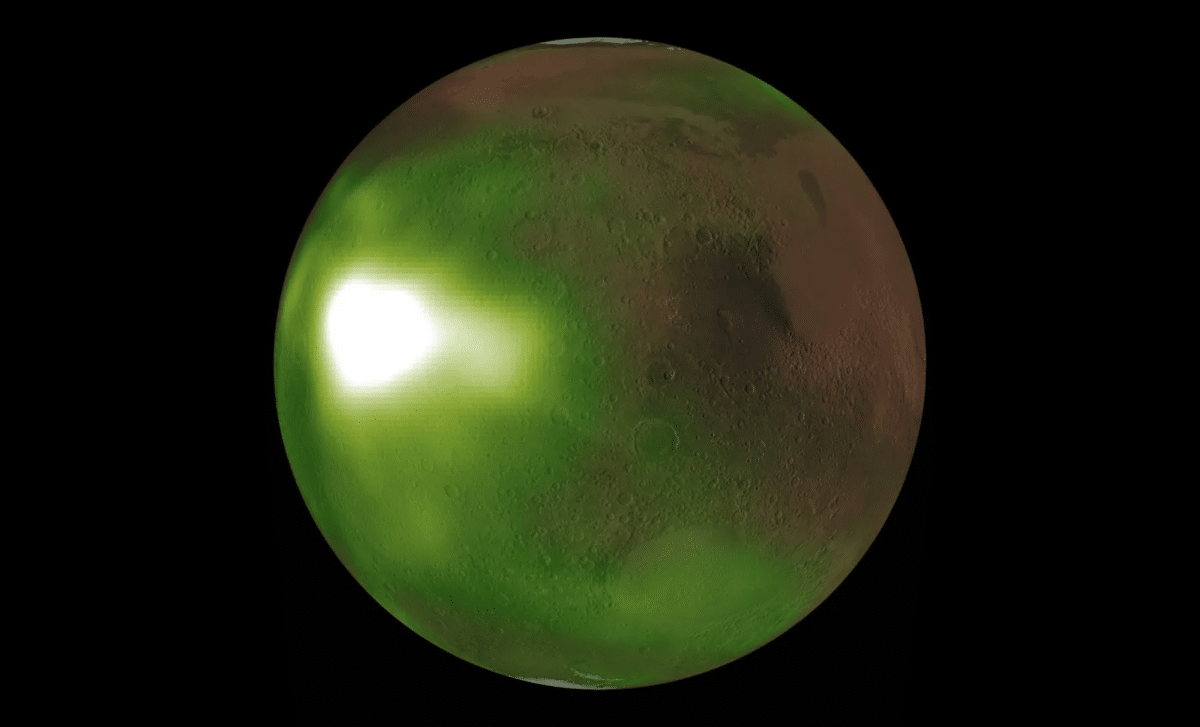
Breakthroughs in synthetic biology, planetary engineering, and cost-efficient space travel have redefined the potential for terraforming Mars. Once confined to speculative fiction, the concept of cultivating a green Mars is gaining serious scientific consideration. A recent paper by Erika DeBenedictis and Devon Stork, published on arXiv in October 2025, presents a detailed phased strategy for transforming Mars into a more Earth-like world while prompting reflection on humanity’s readiness to initiate such an endeavor.
From Imaginary Notion to Scientific Blueprint
Throughout much of the previous century, the idea of Mars terraforming was often dismissed as far-fetched, something for distant future civilizations to ponder. However, advancements in technology and sophisticated environmental models have brought this vision into the domain of viable scientific inquiry. The work by DeBenedictis, head of Pioneer Labs, sketches out a stepwise plan to modify Mars’ climate, starting with warming its atmosphere and potentially culminating in self-sustaining ecosystems.
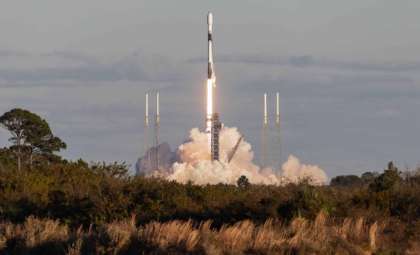
“Thirty years ago, terraforming Mars wasn’t just hard — it was impossible,” said Erika DeBenedictis. “But new technology like [SpaceX’s] Starship and synthetic biology have now made it a real possibility.”
Add Cosmo Herald as a Preferred Source

This shift in perspective is fueled by cutting-edge climate models, engineered resilient microbes, and the emergence of affordable interplanetary logistics enabled by vehicles such as Starship. The authors urge the scientific community to move beyond mere theory toward practical trials, suggesting that initial experiments be integrated into upcoming Mars exploration missions.
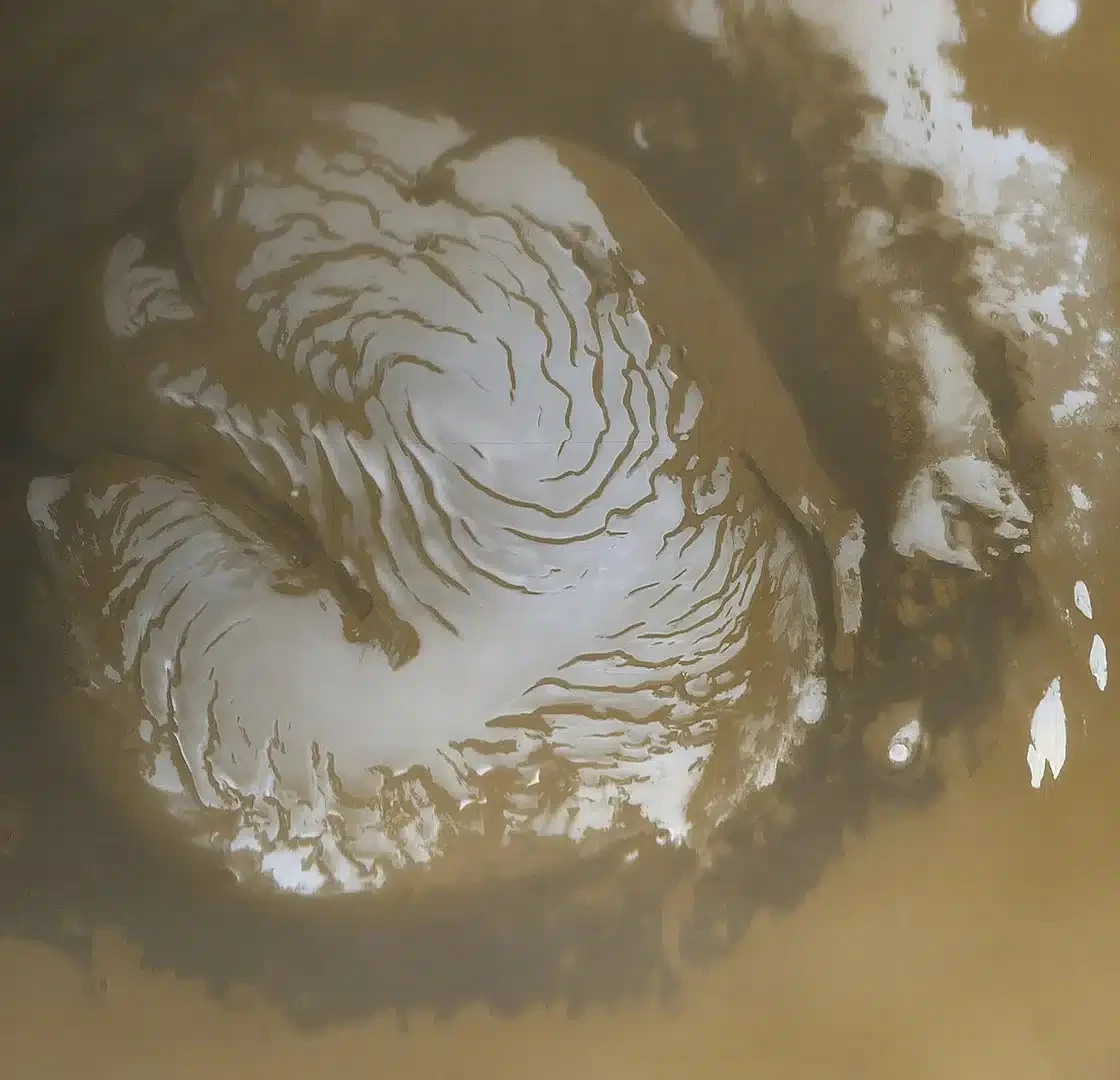
Entitled “An Introduction to Mars Terraforming, 2025 Workshop Summary,” the publication on arXiv doubles as a comprehensive scientific document and an ethical discussion prompt. It encourages viewing Mars not as a barren wasteland but as a candidate for Earth-like life-supporting environments. The central shift in dialogue focuses on transitioning from “Is it possible?” to “Is it ethically justified, and how should we proceed?”
Step One: Increasing Temperature and Mobilizing Water
The paper identifies the foremost objective as elevating Mars’ mean temperature by several tens of degrees. This might be attained through injecting artificial aerosols, enhancing greenhouse gas concentrations, or employing direct radiative warming. Melting frozen water in Martian reservoirs—some large enough to create a global-scale ocean—could allow stable liquid water presence within mere decades.
With a warmer climate, Mars would be poised to support surface ecosystems, starting with specially tailored genetically modified microbes designed to endure harsh UV exposure, reduced atmospheric pressure, and cold conditions.
“Living planets are better than dead ones,” said study co-author Edwin Kite, associate professor at the University of Chicago. “We now know that Mars was habitable in the past, from data returned by the Mars rovers, so greening Mars could be viewed as the ultimate environmental restoration challenge.”
This vision intertwines planetary exploration with deliberate ecosystem engineering, encouraging a view of Mars as a prospective cradle for developing life-supporting communities.
Synthetic Biology Driving Mars’ Transformation
Synthetic biology stands at the core of terraforming strategies. Scientists are focused on crafting extremophile microorganisms capable of thriving under Mars’ extreme conditions. These organisms could be introduced in targeted areas to initiate gradual atmospheric modification.
“I see humanity as part of the biosphere, not separate from it,” said Kite. “Life is precious — we know of nowhere else in the universe where it exists — and we have a duty to conserve it on Earth, but also to consider how we could begin to propagate it to other worlds.”
This perspective recasts terraforming as an extension of life’s expansion throughout the cosmos, not an act of domination. The research team highlights that insights gained from Mars bioengineering could translate to solutions for Earth’s environmental issues, particularly in developing sustainable closed ecosystems and drought-resistant agriculture.
“If we want to learn how to modify our environment here on Earth, to keep it in a configuration that suits us and other life forms, maybe it would be better to experiment on Mars and say, ‘Look, does this work?’” said DeBenedictis. “I personally would like to be a little more conservative with our home planet. This is the only place we can live.”
Balancing Scientific Opportunity with Ethical Concerns
While enthusiasm runs high, caution persists. The study highlights unresolved scientific challenges such as the unpredictable responses of Martian dust storms, subsurface ice dynamics, and geological features to warming interventions. Additionally, terraforming risks jeopardizing undiscovered native Martian life forms.
“If we decide to terraform Mars, then we will really change it in ways that may or may not be reversible,” said Nina Lanza, planetary scientist at Los Alamos National Laboratory. “Mars is its own planet and has its own history. When we terraform, then we effectively don’t have the opportunity to study that anymore.”
“If we modify the environment on Mars, we’re going to change the chemistry of the surface and of the subsurface, eventually,” Lanza added. “I can’t say for certain. It’s very complicated, but it’s a risk.”
These ethical dilemmas shift focus from feasibility to stewardship. The question looms: should Mars be preserved as a planetary time capsule, or transformed into a new habitat for life? This contentious topic continues to fuel debate among scientists, ethicists, and space policy makers worldwide.
- Categories:
- Space









0 comments
Sign in to Comment