
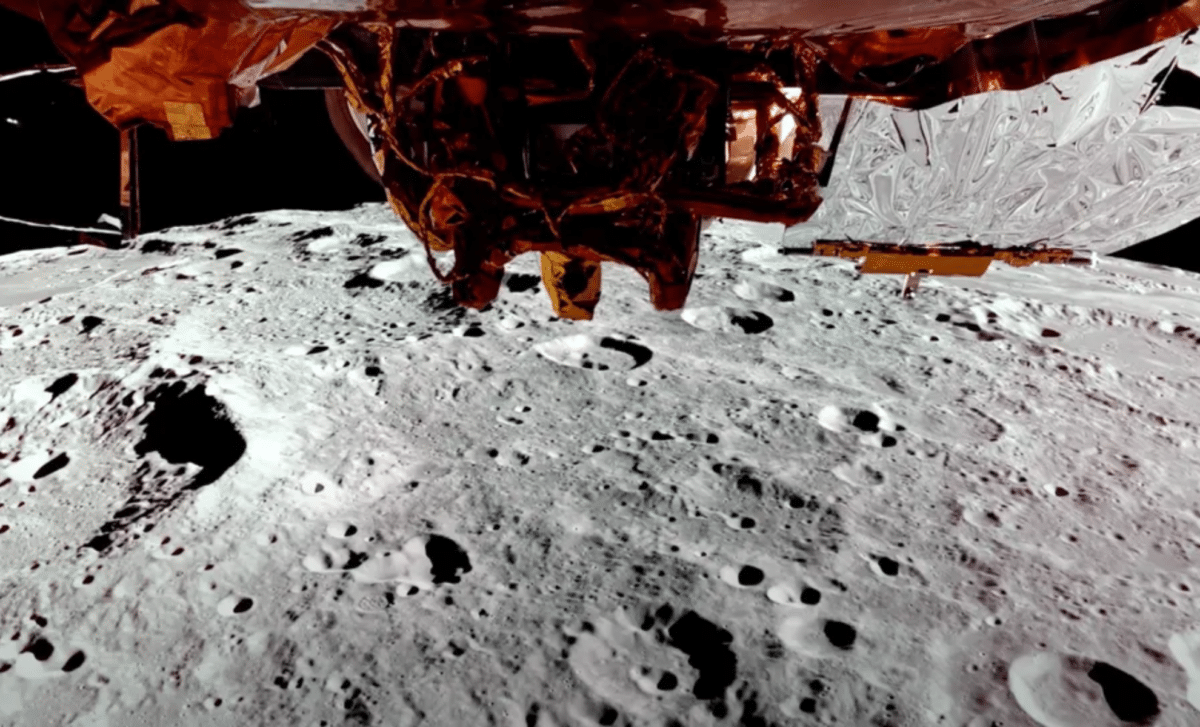
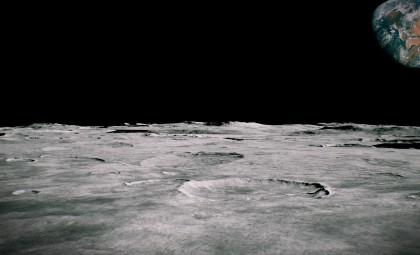
Firefly Aerospace’s Blue Ghost lunar lander has sent back surprising data that could transform our comprehension of the moon’s inner heat distribution. Since its touchdown in March 2025, the spacecraft has uncovered evidence suggesting that the moon's thermal landscape is not as uneven as once believed.
Reevaluating Long-Held Views on Lunar Temperature
Scientists have long theorized that the moon’s near side—the hemisphere facing Earth—is warmer due to the presence of volcanic features called lunar maria. These dark basaltic plains result from ancient lava flows and are predominantly found on the near side, where radioactive elements like thorium were thought to concentrate. This radioactive decay was assumed to energize volcanic activity on that side, while the far side remained considerably cooler.
Contradicting this established framework, Blue Ghost’s mission to the Mare Crisium area on the far side, selected for its presumed cooler characteristics, has recorded heat flow data that rivals measurements made during the Apollo missions. According to Space.com, the lander’s LISTER instrument captured thermal readings indicating a more uniform spread of heat-producing materials beneath the lunar surface than was formerly expected.

Technical Hurdles in Probing the Lunar Subsurface
The LISTER instrument aboard Blue Ghost was designed to drill down to measure subsurface temperatures, ideally beyond one meter to avoid surface temperature fluctuations caused by the lunar day-night cycle. However, the mission encountered notable difficulties.
“It didn’t go that well,” explained Dr. Nagihara, a core contributor to the Blue Ghost project. “Despite multiple attempts, progress was slow.” Nonetheless, the probe managed to reach nearly 98 centimeters deep, yielding several temperature readings. These measurements, although shallower than intended, offer important insights into heat flow characteristics at the far side site and support the notion of a surprisingly even distribution of heat elements in the lunar crust.
Provoking New Scientific Inquiry into Lunar Volcanism
While the Blue Ghost findings do not close the case, they open up fresh scientific debates. Researchers are questioning whether the factors that triggered lunar volcanism might extend beyond just the abundance of radioactive materials. The possibility that variations in crustal thickness influenced magma movement offers an alternative explanation for why volcanic activity clustered where it did.
“This is just the beginning,” said Robert Grimm, a planetary geophysicist involved with the mission. He noted that the results from the Blue Ghost lander are just a piece of the puzzle. “We need more measurements,” said Dr. Nagihara.
Additional data collection is essential as upcoming missions, notably NASA’s Artemis program, plan to investigate diverse lunar terrains to deepen our geological understanding of the moon.
Blue Ghost’s Role in Shaping the Future of Lunar Exploration
The timing of the Blue Ghost discoveries aligns with an exciting phase in lunar exploration. NASA’s Artemis initiative aims to place astronauts back on the moon by the late 2020s and establish a long-term human presence. Insights from Blue Ghost will be valuable for planning these missions and expanding knowledge about the moon’s makeup and evolution.
As robotic explorers delve into unexplored moon regions beyond the original Apollo sites, advances powered by both private enterprises and space agencies promise to unlock long-guarded secrets of the lunar interior, revealing the moon’s hidden depths in unprecedented detail.
- Categories:
- Astronomy





0 comments
Sign in to Comment