
Researchers exploring the interiors of Uranus and Neptune have uncovered evidence of an extraordinary phase of matter that defies typical states seen on Earth.
Central to this discovery is carbon hydride, which exhibits properties blurring the line between solid and liquid, shedding new light on planetary structure and magnetic phenomena.
The findings, detailed in Nature Communications, emerge amid a surge in exoplanet discoveries, now exceeding 6,000, driving the need to deepen understanding of planetary cores through a mix of observations, experiments, and advanced simulations.

An Exotic “Hot Ice” Formed Under Intense Pressure
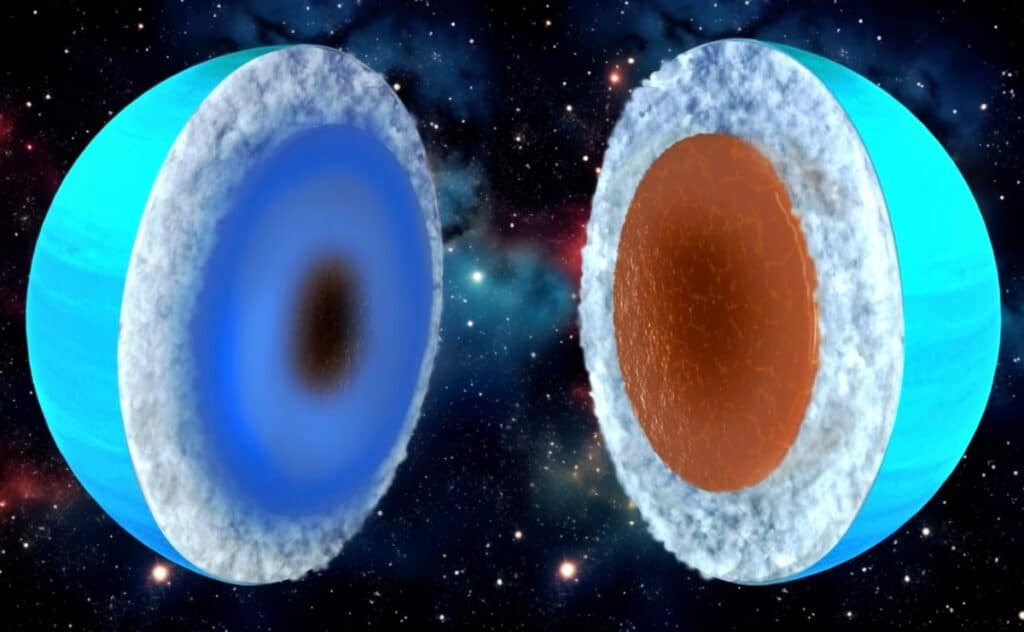
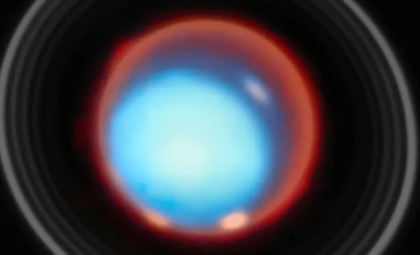
The team led by Cong Liu and Ronald Cohen concentrates on the mysterious “hot ices” inside Uranus and Neptune—layers made up of water, methane, and ammonia that lie between the gaseous outer shell and the rocky planetary core.
Within these zones, pressures span from 500 to 3,000 gigapascals and temperatures soar between 4,000 and 6,000 Kelvin. Such extreme conditions transform familiar substances into exotic phases, revealing surprising atomic rearrangements.
To decode these environments, researchers employed quantum-based simulations enhanced by machine learning techniques, facilitating an unprecedented atomic-level insight into deep planetary layers.
Helical Hydrogen Motions Within Carbon Lattices
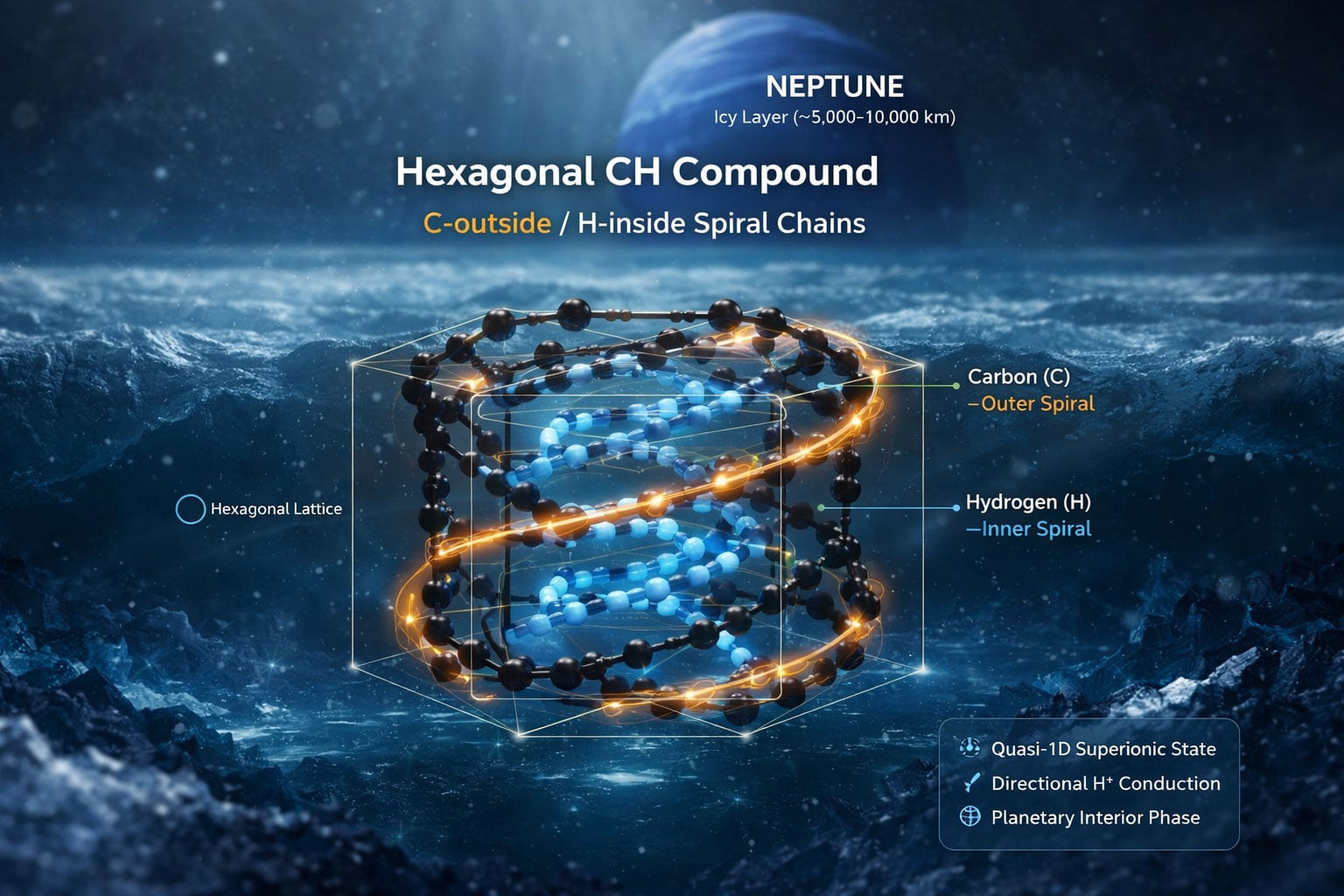
The simulations reveal that carbon hydride arranges itself into a stable hexagonal framework wherein hydrogen atoms exhibit an extraordinary movement pattern. According to Nature Communications, these hydrogen atoms travel along spiral, helix-shaped trajectories, establishing a quasi-one-dimensional superionic phase.
This phenomenon contrasts conventional superionic substances, where atoms move in multiple directions. Here, the motion is confined within specific channels. Ronald Cohen explained:
“This newly predicted carbon-hydrogen phase is particularly striking because the atomic motion is not fully three-dimensional. Instead, hydrogen moves preferentially along well-defined helical pathways embedded within an ordered carbon structure.”
Implications for Magnetic Fields in Ice Giants
The distinctive hydrogen movement influences how thermal energy and electrical currents propagate through these planets, directly affecting their unique magnetic field shapes and strengths.
Uranus and Neptune possess uncommon magnetic fields, tilted and offset from their centers. The superionic carbon hydride phase may be key to understanding how interior energy and conductivity create these magnetic anomalies. As Cong Liu remarked:
“Carbon and hydrogen are among the most abundant elements in planetary materials, yet their combined behavior at giant-planet conditions remains far from fully understood.”
- Categories:
- Astronomy






0 comments
Sign in to Comment