
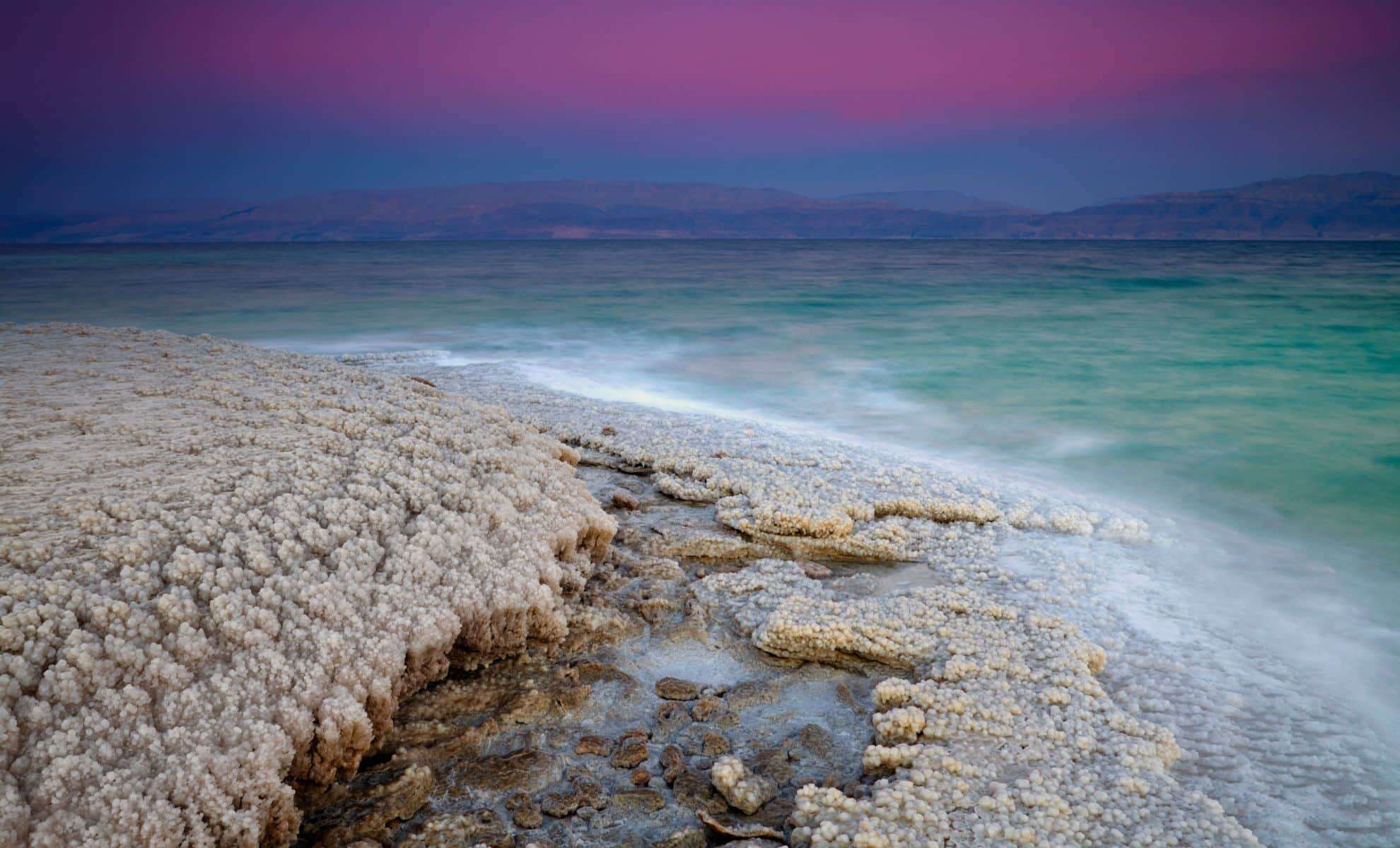
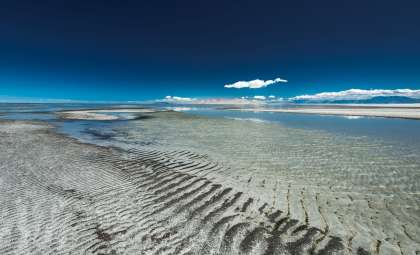
Hidden beneath the dense and highly saline waters of the Dead Sea, researchers have discovered an extraordinary geological event. Massive salt structures, dubbed salt giants, are gradually taking shape on the lake’s floor, promising valuable clues about Earth’s geological history as well as its forthcoming changes. A recently published study in the Annual Review of Fluid Mechanics highlights that the Dead Sea might be the sole location globally where this process can be observed as it unfolds.
Exploring the Origins of the Deep Salt Formations
The Dead Sea stands out not only as the saltiest body of water on Earth but also as the lowest terrain on the planet’s surface and a singular environment for aquatic studies. Scientists at UC Santa Barbara in collaboration with the Geological Survey of Israel have documented enormous salt formations developing underwater, some extending several kilometers wide and exceeding a kilometer in thickness.
“These immense deposits in Earth’s crust can stretch over vast horizontal distances and reach thicknesses over a kilometer vertically,” explained Eckart Meiburg, a mechanical engineering professor at UC Santa Barbara.

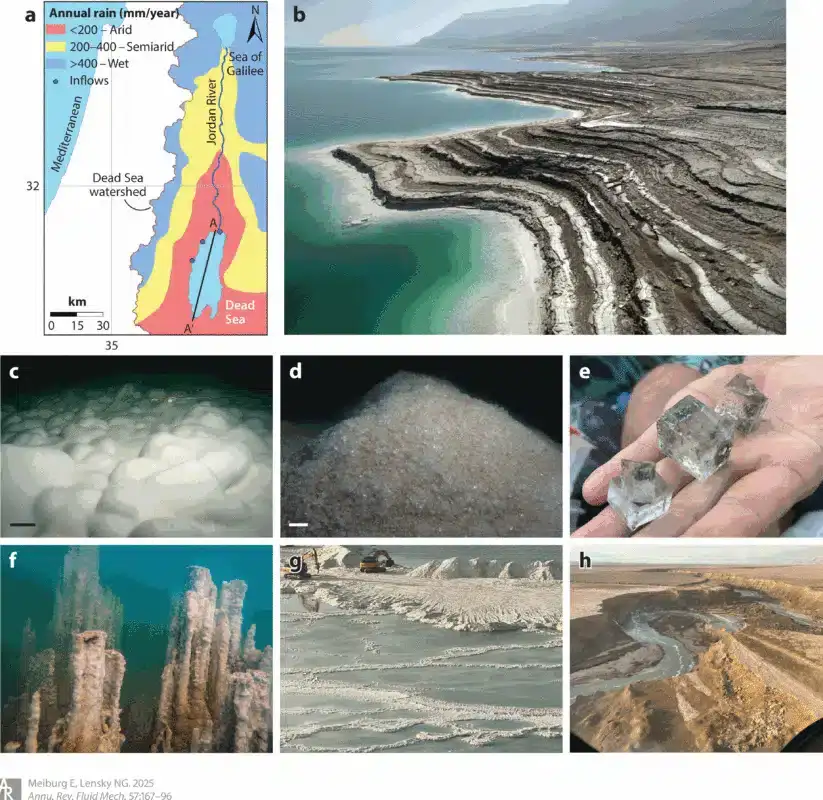
Transition From Stable Layers to Vigorous Mixing
Prior to the 1980s, the Dead Sea was classified as a meromictic lake, meaning its water column was layered without mixing. Warmer, lighter water rested atop colder, denser saline waters at the bottom, maintaining stable chemical stratification throughout the year.
This stability was disrupted when the Jordan River was dammed and diverted, drastically reducing freshwater inflow. This shift intensified evaporation and rose surface salinity, causing the once distinct layers to blend. The lake evolved into a holomictic system that experiences seasonal overturning, especially in winter, initiating a new stage in salt deposit development.
A remarkable consequence of this change is the advent of “salt snow”. First spotted in 2019, these halite crystals were initially linked to cooler months but were later found to form under summer conditions as well, indicating a continuous cycle fueling the creation of salt giants on the lake’s bottom.
The Science Behind Crystal Formation
What makes this phenomenon so distinctive is the interplay of salinity, temperature, and a specialized process called double diffusion. During summer, intense sunlight heats the Dead Sea’s surface, enhancing evaporation and salt concentration. Meanwhile, deeper layers remain cool and stable, establishing a sharp temperature and density gradient.
This gradient triggers a subtle exchange: the warm, salty upper water cools and descends, while cooler bottom waters rise slightly. This delicate motion creates gentle currents underwater, enough to encourage the formation of halite crystals that slowly sink, resembling a fall of salt snow.
Unlike other salty lakes where this occurs only during dry seasons, the persistent layering and temperature contrasts in the Dead Sea allow this process to continue almost year-round, making it one of the rare natural laboratories for direct observation of growing salt giants.
Reflecting Ancient Marine Events
Similar events took place millions of years ago on a much grander scale. During the Messinian Salinity Crisis, the Mediterranean Sea was cut off from the Atlantic Ocean. This caused the basin to dry up extensively as evaporation outpaced inflow, leaving behind massive salt deposits.
“Some water always entered the Mediterranean through the Strait of Gibraltar,” said Meiburg. “But tectonic forces eventually sealed the Strait, stopping Atlantic inflow.” This condition lasted for hundreds of thousands of years until the Zanclean flood reopened the passage, refilling the basin. The extensive salt layers from that period are still buried beneath the Mediterranean’s seabed.
By decoding how these salt formations develop today, scientists aim to reconstruct ancient oceanic episodes and better predict the responses of dry coastal ecosystems to increasing threats from climate change and rising sea levels.
- Categories:
- News

0 comments
Sign in to Comment