

Scientists are encountering a baffling phenomenon involving kaons, quark-based particles, which exhibit decay patterns that challenge existing theoretical frameworks. Might this unusual activity hint at undiscovered dimensions of fundamental physics?
Investigations into kaon decay have revealed surprising irregularities, shaking the foundations of our understanding of particle interactions. Should these observations be validated, they could imply the presence of unknown particles or forces beyond the scope of the Standard Model, the predominant theory governing particle physics for decades.
Examining the Rare Kaon Decay Anomaly
Kaons belong to the class of mesons, particles formed by a quark partnered with an antiquark, and are members of the broader hadron family. These particles typically arise from other particle decays and themselves transform into entities such as protons or neutrinos. However, the decay event recently detected occurs so infrequently that predictive models anticipated fewer than 0.25 such instances in the experimental data.

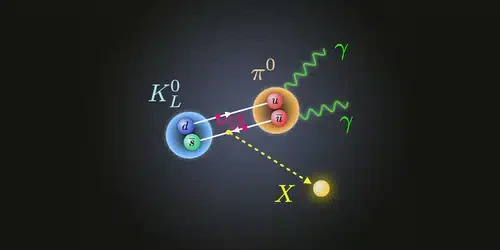
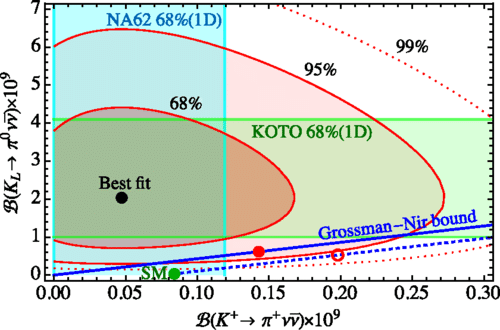
Contrary to predictions, the team identified four occurrences of this extraordinarily scarce kaon decay mode, sparking critical inquiries: could these findings represent evidence of a fresh physics paradigm?
Catching a Glimpse of Physics Beyond the Known
The persistence of these results hints at phenomena outside the established Standard Model. The study, documented in Physical Review Letters, proposes that the elevated frequency of this unusual decay might involve an unseen force or a novel particle. Some researchers theorize a long-lived, previously unobserved particle triggers this behavior, while others speculate on the existence of an entirely new fundamental interaction.
Discovering new physics would be revolutionary, demanding a profound amendment to current subatomic theories. As noted by the publication, such breakthroughs routinely lead to significant shifts in scientific consensus.
The Challenge of Investigating Subatomic Phenomena
Gleaning accurate data on subatomic particles is an intricate task. Scientists frequently depend on indirect detection techniques, such as analyzing interactions between particles and light or inferring presence through secondary effects, which inherently introduces uncertainty and potential errors.
Kohsaku Tobioka, a lead researcher in the project, emphasized that minimal background noise is crucial since even a few anomalous events can dramatically affect conclusions. He stated:
“In this case, expectation of noise is very low, so even one event or observation is very striking.” he added, “and in this case, there were four.”
The detection of four such decays intensifies the mystery. The team is meticulously verifying results to exclude measurement errors and discern whether this finding represents a groundbreaking discovery or a rare statistical deviation.
- Categories:
- Physics







0 comments
Sign in to Comment