
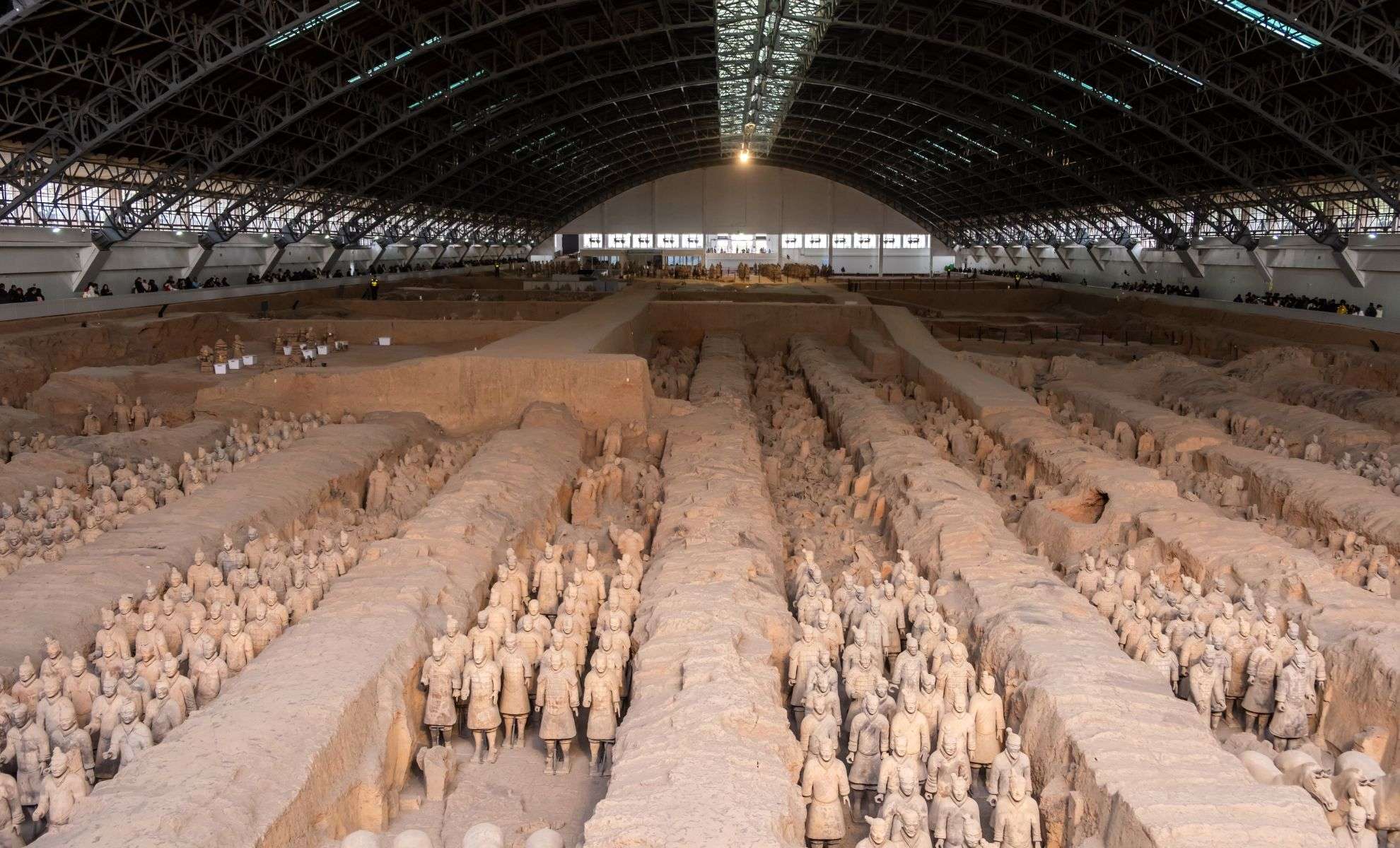
The resting place of Qin Shi Huang, China’s inaugural emperor who ruled from 221 BC to 210 BC, has remained sealed for over two millennia. Situated in Shaanxi Province, the site was uncovered in 1974 by local farmers, unveiling a remarkable terracotta army composed of clay soldiers and horses set to protect the tomb.
While numerous digs have been conducted around the vicinity, the tomb itself has never been breached. Experts remain cautious about opening it. A 2020 research featured in Nature highlights that their apprehensions are backed by both ancient historical accounts from Sima Qian and contemporary scientific findings.
Guarded by the Terracotta Army, the Tomb Stays Intact
The famed terracotta army serving as the tomb’s sentinels is hailed as a monumental archaeological discovery of the last century. Found by farmers, this assembly features thousands of full-sized clay warriors, chariots, and horses arrayed in battle formation.

This incredible formation is thought to act as a spiritual protector for the emperor’s afterlife journey. Despite extensive excavation activities nearby, the inner tomb remains sealed due to fears held by archaeologists and historians about the dangers involved.
Deadly Traps Hidden Within
A key reason for the reluctance to open Qin Shi Huang’s tomb stems from the belief that it was rigged with booby traps aimed at deterring grave robbers.
Writings by Sima Qian, penned roughly a century after the emperor’s demise, describe defensive mechanisms including crossbows and poisoned arrows set to fire automatically upon intruders. Though many components may have decayed over time, the risk posed by these ancient weapons still remains a significant obstacle for modern explorations.
Toxic Mercury: An Invisible Hazard?
A striking and hazardous feature of the tomb is the rumored presence of mercury. Historical sources indicate that mercury was used to mimic the Yangtze River, Yellow River, and surrounding seas, potentially forming a poisonous liquid landscape within the tomb.
A 2020 investigation, referenced by IFL Science, suggests mercury may still seep from fissures in the tomb, posing a serious hazard to anyone entering.
“Highly volatile mercury may be escaping through cracks, which developed in the structure over time, and our investigation supports ancient chronicle records on the tomb, which is believed never to have been opened/looted,” explained the research team.
Exploring Safely Without Entry
Due to these risks, researchers are exploring non-invasive technologies to investigate the tomb. Tools like 3D imaging and ground-penetrating radar present promising means to examine the site without disrupting it physically.
Despite ongoing efforts, no definitive technique has yet emerged that can reveal the tomb’s secrets thoroughly without risking damage to artifacts or endangering those involved. Remote sensing remains the leading method for future studies, though challenges abound, especially given toxic elements like mercury.
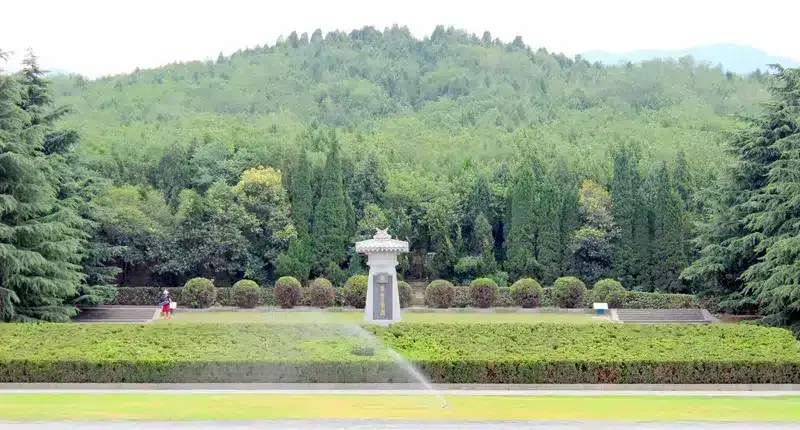
What Has Kept the Tomb Untouched?
Remarkably, despite the tomb’s legendary cache of riches and lethal defenses, Qin Shi Huang’s burial chamber has never been plundered. This mystery puzzles experts worldwide. The potentially mercury-laden waterways and deadly traps likely discouraged intrusions. Inside, priceless treasures such as gold, jade, and ceremonial relics are thought to remain protected within the sealed chamber, preserving the tomb as one of the globe’s best-preserved royal burial sites.
- Categories:
- Science









0 comments
Sign in to Comment