
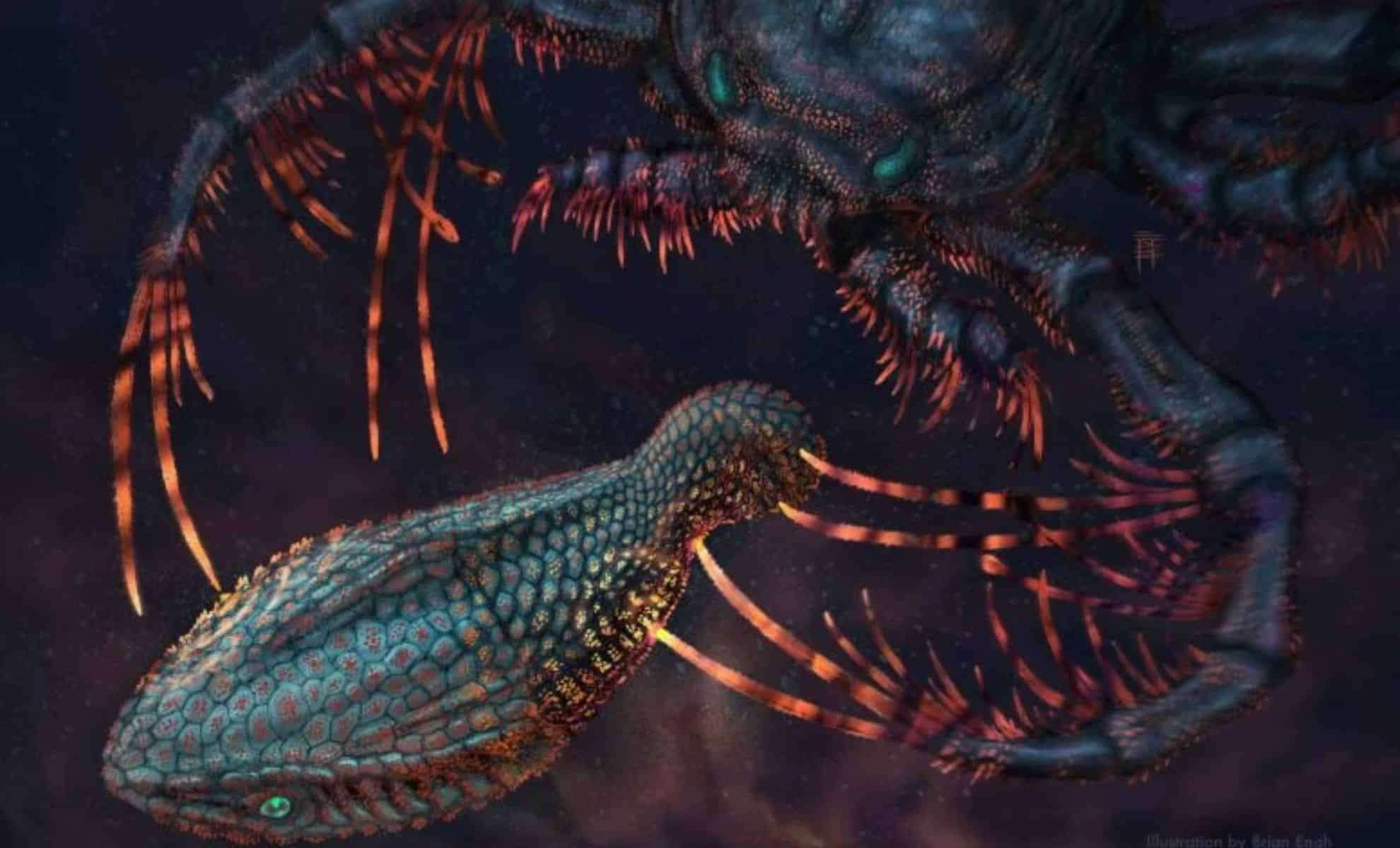
A recent investigation has uncovered that the earliest forms of teeth in ancient fish were not designed for biting or chewing but served as sensory tools to perceive their surroundings. This revelation extends the known timeline of vertebrate evolution by millions of years, showing that primordial teeth were part of the armored exoskeletons of these early fish.
Primitive Fish Possessed Sensory Tooth Structures
Conducted by researchers at the University of Chicago, the study examined dentine, the inner tissue of teeth responsible for conducting sensory signals to the nervous system. Their findings suggest dentine was initially located within the protective exoskeleton of ancient fish, indicating teeth originally evolved for sensory functions rather than feeding.
Neil Shubin, senior author and UChicago professor, highlighted the importance of these sensory elements. “For an early armored swimmer navigating a predator-rich environment, sensing water properties was crucial,” he explained.

Insights were drawn from studying Ordovician-era vertebrates, dating back roughly 465 million years, alongside comparisons to modern fish and arthropods.
Challenging Traditional Views on Tooth Evolution
The results, published in Nature, question long-held assumptions about dental origins. Previously, paleontologists thought teeth developed from armored structures on ancient fish, but their exact functionality was unknown. This new research reveals these “teeth” functioned as sensory organs similar to those in modern arthropods.
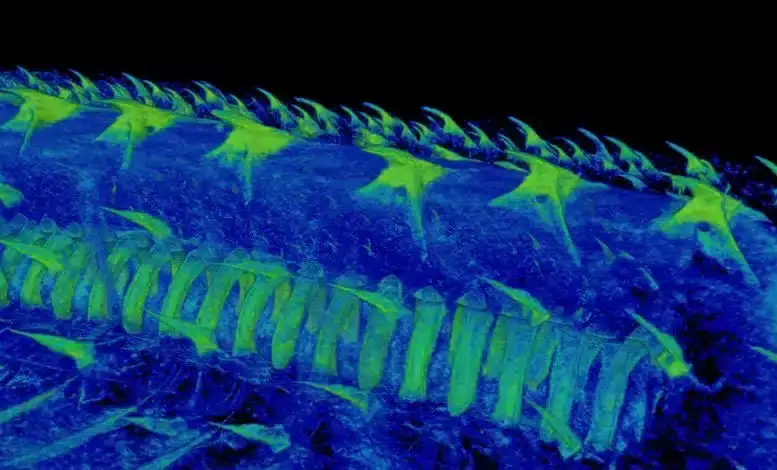
Utilizing detailed CT scans, scientists analyzed fossils from the Cambrian period (485 to 540 million years ago), uncovering parallels between sensory formations on ancient fish exoskeletons and those on contemporary crustaceans like crabs and shrimp. Known as “sensilla,” these organs enabled early vertebrates and arthropods to detect environmental cues despite distinct evolutionary origins.
The Rise of Sensory Exoskeletal Features
Further analysis showed these sensory adaptations weren’t exclusive to early vertebrates but were also present in ancient arthropods such as horseshoe crabs. This highlights a remarkable example of convergent evolution where both groups independently developed similar sensory mechanisms. Lead researcher Yara Haridy explained that sensory systems initially evolved on exoskeletons, with genetic pathways later repurposed to create sensitive teeth.
This finding prompts reconsideration of tooth evolution theories. Contrary to the “inside-out” model proposing teeth preceded exoskeleton adaptations, the new evidence supports the “outside-in” model, suggesting sensory structures arose on exoskeletons first and were subsequently adapted into teeth.
State-of-the-Art Technology Reveals Evolutionary Secrets
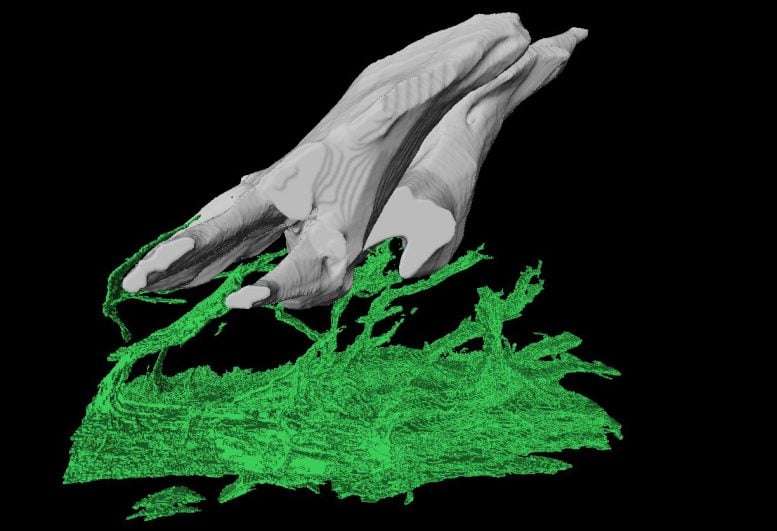
To explore these fossils, Haridy’s team utilized advanced technology, conducting scans at the Advanced Photon Source at Argonne National Laboratory. Hundreds of fossil fragments from ancient fish and living species were examined in high resolution, allowing researchers to identify dentine traces within fossilized exoskeletons.
A particularly intriguing discovery involved the Cambrian fossil Anatolepis. Initially thought to be the earliest vertebrate fish due to its dentine-like armor features, subsequent analysis clarified that Anatolepis was actually an ancient arthropod. This demonstrated the independent evolution of sensory organs across different lineages.
- Categories:
- News



0 comments
Sign in to Comment