
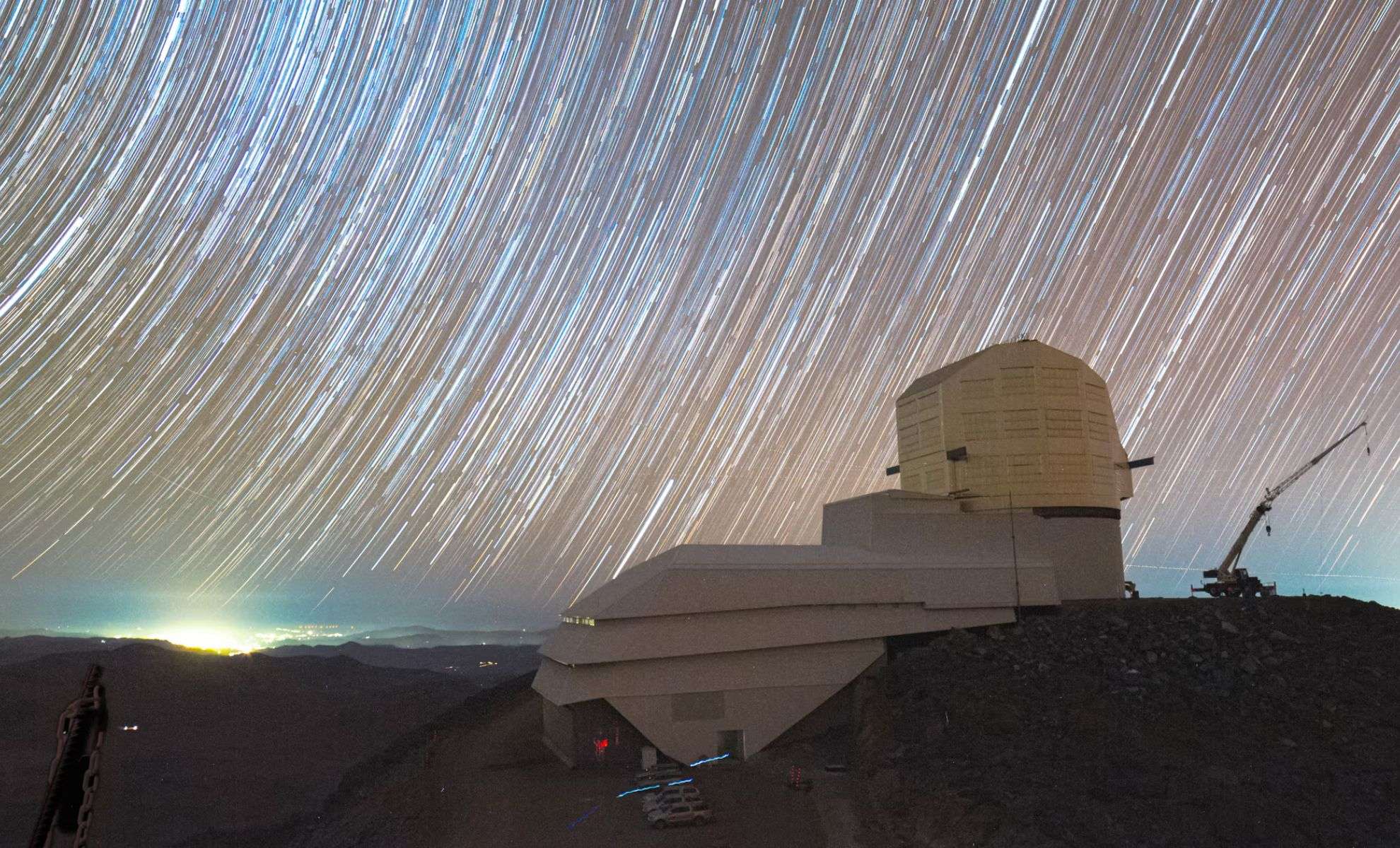
A landmark event in space exploration is set to occur as the Vera C. Rubin Observatory prepares to share its debut images on Monday, June 23. After nearly a quarter-century of development, this observatory nestled in the Chilean Andes promises to deliver some of the most detailed astronomical photographs ever seen.
Innovative Features Powering the Rubin Observatory
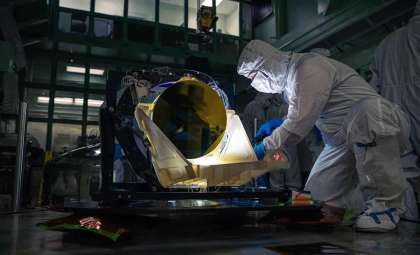
Central to this observatory’s capabilities is a state-of-the-art 3.2-gigapixel digital camera, the largest ever designed specifically for astronomy. The immense camera, comparable in size to a car, will capture ultra-sharp images and videos of the night sky with stunning precision. Operated collaboratively by the National Science Foundation (NSF) and the Department of Energy (DOE), the Rubin Observatory is set to provide invaluable data to expand our cosmic knowledge.
The highly anticipated launch event will be broadcast live on Monday, June 23 at 11 a.m. ET. Audiences worldwide can witness the first-ever images captured by the Rubin Observatory, accompanied by a magnificent high-resolution time-lapse movie portraying the night sky. An interactive map on the observatory’s website will help enthusiasts locate local watch parties.

The Ambitious Legacy Survey of Space and Time
June 23 simply marks the beginning of the Legacy Survey of Space and Time (LSST), a 10-year initiative designed to chart the universe with extraordinary detail. The project is expected to generate an immense dataset of approximately 60 petabytes, aiding scientists in probing the elusive properties of dark matter and dark energy, the enigmatic forces shaping our universe.
Utilizing the Simonyi Survey Telescope, outfitted with an innovative three-mirror configuration and an expansive 8.4-meter (27.6-foot) primary reflector, the observatory will capture 30-second exposures that encompass an area nearly 45 times larger than the full moon. The southern sky will be photographed every three nights, continuously advancing our understanding of the cosmos.
Enhancing Detection of Near-Earth Objects
Beyond expanding astronomical knowledge, the Rubin Observatory will greatly enhance efforts to detect and track near-Earth objects (NEOs). Recent studies led by astronomer Meg Schwamb at Queen’s University Belfast estimate that the observatory may increase the known count of NEOs by a factor of three. Additionally, it could discover tenfold more trans-Neptunian objects and identify over five million main-belt asteroids, dramatically surpassing the present catalog of about 1.4 million.
Mario Juric, an astronomer from the University of Washington, emphasized that this influx of data has the potential to "rewrite textbooks on solar system formation" and improve our capability to detect and possibly divert hazardous asteroids.
Honoring Vera Rubin’s Trailblazing Contributions
The observatory honors the legacy of Vera Rubin, the distinguished astronomer whose pioneering investigations provided compelling evidence for dark matter. Rubin’s work significantly transformed cosmology, especially through her studies on spiral galaxies and their rotational dynamics, while also paving the way for women in science.
As the Rubin Observatory embarks on its ambitious quest to map the universe in unparalleled detail, it carries forward Rubin’s vision, delivering groundbreaking insights and breathtaking views of the cosmos.
- Categories:
- News







0 comments
Sign in to Comment