
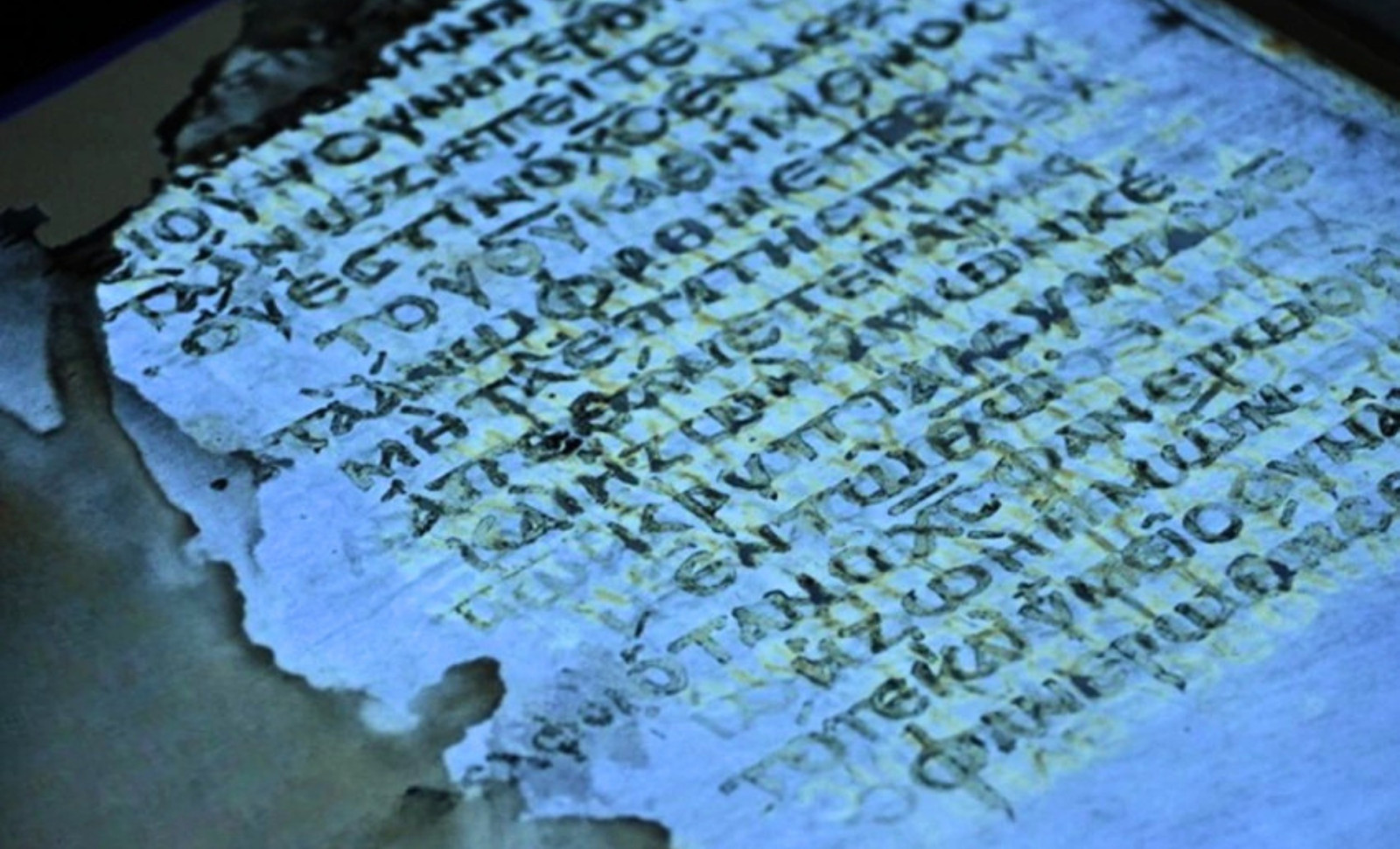
In the 13th century, monks at a Greek monastery carefully took apart a 6th-century manuscript of Saint Paul’s Letters, repurposing its parchment leaves as protective bindings for newer books. Known as Codex H, the manuscript's pages were concealed within other volumes. On April 24, 2026, scholars at the University of Glasgow revealed the recovery of 42 of those long-lost pages by detecting faint ink imprints transferred between adjacent leaves.
While the recovered text does not change the content of Paul’s Letters, it offers invaluable insight into the early Christian compilation and organization of sacred writings. These pages are among the oldest surviving fragments of the New Testament and contain the earliest evidence of the Euthalian apparatus, an ancient system of chapter summaries and citation markers, quite distinct from the chaptering found in contemporary Bibles.
The Journey of a Manuscript Repurposed
Created in the 6th century, Codex H was kept at the Great Lavra Monastery on Mount Athos. When the manuscript deteriorated, the monks reused its parchment as flyleaves and structural supports within other books. Over many centuries, these recycled pages have dispersed, now residing in libraries across Italy, Russia, Ukraine, France, and Greece.

In the 18th century, the French Benedictine scholar Bernard de Montfaucon identified traces of the missing manuscript while cataloging the Saint-Germain-des-Prés abbey collection in Paris. He extracted fourteen leaves from reused bindings containing Paul’s Epistles. Yet much of Codex H’s original configuration remained hidden due to overwritten sections and presumed lost pages.
Unearthing Invisible Ink Traces
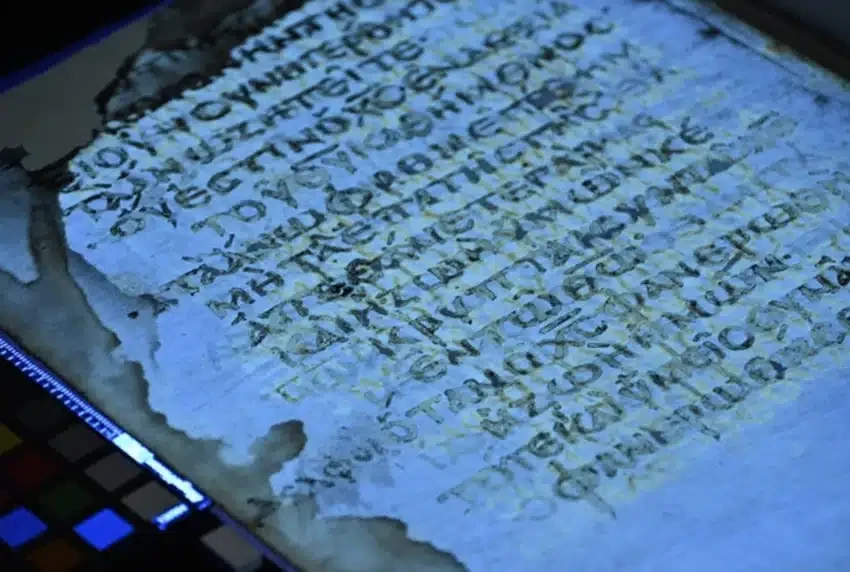
The key to this discovery hinged on a fortuitous chemical reaction. When the monks applied fresh ink centuries ago, compounds from the new ink migrated to the opposite page, imprinting a faint, reversed copy of the text across several leaves. These elusive ghost impressions are imperceptible without specialized imaging.
Professor Garrick Allen, Chair in Divinity and Biblical Criticism at Glasgow, collaborated with the Early Manuscripts Electronic Library to reveal this hidden text. Employing multispectral imaging, the team captured pages under a spectrum of light from ultraviolet to infrared. By digitally layering these images, they isolated the offset ink signatures and reconstructed content no longer physically present.
“The ink’s chemical properties caused a transfer of text onto facing pages, creating mirror images that are invisible to the naked eye but clear with advanced imaging,” Allen described in a university statement.

Radiocarbon dating performed by experts in Paris confirmed the manuscript’s 6th-century origin, placing it firmly within the formative years of Christian scripture compilation. The team accessed ink transfer data from pages located in Ukraine and Russia remotely, expanding the reach of their digital investigation.
Ancient Navigation Tools for Scripture
The recovered material’s most striking feature is its incorporation of the Euthalian apparatus. This early system provided readers with prefaces, chapter guides, and quotation aids to navigate extensive scriptural writings prior to the introduction of page numbers. Codex H houses the earliest recorded use of these tools in Paul’s Letters, showcasing chapter divisions that differ strikingly from modern Bible formats.
Moreover, the fragments include editorial notes and corrections penned by 6th-century scribes, indicating an active engagement with the text rather than passive copying. The physical reuse of the manuscript’s parchment illustrates a common medieval practice of recycling worn manuscripts, inadvertently preserving Codex H’s legacy in scattered fragments.
The Christian Post highlighted how the manuscript’s condition illuminates the practical recycling of sacred texts and offers a window into the lifespan of early Christian literature. This project, supported by the Templeton Religion Trust and the UK Arts and Humanities Research Council, was conducted with the cooperation of the monastery still safeguarding parts of the codex.
Opening a Digital Portal to Early Scripture
A printed edition of Codex H is scheduled for release soon, while a digital edition is already publicly available, granting scholars and readers worldwide unprecedented access to the restored text.
“Codex H represents a crucial source for understanding Christian biblical texts,” Allen stated. “Uncovering this amount of original material is a remarkable achievement.”
Though the content of Paul’s Letters remains unchanged, the recovered manuscript reveals how the text was organized, annotated by early scribes, and preserved through its remarkable trajectory from a Greek monastery to diverse European libraries over centuries.
- Categories:
- News











0 comments
Sign in to Comment