
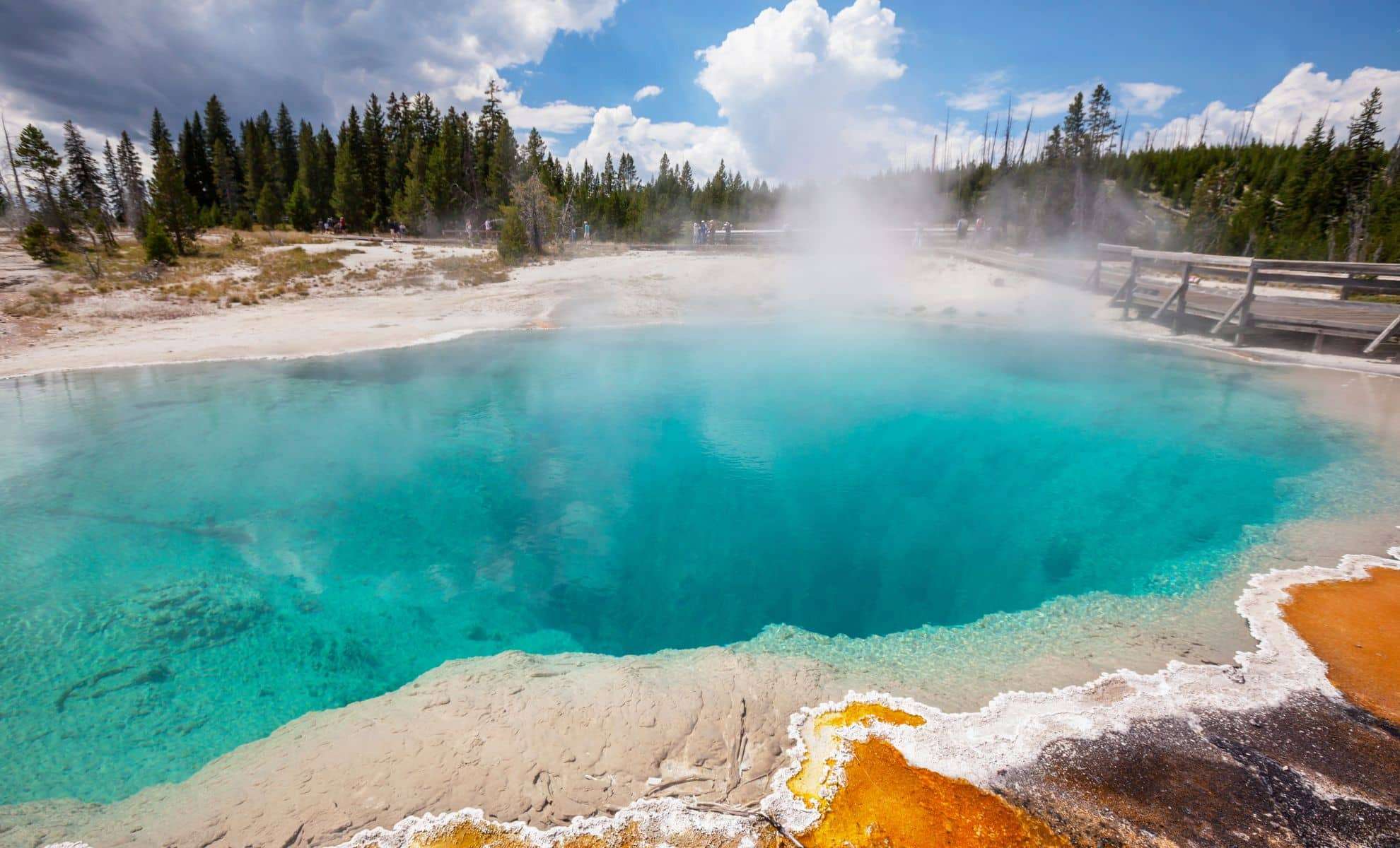
Published on April 16 in the journal Nature, the latest research offers fresh insights into the subterranean workings of the Yellowstone supervolcano, potentially altering how we anticipate its eruption patterns.
A "breathing" magma cap has been identified just below Yellowstone’s surface, providing crucial clues about the volcano's ongoing activity.
An Active Magma Lid Lies Beneath the Crust
Scientists have pinpointed a magma layer residing approximately 2.6 miles (3.8 kilometers) underneath Yellowstone’s surface.
This magma lid functions both as a pressure trap and a slow-release valve within the supervolcano.
The team explains that its porous nature allows gradual outgassing, which helps mitigate the chances of a sudden massive eruption anytime soon.

Brandon Schmandt, a professor in earth, environmental, and planetary sciences at Rice University, noted, “We’ve long understood there’s magma underneath Yellowstone, but clarifying the depth and structure of this upper boundary was a major unknown.”
“Our findings reveal that this reservoir remains active after millions of years, maintaining a dynamic state rather than being dormant.”
Continuous Venting Lowers Eruption Probability
Using a 53,000-pound (24,000 kilograms) vibroseis truck to generate precise seismic waves, researchers mapped detailed images of underground volcanic layers.
The data uncovered a magma lid made up of molten minerals interspersed with supercritical water bubbles within a porous rock matrix.
While bubbles in magma chambers often elevate eruption risk by amplifying internal pressure, Yellowstone’s bubbles rise and escape through microscopic fissures and mineral pathways naturally.
Describing the process as “steady breathing,” Schmandt emphasized that “the volatile-rich layer exists, but its bubble and melt fractions remain below levels linked to imminent volcanic activity.”
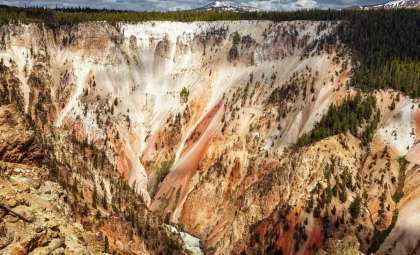
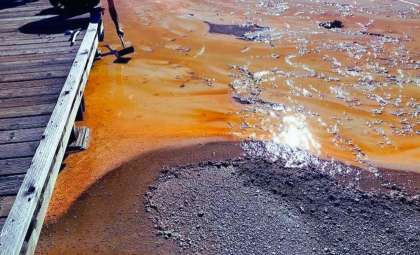
This outgassing activity aligns with Yellowstone’s well-known hydrothermal phenomena like geysers and hot springs, which continually release magmatic gases into the environment.
A History of Eruptions and What Lies Ahead
The Yellowstone volcanic system has a dramatic past, having erupted three times over the past 2.1 million years. The most recent major eruption happened around 640,000 years ago, blanketing roughly 2,900 square miles (7,500 square kilometers) with volcanic debris.
Despite this fiery legacy, scientists stress that the risk of another large-scale eruption in the near future remains very low.
Volcanic systems such as Yellowstone evolve slowly, and evidence suggests it could take thousands of years before a major eruption might occur, if it ever does.
Nonetheless, the inherent unpredictability of volcanic behavior keeps the scientific community alert.
Advanced Techniques Reveal Microstructures Underground
By harnessing advanced tools like vibroseis technology and high-resolution computer modeling, scientists achieved an unprecedented view of Yellowstone’s underground compositions.
These cutting-edge methods provide a granular and evolving understanding of the magma system.
Schmandt explained, “The system appears to be efficiently releasing gases through cracks nestled between mineral grains, which aligns well with Yellowstone’s numerous surface hydrothermal features that emit magmatic gases.”
The study highlights the vital role of continuous monitoring combined with technological innovation in studying volcanic risks.
Yellowstone’s Intriguing Subsurface Activity
The identification of this breathing magma lid enriches our knowledge of one of Earth’s most intensely scrutinized and mesmerizing volcanic systems.
While Yellowstone remains active beneath the surface, the structure currently suggests a state that favors pressure release and stability, offering reassurance to both researchers and visitors for the time being.
- Categories:
- News



0 comments
Sign in to Comment