
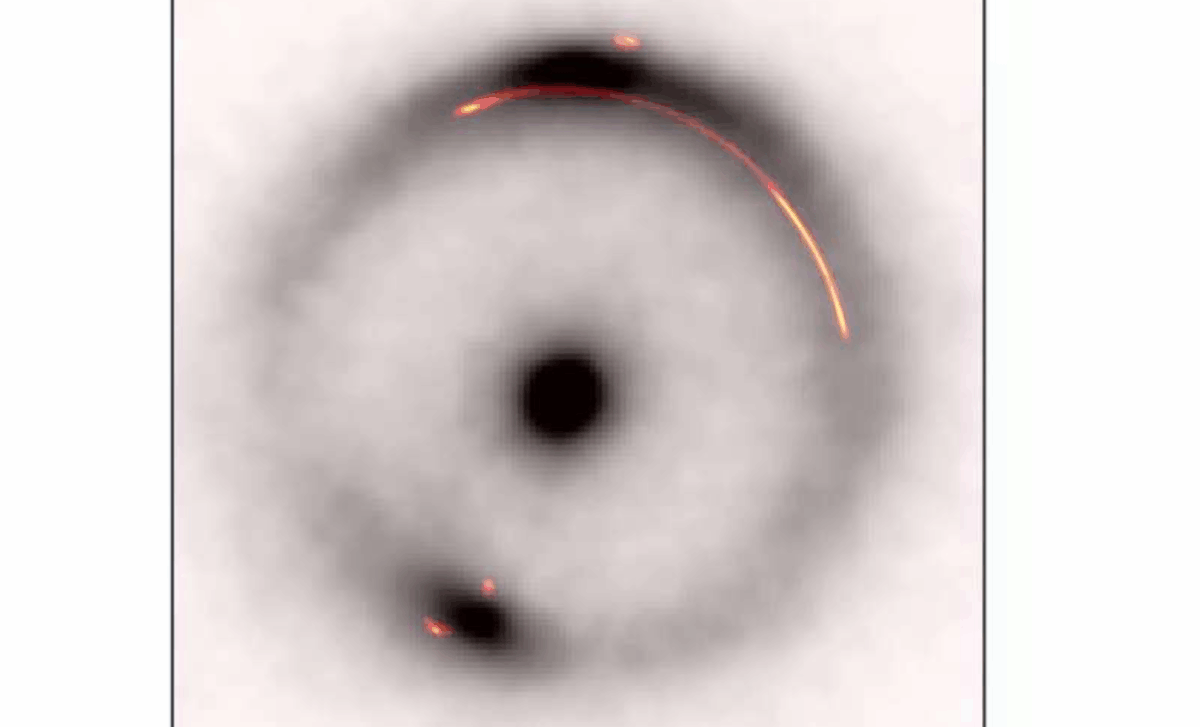
A recent study published in Nature Astronomy reveals astronomers have discovered the smallest dark matter structure ever observed using gravitational lensing. This important finding advances our understanding of dark matter’s clustering properties and its influence on the growth of galaxies. The discovery was made possible through the coordinated efforts of several international telescopes, marking a milestone in dark matter exploration.
The Complex Quest to Detect Elusive Dark Matter
Dark matter, comprising a large portion of the cosmos’s mass, remains an enigma because it doesn’t interact with electromagnetic radiation. This makes it invisible to even our most advanced telescopes. Instead, scientists rely on tracing its gravitational effects on visible objects. Using the gravitational lensing technique, the research team identified a dark matter object with about one million times the mass of our Sun. This object lies roughly 10 billion light-years away, from a universe aged approximately 6.5 billion years.
“Hunting for dark objects that do not seem to emit any light is clearly challenging,” said Devon Powell, the lead author of the study from the Max Planck Institute for Astrophysics. He explained that, “Since we can’t see them directly, we instead use very distant galaxies as a backlight to look for their gravitational imprints.”
Add Cosmo Herald as a Preferred Source

This technique leverages the gravity of dark matter objects to bend the light from far-off galaxies, creating distorted patterns that can be analyzed for clues.
Gravitational Lens Effects Reveal the Invisible
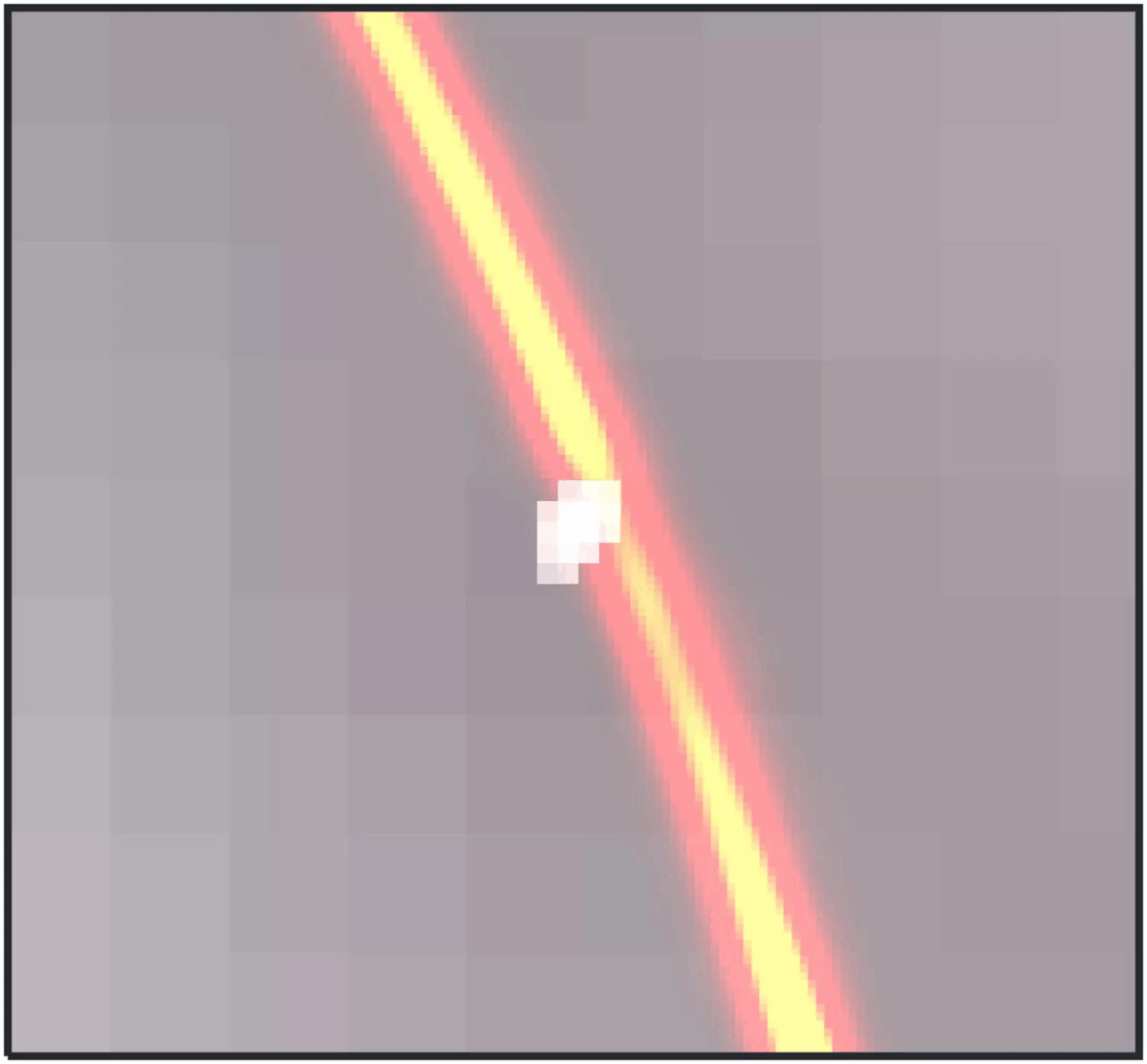
Gravitational lensing occurs when the gravitational field of a matter concentration deflects light from more distant sources. This cosmic magnifying effect acts as a lens, enabling scientists to detect dark matter by observing the warped images behind it. Analyzing these distortions provides valuable information about the unseen object’s characteristics, such as its mass and shape.
For this discovery, a global array of radio telescopes, including the Green Bank Telescope, the Very Long Baseline Array, and the European Very Long Baseline Interferometric Network, was utilized to capture the subtle lensing signals. Combining these datasets allowed the team to produce a finely detailed image that exposed the gravitational footprint of the dark object and measure its mass—the smallest measured so far using this approach.
“We expect every galaxy, including our own Milky Way, to be filled with dark matter clumps, but finding them and convincing the community that they exist requires a great deal of number-crunching,” said Simona Vegetti, a co-author of the study from the Max Planck Institute for Astrophysics.
This immense computational effort is crucial for processing and modeling complex gravitational signals, demonstrating the challenges faced in probing dark matter.
Opening New Frontiers in Dark Matter Studies
Unearthing such a low-mass dark matter clump represents a major advance in our efforts to decode dark matter’s nature. Powell emphasized, “Given the sensitivity of our data, we were expecting to find at least one dark object, so our discovery is consistent with the so-called ‘cold dark matter theory’ on which much of our understanding of how galaxies form is based.” This theory suggests that dark matter is made up of slowly moving particles that influence galaxy formation through gravitational interactions.
This finding not only reinforces the cold dark matter theory but also prompts further investigation into the abundance and distribution of such low-mass dark matter objects. If these clumps are more widespread than previously believed, they could significantly impact galaxy evolution. Moving forward, Powell and his colleagues aim to detect additional dark matter objects to verify whether their observed numbers align with theoretical expectations.
- Categories:
- News










0 comments
Sign in to Comment