
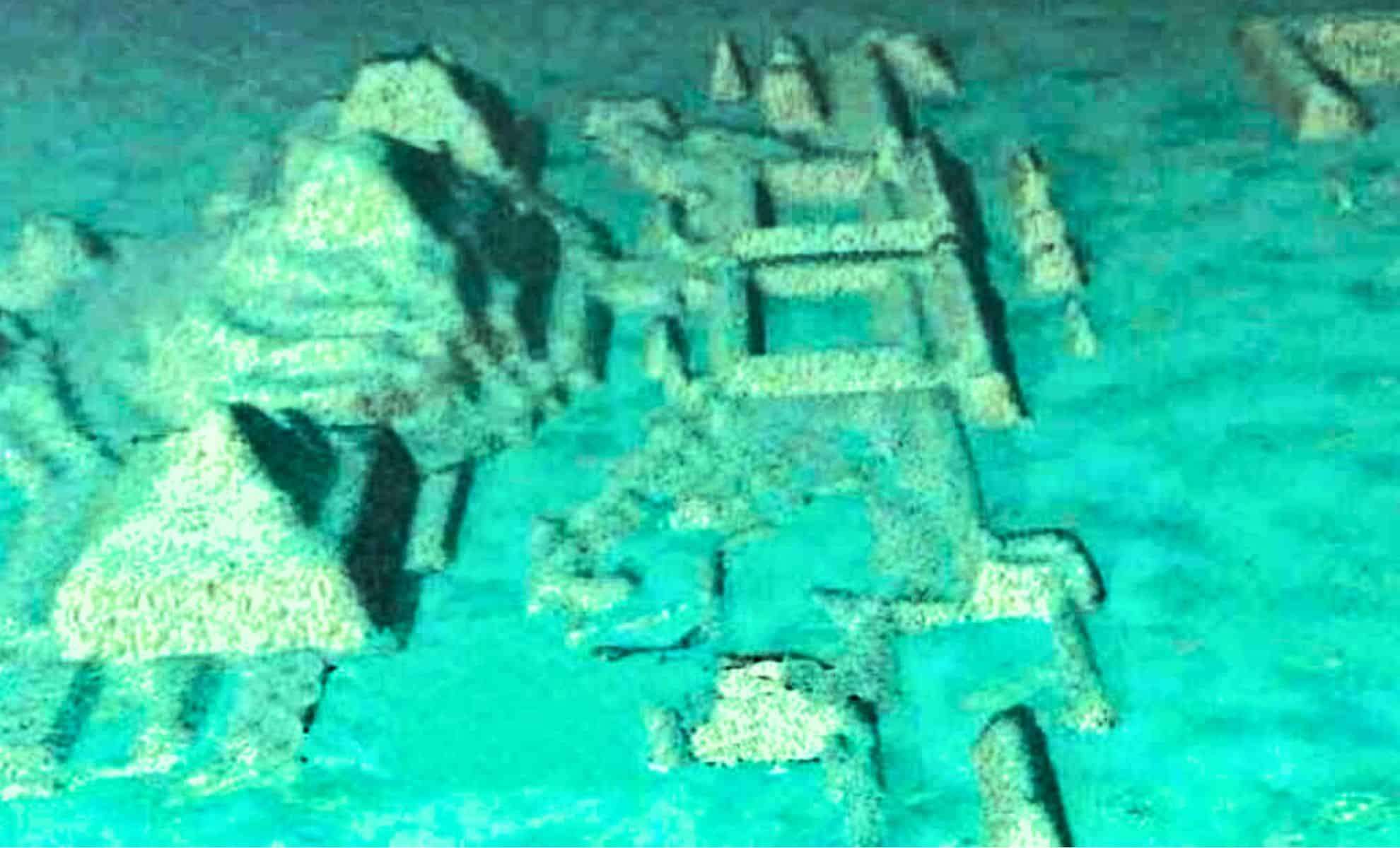
Over twenty years after their initial discovery, enigmatic underwater formations off Cuba’s coast are once again stirring scientific curiosity and sparking debates about their origin and significance.
Found in 2001 by Canadian firm Advanced Digital Communications (ADC), these structures rest approximately 650 meters beneath the waves near Cuba’s Guanahacabibes Peninsula. Early sonar imaging revealed shapes that suggested large, ordered patterns reminiscent of city grids or architectural designs.
Although the discovery captured widespread attention, progress stalled and investigations diminished, causing the site to drop out of mainstream scientific focus. Renewed technological advancements in ocean exploration have now brought the so-called “Cuban underwater city” back into scientific discussion — its mysterious nature still fueling debate.

Unusually Precise Formations Spark Questions About Their Origin
Sonar scans from the initial expedition indicated sizable geometric shapes laid out in a way that resembled urban street plans. Intrigued by this organized pattern, ADC deployed a remotely operated vehicle (ROV), which captured low-resolution footage showing what appeared to be smooth, granite-like blocks scattered on the seafloor. Investigators referred to this alignment as a possible “urban blueprint,” igniting excitement about its potential implications.
“If it turns out to be man-made, it could be older than 6,000 years — that’s well before the Pyramids of Giza,” the team told the BBC in 2001, cautioning that no solid conclusions could be drawn without more evidence.
However, the depth where these formations are found presents a conundrum. According to Manuel Iturralde, then a lead geologist at the Natural History Museum of Cuba, structures at this depth would need to date back at least 50,000 years, predating any known human civilization by tens of millennia.
In a conversation with National Geographic, Iturralde described the formations as “highly unusual,” but suggested that geological forces like erosion or tectonic shifts could be responsible for creating these shapes.
“Nature can do some pretty strange things,” he said, reminding readers that symmetry does not always equal civilisation.
Limited Research Spurs Rumors and Speculation
Following the initial excitement, scientific engagement with the site faded after the early 2000s. The absence of peer-reviewed publications confirming human origin and lack of large expeditions beyond 2005 have left many questions unsolved. Importantly, no physical samples—such as rock specimens or sediment cores—have been collected for rigorous study.
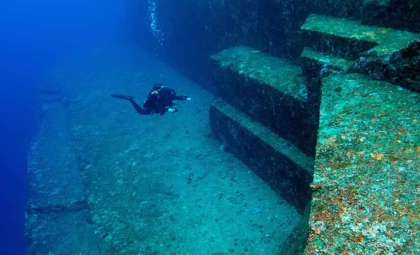
This gap has allowed speculation to flourish. The site is sometimes linked by fringe enthusiasts to the legendary Atlantis, the mythical submerged city from Plato’s writings. Others compare it to the Yonaguni Monument near Japan, another underwater structure whose origins remain debated.
Although mainstream science has yet to validate these theories, public fascination persists. Google Trends data reveal recurring spikes in searches for terms like “Cuba underwater ruins”, “Atlantis found”, and “ancient city beneath ocean”, often fueled by viral clips or re-uploaded documentaries. Renewed interest has been driven in part by a resurfaced BBC archive report and YouTube videos from creators such as Ancient Architects.
Cutting-Edge Sonar Technology Could Clarify the Mystery
The field of ocean mapping has drastically advanced since the early 21st century. Modern equipment like multibeam sonar, photogrammetry, and autonomous underwater vehicles (AUVs) allow scientists to generate high-resolution, three-dimensional representations of the seafloor—even at extreme depths.
Organizations including the Schmidt Ocean Institute and NOAA have showcased how these technologies uncover shipwrecks and geological formations with remarkable precision. Researchers from the University of Southampton emphasize that more than 80% of the oceans remain largely unmapped, meaning significant underwater anomalies could remain hidden for years to come.
- Categories:
- News








0 comments
Sign in to Comment