

A novel exoplanet, designated TOI-4507 b, resides approximately 578 light-years from Earth, orbiting a notably young star aged around 700 million years. Despite its vast diameter, this planet possesses less than one-tenth the mass of Jupiter, categorizing it among a rare group of celestial objects known as super-puffs. These findings are detailed in a preprint submitted to arXiv, where the research team shares their observational data and interpretations.
The planet’s peculiar traits—including its remarkably expanded atmosphere and an orbit that’s highly inclined—are challenging existing theories about planetary formation. Utilizing data gathered from NASA’s Transiting Exoplanet Survey Satellite (TESS) alongside observations from the ASTEP telescope based in Antarctica, researchers confirmed the extraordinary dimensions and unusual orbit of TOI-4507 b. Their discoveries highlight a case not previously well-documented in exoplanet studies.
A Planet Larger Than Expected But Surprisingly Light
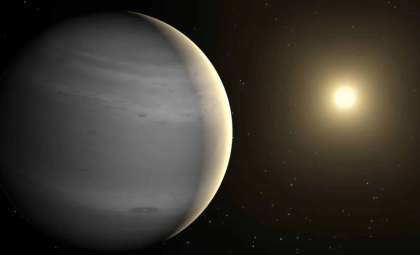
TOI-4507 b boasts a diameter roughly nine times that of Earth, yet its mass is only about 30 times Earth’s. This combination results in a planet similar in size to Jupiter but significantly less massive. According to Space.com, this places TOI-4507 b among the sparsest planets ever discovered. Its extreme low density is characteristic of super-puffs, exoplanets with exceptionally swollen, airy atmospheres.

Typically, planets like this swell due to tidal heating, where the gravitational forces from an elliptical orbit cause internal flexing and heat generation, inflating the atmosphere. However, the preprint explains that TOI-4507 b’s orbit is too distant from its star for tidal heating to play a major role.
An Unusual Tilted Orbit Around a Youthful Star
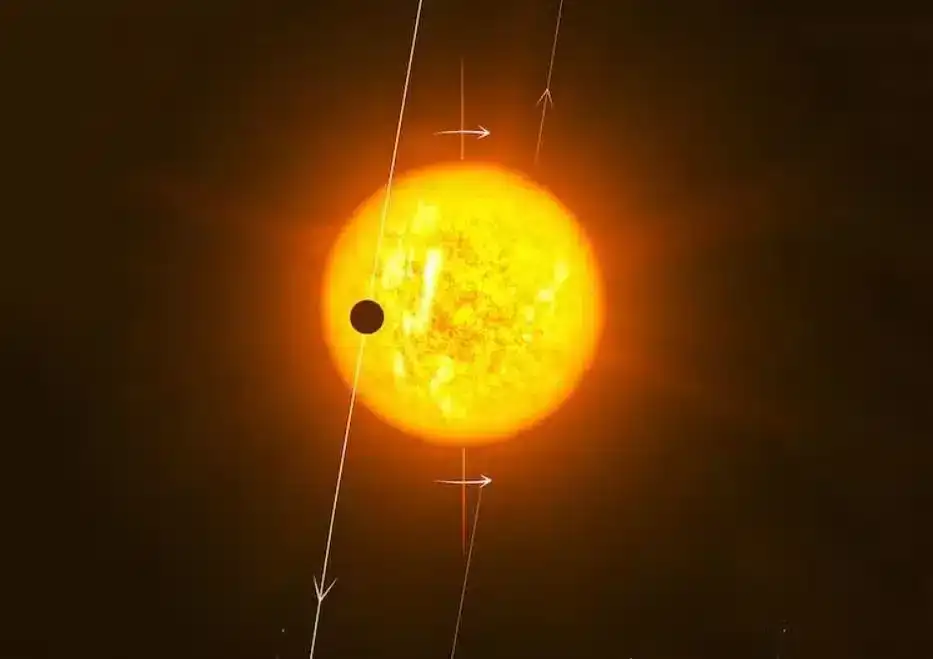
Beyond its physical oddities, TOI-4507 b’s orbit is strikingly atypical. Rather than circling in alignment with the star’s equator, the planet follows a nearly polar trajectory, orbiting nearly perpendicular to the star’s rotational axis. Such an extreme tilt often indicates past disruptions within the system.
This inclination might stem from a dramatic early event that disturbed the protoplanetary disk or could result from gradual gravitational effects caused by another, more distant planet. Regardless of the cause, this orbital configuration is uncommon, especially for a star as young as the host of TOI-4507 b.
No Rings or Heat as an Explanation—Only Enigma
Some initial hypotheses proposed that TOI-4507 b might appear larger because of surrounding rings, akin to those of Saturn, which can skew transit measurements by partly blocking starlight. However, such speculation has been ruled out, since Space.com explains that given the planet’s high temperature, rings would not remain stable over time, implying the planet’s bloated size truly represents its atmosphere’s breadth.
Due to these unusual characteristics, TOI-4507 b is an excellent subject for subsequent investigations. Its bright host star and diffuse atmospheric envelope make it well suited for study with the James Webb Space Telescope (JWST). Researchers anticipate that JWST’s advanced capabilities will yield insights into the planet’s atmospheric makeup and shed light on the origins of such an enigmatic exoplanet.
- Categories:
- News








0 comments
Sign in to Comment