
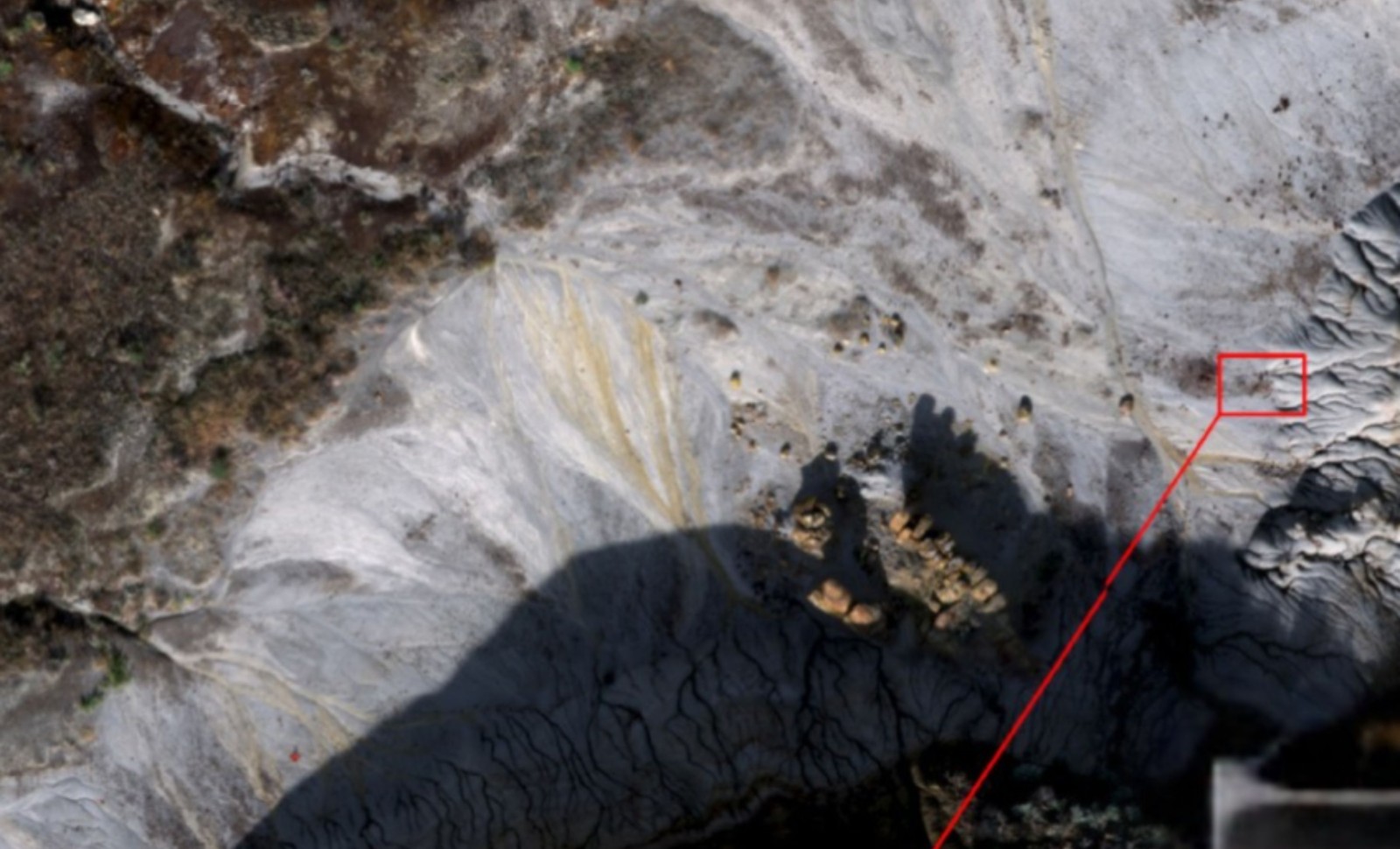
Scientists in Canada are employing innovative drone technology combined with lichen detection to uncover dinosaur fossils, a strategy recently presented in a study published in Current Biology. The team found that specific lichens frequently inhabit exposed dinosaur bones, enabling researchers to pinpoint fossil sites from the air.
This novel approach uses drones outfitted with advanced sensors to identify lichen presence, proving especially useful in the challenging landscapes of Alberta’s Dinosaur Provincial Park. Although the association between lichens and fossilized bones has been observed previously, this study quantifies the phenomenon, significantly enhancing the efficiency of fossil discovery.
Revolutionizing Fossil Exploration
Dr. Caleb Brown of the Royal Tyrrell Museum of Palaeontology notes that when surveying extensive bonebeds, the initial visible indicators are often the vivid orange lichens spread across the bones. Dr. Brian Pickles from the University of Reading suggests this technique could “transform paleontology’s approach to fossil hunting.”

“It’s remarkable to consider that these lichens, essentially miniature ecosystems, are founded upon the remains of dinosaurs that died over 75 million years ago,” he added.
This cutting-edge method changes the paradigm of paleontological fieldwork. Instead of enduring exhausting treks through rugged environment in search of fossils, drones provide an aerial vantage point to survey expansive regions quickly and identify fossil-rich zones. Traditional fossil hunting is labor-intensive and often yields limited results.
Unmanned aerial vehicles can access otherwise unreachable areas, scanning vast landscapes in minimal time. Equipped with specialized imaging tools, drones capture high-definition visuals that reveal distinct lichen patterns signaling fossil sites.
Lichens as Fossil Indicators
Lichens, symbiotic organisms formed by fungi and algae, thrive in diverse environments. Remarkably, certain types appear to preferentially colonize dinosaur bones. The study, published November 3, 2025, revealed that Rusavskia elegans and Xanthomendoza trachyphylla covered nearly half of visible dinosaur bones in the bonebeds while occurring on less than 1% of surrounding geological surfaces.
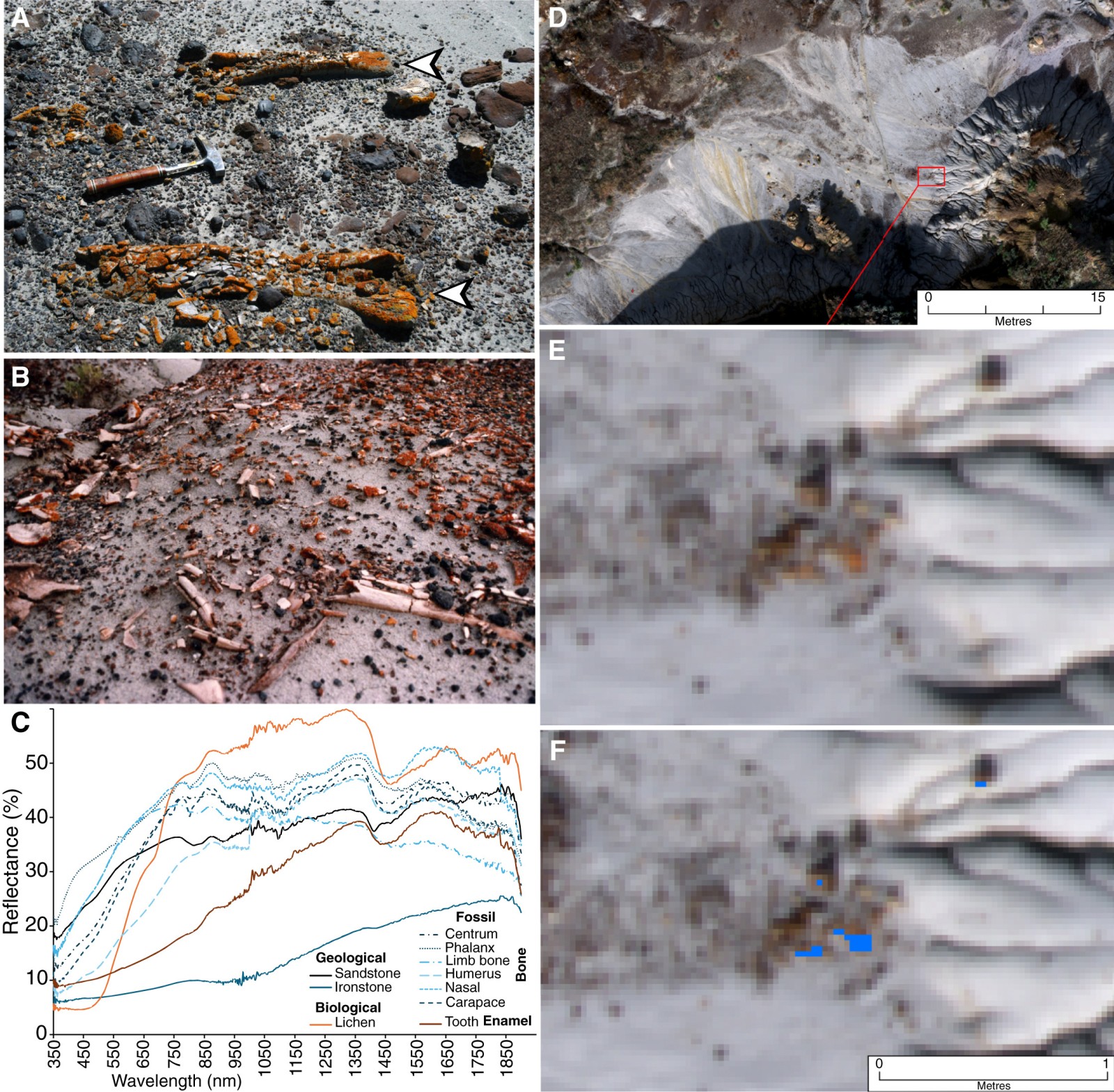
Researchers propose that the alkaline and porous nature of the fossilized bones offers ideal conditions for these lichens to thrive, which explains their affinity for such remains. Although this connection has been observed for decades, this is the first scientific effort to measure it comprehensively.
Dr. Brown mentions the lichens act as a “visual cue” for fossil hunters. When viewing large fossil deposits, the striking orange lichens stand out more readily than the bones themselves. These vibrant patches serve as markers indicating the presence of buried dinosaur remains.
Integrating Aviation and Paleontology
Drones enable researchers to rapidly examine extensive areas otherwise difficult or time-prohibitive to explore by foot. The application of UAVs is not restricted to Dinosaur Provincial Park but shows promise for deployment in other fossil-rich dry zones worldwide, particularly where exposed bones encourage lichen growth.
Dr. Derek Peddle from the University of Lethbridge envisions that this aerial mapping method could eventually be expanded to planes or satellite technology, vastly increasing the scope of fossil searches.
“It’s exciting to combine our imaging technology with this international team’s expertise to advance dinosaur discovery through remote sensing of lichen.”
Though still in early development, this drone-and-lichen detection approach holds tremendous potential. The ability to identify fossils remotely via distinctive lichen patterns could streamline fossil hunting, boosting both speed and efficiency while reducing environmental disruption.
- Categories:
- Science






0 comments
Sign in to Comment