
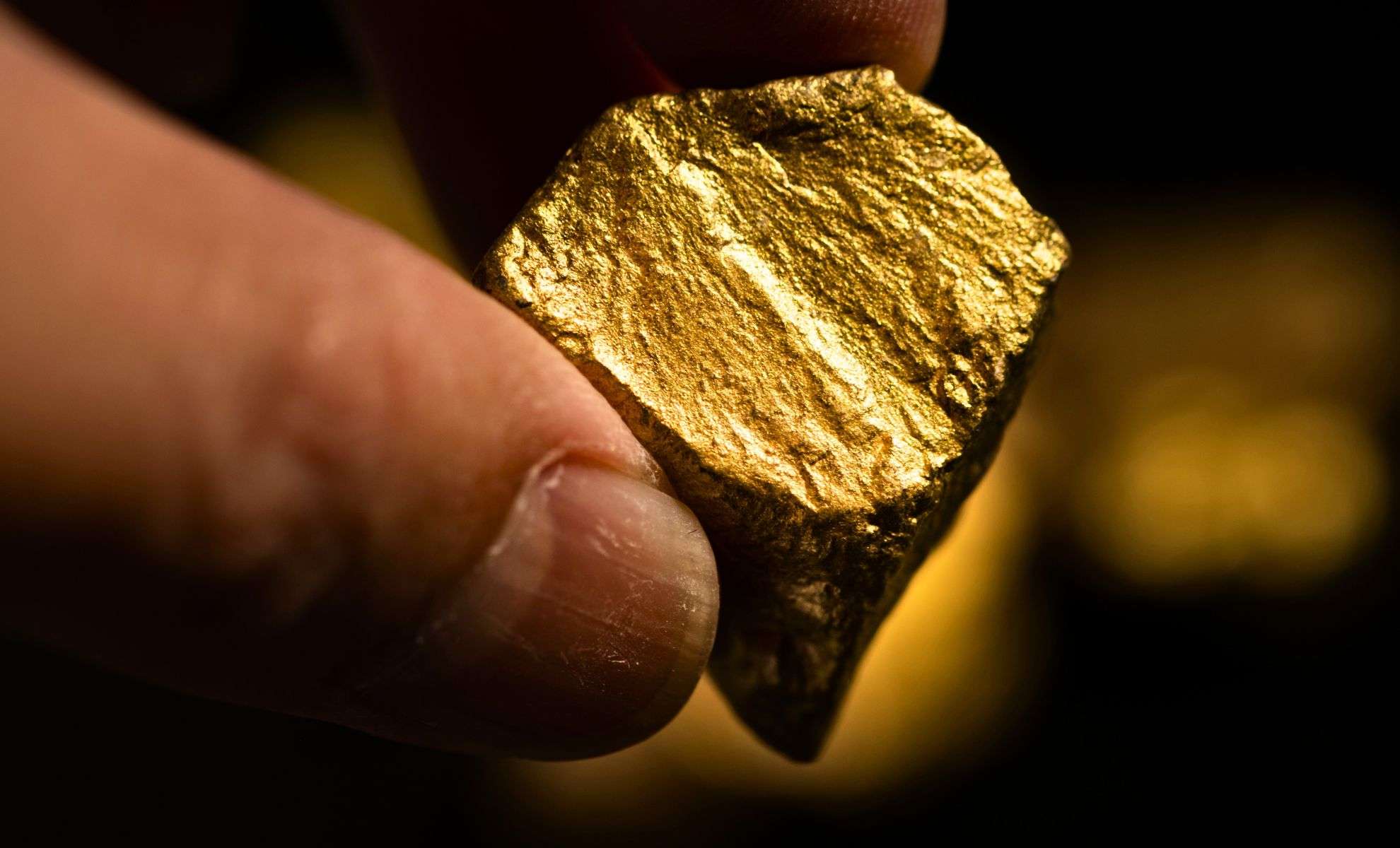
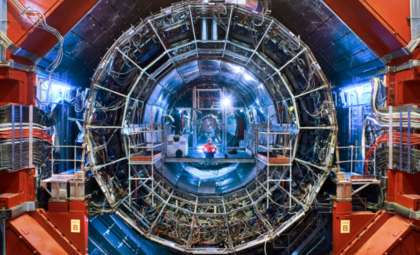
Deep beneath the Swiss-French Alpine region, a centuries-old quest has been momentarily revived. At CERN, the European Organization for Nuclear Research, scientists have successfully converted lead atoms into gold within the confines of the Large Hadron Collider (LHC), the planet’s most formidable particle accelerator.
This groundbreaking result appeared in a peer-reviewed article in Physical Review C and is further detailed in the official CERN announcement. Rather than relying on mystical means, the transformation relies on collisions involving high-energy lead ions racing close to the speed of light.
While the idea evokes alchemy, the real significance lies in probing fundamental forces that shape matter. The ALICE collaboration, one of CERN’s flagship experiments, documented the fleeting formation of genuine gold nuclei (Au) arising from lead nuclei (Pb) interactions—before they disintegrated in under a microsecond.

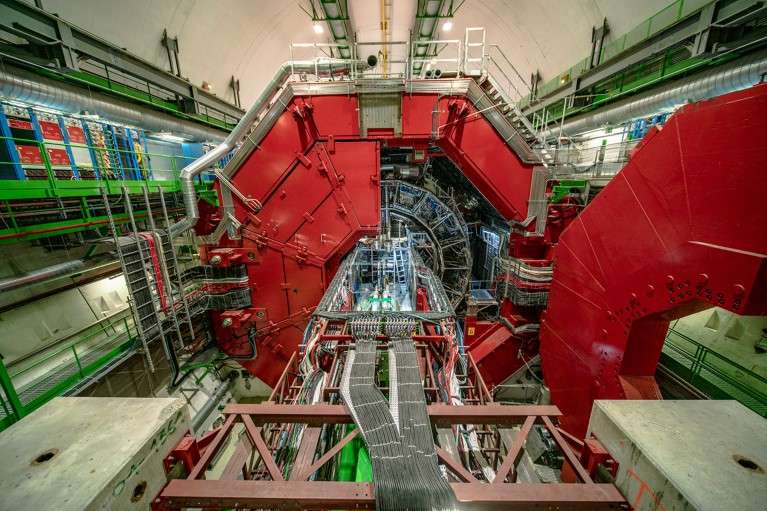
The production, encompassing about 86 billion gold nuclei between 2015 and 2018, has intrigued physicists—not due to monetary worth, amounting to a mere 29 picograms, but because it provides fresh insights into particle behavior under extraordinary conditions.
From Mysticism to Modern Physics
Long before modern science, alchemists sought to transform common metals into gold. Today, such transmutation happens not by magic, but through high-energy physics, where fast-moving ions and intense electromagnetic fields replace the ancient hopes of fire and potions.
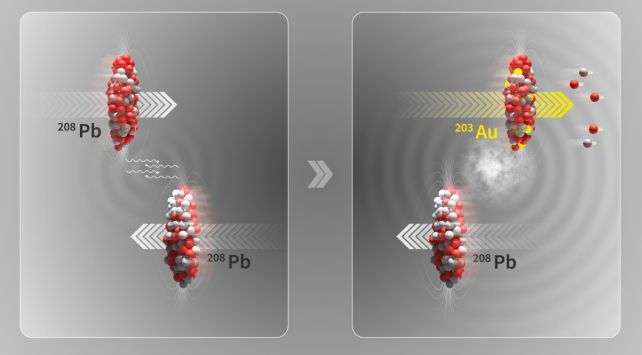
At the LHC, lead nuclei travel near light speed and skim past each other in what’s termed ultra-peripheral collisions. These glancing encounters avoid creating the quark-gluon plasma characteristic of direct impacts; instead, they generate brief but potent electromagnetic fields that emit photon bursts capable of ejecting protons from nuclei.
When a lead nucleus loses three protons, it turns into gold, possessing 79 protons instead of 82. This mechanism—called electromagnetic dissociation—is rare but has been unequivocally observed by the ALICE project.
ALICE physicist Uliana Dmitrieva highlighted this as “the first instance of gold production being experimentally detected and studied at the LHC.”
Insights Gained From the Findings
Though the symbolic nature of turning lead into gold draws attention, the newly formed gold atoms were scant and transient, disappearing in under one microsecond by decaying or colliding with the beam pipe.
CERN’s measurements recorded around 86 billion such gold nuclei throughout three years, but their combined mass was an infinitesimal 29 trillionths of a gram, highlighting how tiny the phenomena truly are.
However, the experiment’s importance goes beyond sheer quantity. It verifies theoretical models concerning photon-nucleus interactions, offering a rare experimental perspective on nuclear responses to intense electromagnetic forces, which is vital for understanding beam loss challenges pivotal to the future of accelerator safety and operational stability.
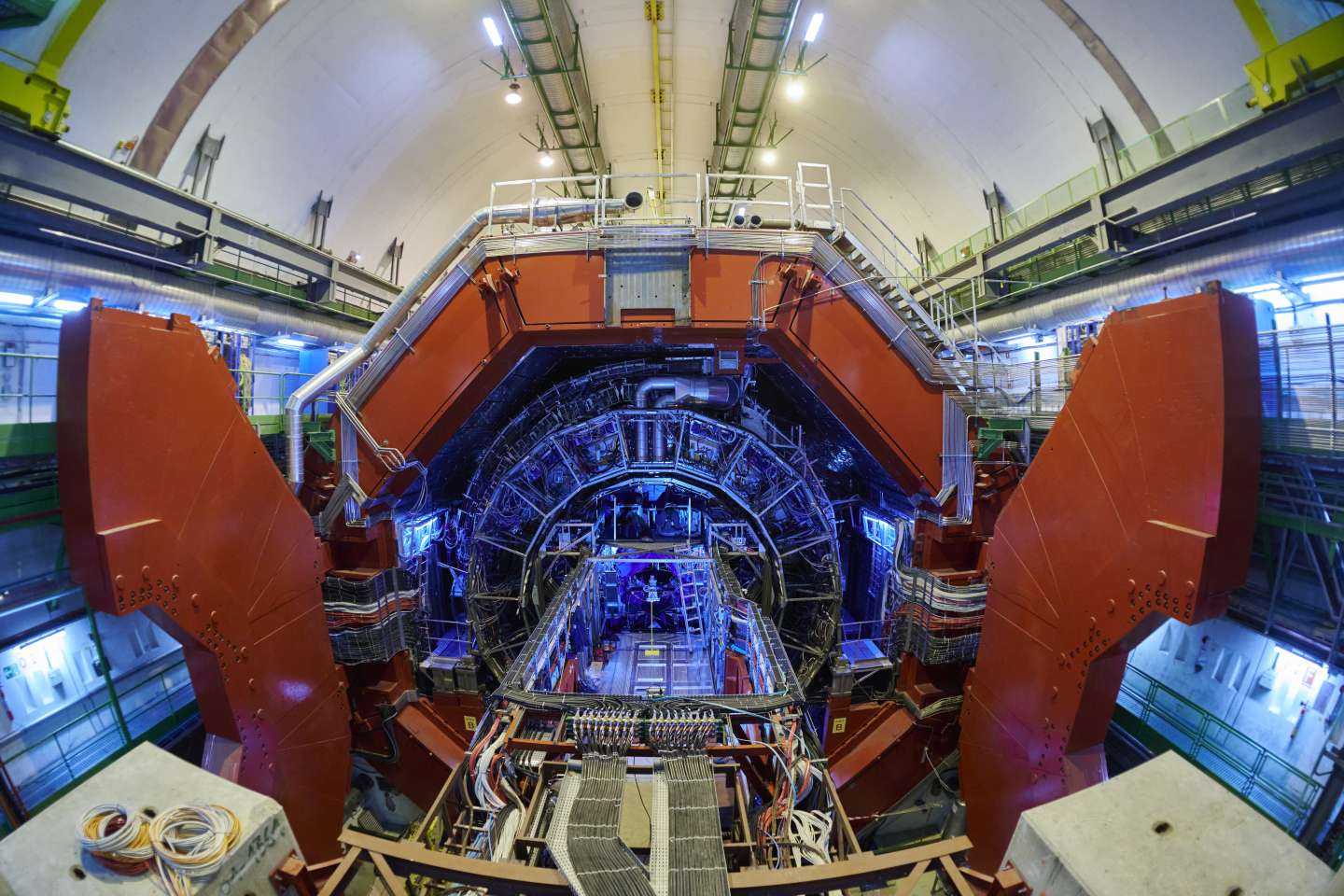
John Jowett, another member of the ALICE team, explained how these observations “allow refinement of theoretical models of electromagnetic dissociation,” which play a key role in predicting particle loss and improving accelerator efficiency.
Exploring Heavier Elements Beyond Gold
Gold was not the sole transmutation outcome. Depending on the number of protons lost, the process can also form thallium (81 protons) or mercury (80 protons), which are created in substantially larger numbers than gold. In fact, gold was among the less common transformation products.
By employing the zero-degree calorimeters (ZDCs) of ALICE, scientists tallied the ejected protons and neutrons to map the nuclear cascade resulting from the collisions. This detailed atomic-scale ‘forensic’ analysis illuminates how heavy nuclei fragment under high-energy conditions.
Moreover, the experiment sheds light on processes that shaped the early universe, as similar energetic events occurred in the first microseconds after the Big Bang. These observations aid in refining models of nuclear physics, matter creation, and the dynamics of ultra-relativistic collisions.



0 comments
Sign in to Comment