
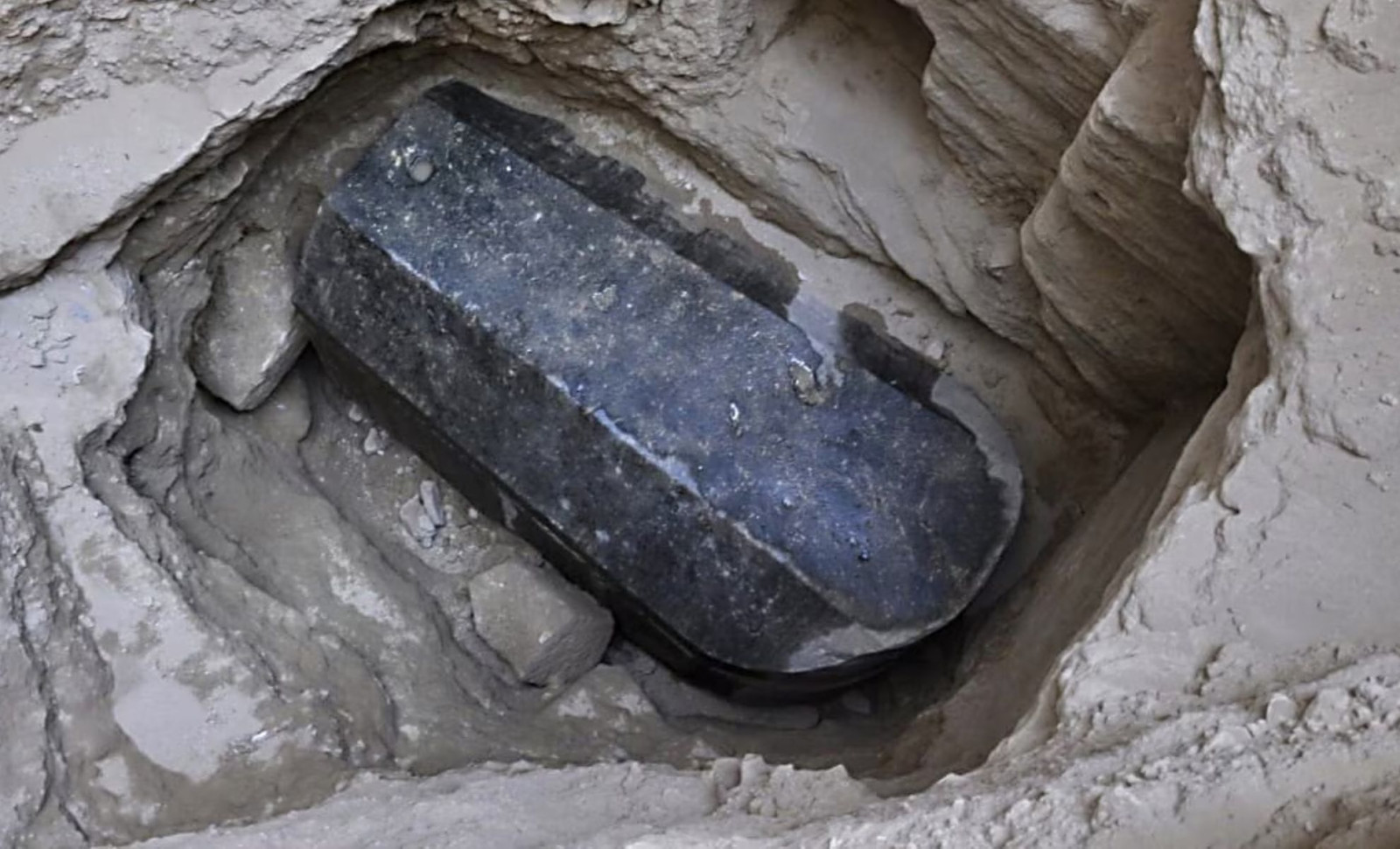
In Alexandria, Egypt, researchers have pried open an enormous black granite sarcophagus, putting to rest weeks of speculation about its contents. Contrary to hopes of uncovering a famous monarch or an ancient curse, the tomb held three skeletons immersed in a malodorous liquid. Experts are now investigating who these individuals were and the circumstances of their deaths.
The immense sarcophagus emerged during building activities in Alexandria, instantly drawing worldwide interest. Its impressive size, remarkably preserved state, and nearly two-thousand-year-old sealed condition sparked significant intrigue among historians and enthusiasts.
Speculation soared following the find. Some suggested it might be the tomb of Alexander the Great, while others feared a legendary “pharaoh’s curse.” Careful archaeological procedures were followed to unveil the truth behind the mysterious sealed coffin.

Unsealing a 27-Tonne Granite Sarcophagus
Measuring close to three meters long and approximately two meters tall, this imposing black granite coffin is one of the largest intact discoveries of its kind. According to BBC News, the sarcophagus weighs nearly 27 tons and likely dates back to the early Ptolemaic era, starting around 323 BC, following Alexander the Great’s demise.
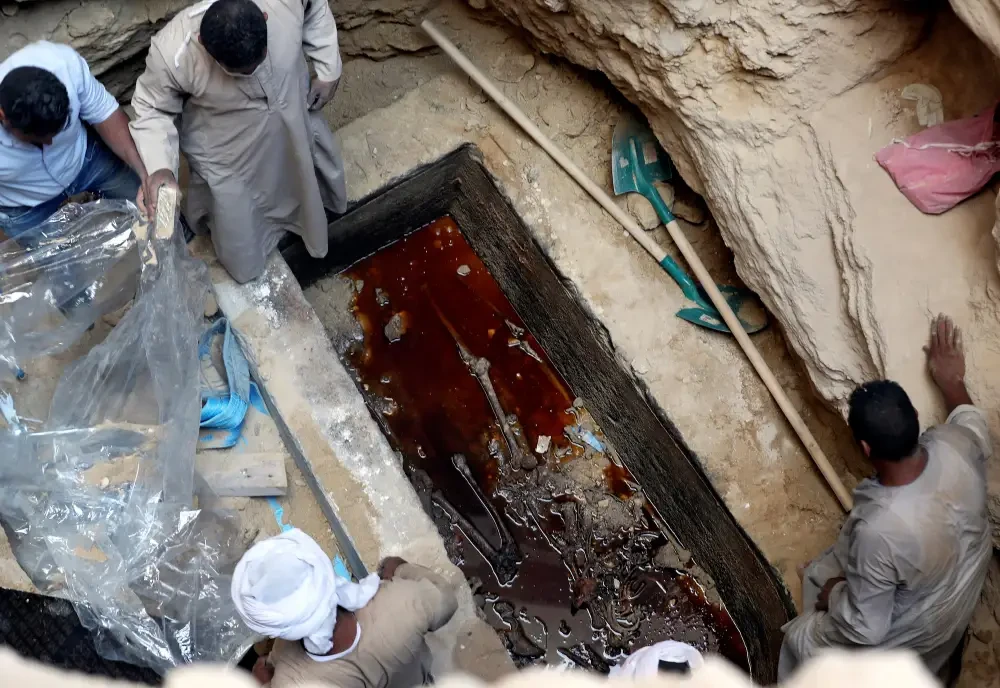
Researchers handled the opening with extreme care. Upon lifting the lid just five centimeters, an overpowering stench compelled the team to retreat momentarily. Eventually, aided by Egyptian military engineers, the sarcophagus was fully opened, permitting detailed examination of its contents.
Skeletons Found Immersed in Polluted Water
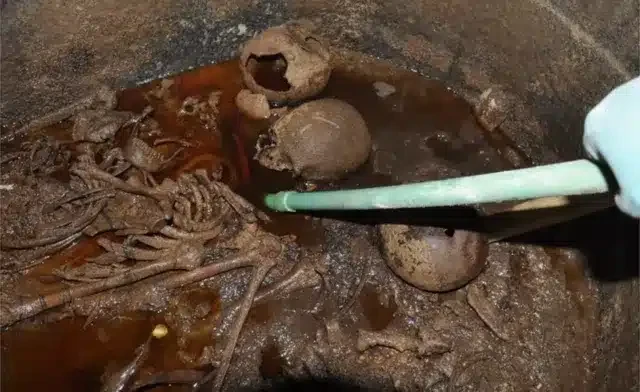
Within the sarcophagus, experts uncovered three skeletal remains submerged in reddish-brown filthy water that gave off an intolerable odor. According to Mostafa Waziri, secretary-general of Egypt’s Supreme Council of Antiquities:
“We found the bones of three people, in what looks like a family burial… Unfortunately the mummies inside were not in the best condition and only the bones remain,” Waziri explained, adding that only skeletal remains were preserved.
Details provided by Waziri reveal one skull bears fractures possibly from an arrow wound, indicating at least one death might have been violent.
Speculation suggests the deceased may have belonged to the ancient Egyptian military, though further study is needed to verify who they were.
Mythical Mummy Curse Dispelled
This finding also rekindled popular myths surrounding a mummy’s curse—the belief that disturbing ancient burial sites causes bad luck or illness. The overpowering stench released during the initial opening further fueled such discussions.
Officials quickly dismissed these concerns. As mentioned by BBC News, Waziri humorously confronted the rumors, noting confidently that no misfortune befell him after opening the sarcophagus.
“I was the first to put my whole head inside the sarcophagus… and here I stand before you … I am fine.”
A National Geographic report confirmed there are no verified reports of archaeologists or visitors falling seriously ill due to mold or bacteria found in ancient tombs.
Scientists hope that the skeletal remains and associated objects, such as an alabaster bust found close to the burial site, will provide insight into the identities and stories of the individuals placed in this colossal stone tomb.
- Categories:
- News





0 comments
Sign in to Comment