

Researchers have successfully generated plasma fireballs in a controlled laboratory environment for the first time ever. This breakthrough experiment offers fresh insights into why certain gamma-ray signals from distant galaxies remain elusive. The discovery highlights a subtle yet vital aspect of the vast intergalactic medium.
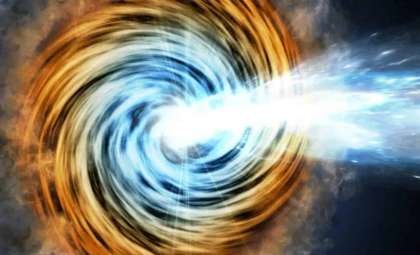
Blazars, which are galaxies energized by enormous black holes at their cores, release jets of particles moving at nearly light speed aimed toward our planet. These jets emit powerful gamma rays that provide astronomers with valuable data on black hole behavior.
In theory, these gamma rays should interact with the pervasive cosmic microwave background, scattering and producing lower-energy gamma rays along the way. However, despite years of observation, these softer gamma rays have never been observed.

Unraveling the Puzzle of Absent Gamma Rays
The missing lower-energy gamma rays from blazars’ emissions have long puzzled astrophysicists. As detailed by IFLScience, the high-energy gamma photons colliding with intergalactic starlight are expected to produce pairs of particles and antiparticles. These pairs should then trigger gamma rays at lower energies through their interactions with the cosmic microwave background, but these signals fail to appear in observations.
Multiple hypotheses have been proposed. One increasingly supported idea posits that faint magnetic fields scattered throughout intergalactic space, remnants from the early universe, divert these lower-energy gamma rays away from our detection instruments.
While this concept has been around for some time, concrete proof has been lacking. Another suggestion involves plasma instabilities that cause blazar jets to lose energy during their cosmic journey. However, as noted by Phys.org, previous laboratory efforts could not adequately recreate the extreme astrophysical environments necessary to test this theory—until now.
Investigating Plasma Fireballs in the Lab
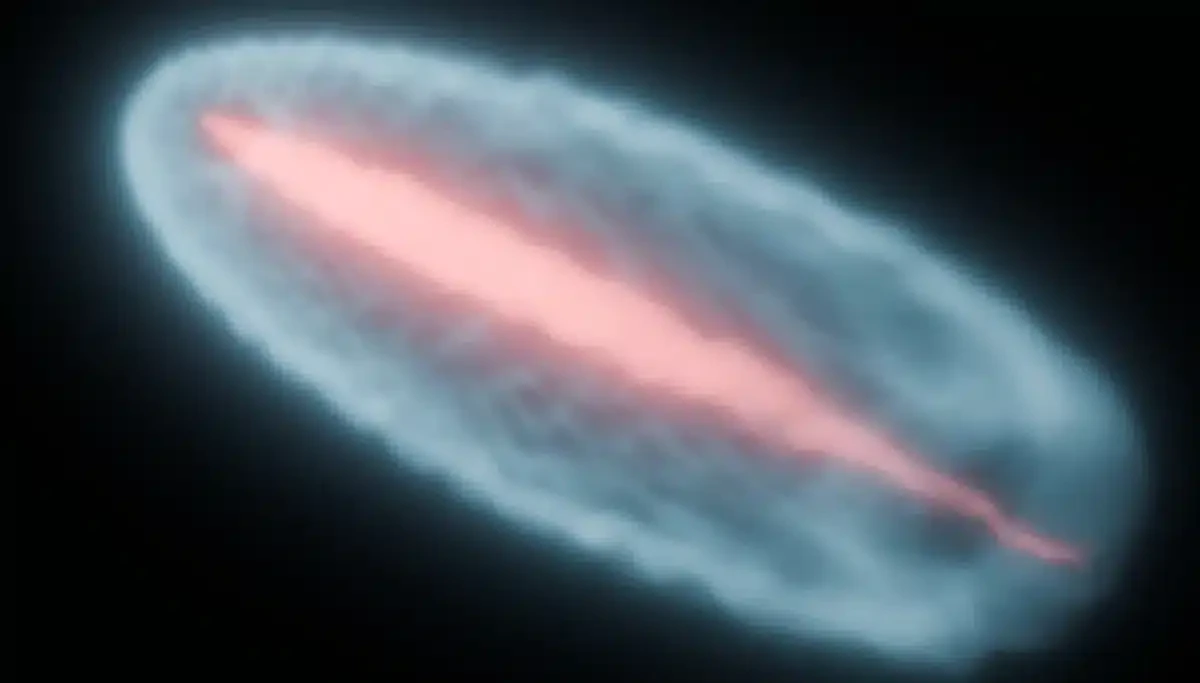
Groundbreaking experiments at CERN, recently shared on arXiv, represent a major advance. Utilizing the HiRadMat facility and the Super Proton Synchrotron, scientists created streams of electron-positron pairs channeled through a meter-long plasma region.
This setup mirrored a miniature version of a particle cascade originating from blazar jets passing through intergalactic space. Surprisingly, the particle beams stayed tightly collimated and showed minimal disturbances, indicating that beam instabilities may not explain the missing gamma rays.
Lead investigator Professor Gianluca Gregori from the University of Oxford highlighted that the findings suggest faint magnetic fields between galaxies—possibly relics of the universe’s infancy—are likely deflecting the lower-energy gamma rays, rendering them undetectable from Earth.
Professor Subir Sarkar, also from Oxford, emphasized the impact of this novel experiment:
“It was a lot of fun to be part of an innovative experiment like this that adds a novel dimension to the frontier research being done at CERN – hopefully our striking result will arouse interest in the plasma (astro)physics community to the possibilities for probing fundamental cosmic questions in a terrestrial high energy physics laboratory.”
- Categories:
- News






0 comments
Sign in to Comment