
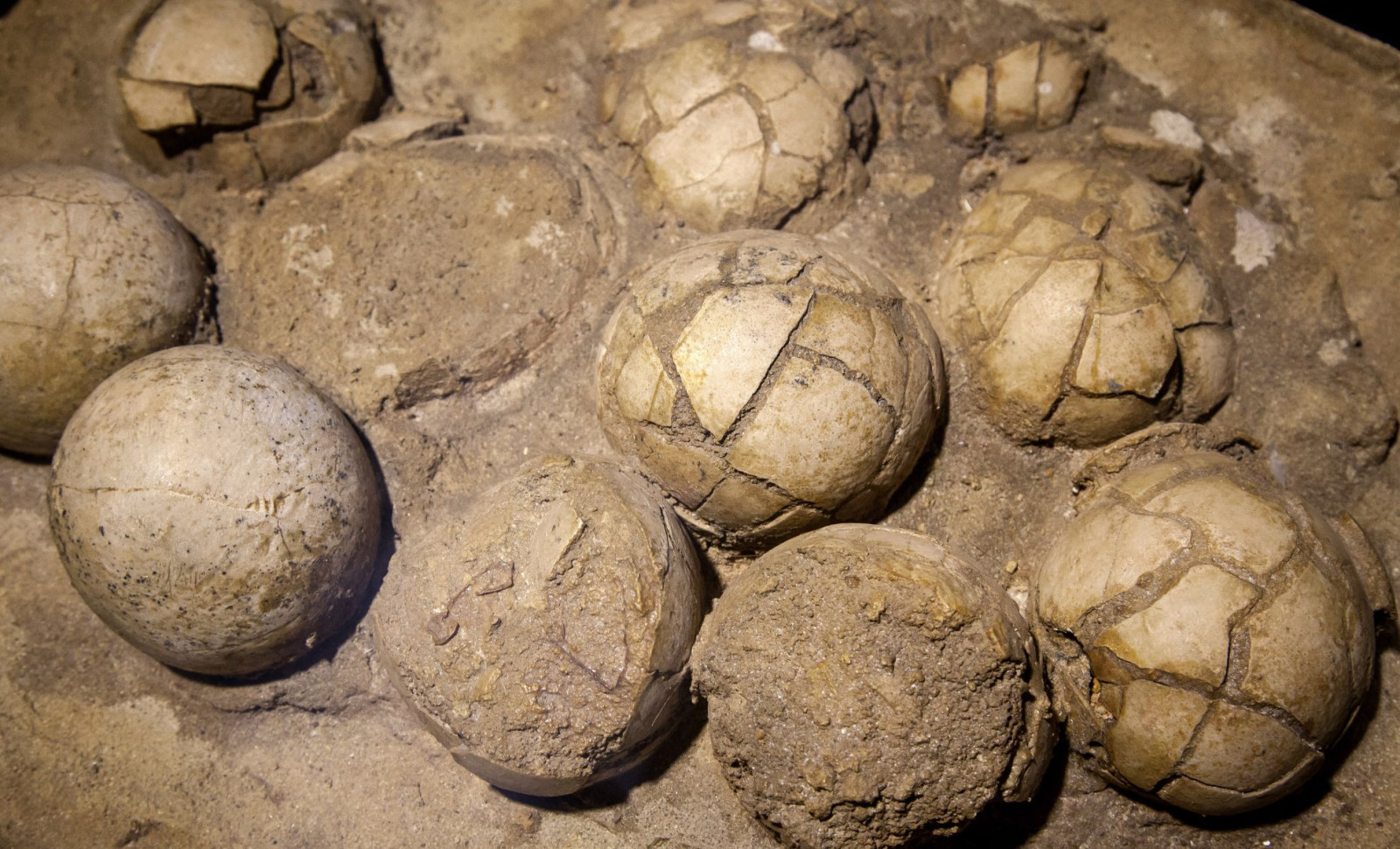
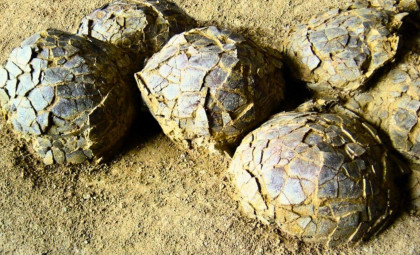
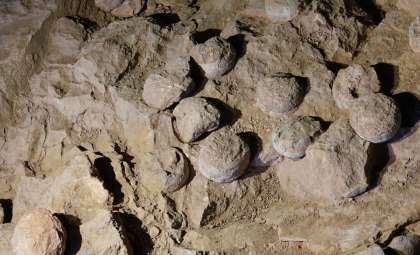
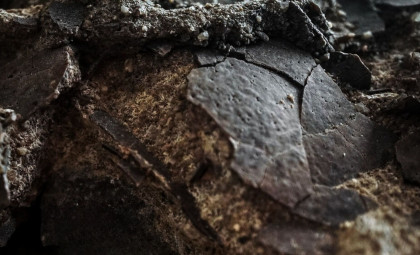
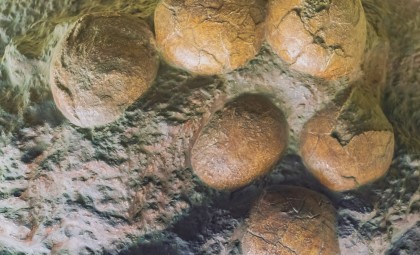
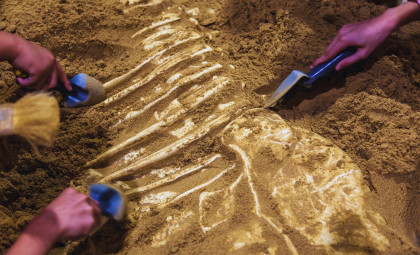
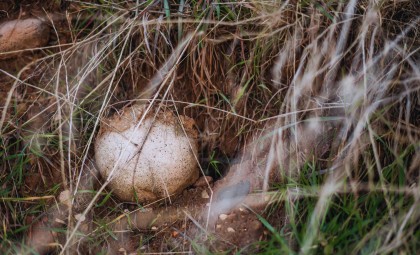
Central India has unveiled an extraordinary fossil site featuring 92 dinosaur nests and a total of 256 eggs, ranking it among the largest dinosaur hatcheries known. These fossils date to the Late Cretaceous period and are associated with titanosaurs, the massive long-necked herbivores that once dominated the region.
A study featured in PLOS ONE reveals that the vast number of nests implies this location served as a significant breeding ground, possibly shared by multiple titanosaur species simultaneously. Investigations conducted between 2017 and 2020 uncovered six distinct egg types, indicating several species might have repeatedly returned here to lay eggs—a behavior still not fully understood in dinosaur reproductive strategies.
An Abundant Nesting Habitat Filled With Giant Eggs
The sheer quantity is remarkable: 92 nests housing 256 eggs. As highlighted by CNN, paleobiologist Darla Zelenitsky noted that the area would have been densely crowded with nests, likely presenting a bustling and possibly chaotic environment during the Cretaceous. With nests in such close proximity, it raises questions about how these enormous creatures navigated the area without damaging their eggs.

This evidence suggests the site was revisited over time, although it remains uncertain if all nests were in use simultaneously or constructed over an extended period.
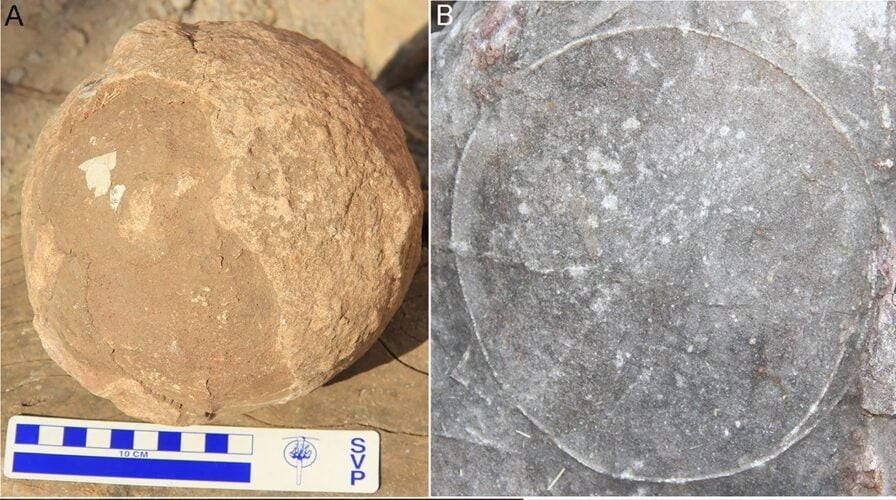
The identification of six unique egg varieties adds complexity, implying that multiple species chose the same nesting grounds—an uncommon insight in the fossil record.
“Dinosaur eggs aren’t very common in the fossil record, and this may be because of how they evolved. A recent paper suggested that some ornithischians, a group of dinosaurs containing ankylosaurs, stegosaurs and Triceratops, may have had soft shelled eggs,” noted paleontologist Susannah Maidment.
Minimal Parental Care After Egg-Laying
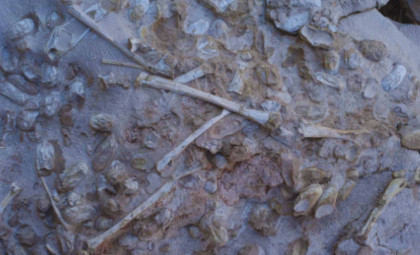
Notably absent from the fossils are any remains of adults or hatchlings. A report from the Natural History Museum in London highlights that Maidment believes titanosaurs likely abandoned their eggs soon after laying them.
“While there are fossils of some dinosaurs, such as the meat-eating theropods, where parents are preserved sitting on a nest, there is no evidence of that kind of behaviour in the sauropods. It looks like sauropods laid their eggs and then left their offspring to fend for themselves.”
The eggs were probably deposited in shallow pits and then covered with layers of sand or sediment. Natural incubation likely resulted from warmth provided by sunlight and the ground, a reproductive approach also observed in some reptiles today. According to Guntupalli Prasad of the University of Delhi, this zone may have served strictly for egg-laying rather than as a habitat.
“From a theoretical point of view, it could be possible that this area was only for nesting and not for habitation purposes,” Prasad explained in an email to Gizmodo. “From a taphonomic (preservation) point of view the bones could not get preserved, or are deeply buried or still unexposed and yet to be discovered.”
A Unique Egg Links Dinosaurs to Birds
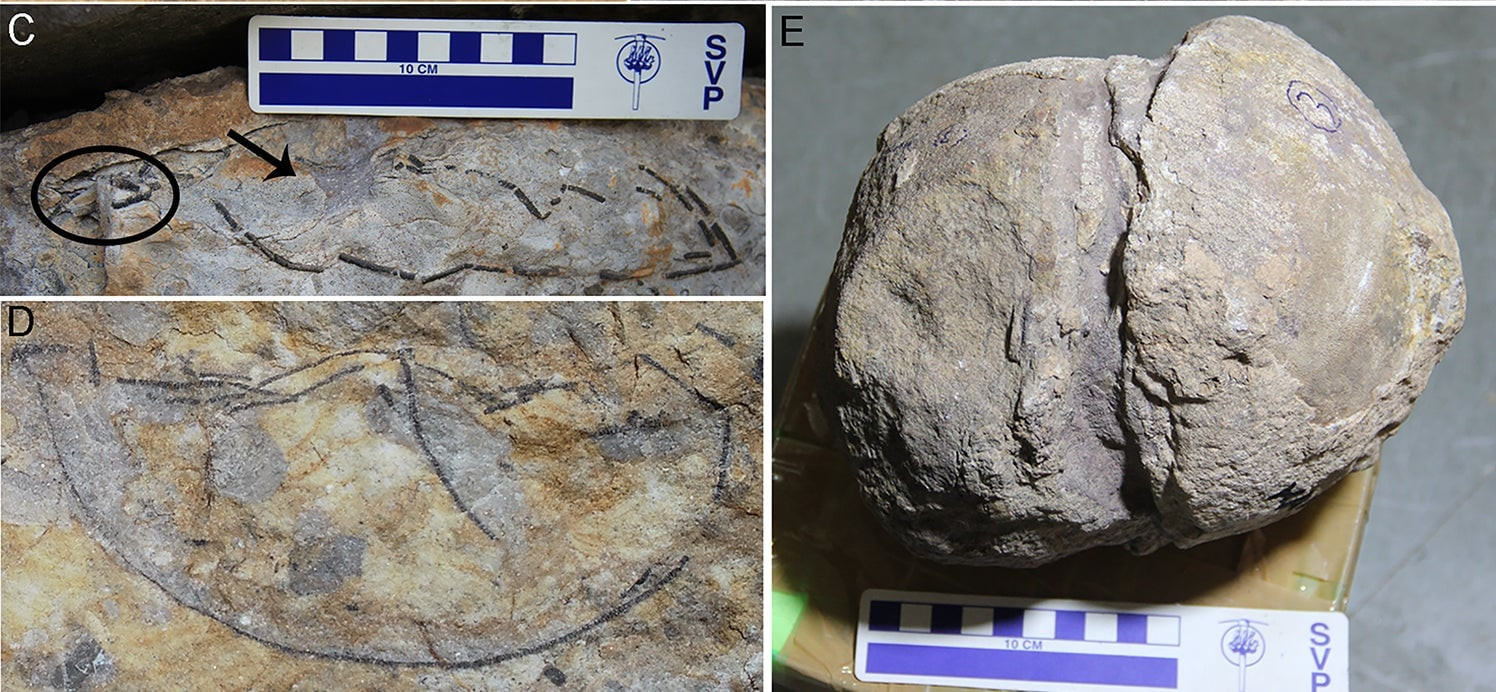
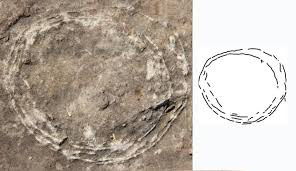
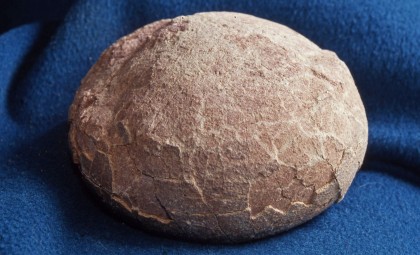
One particularly remarkable find was an egg contained within another egg, known as ovum-in-ovo, a condition previously seen in modern birds but never documented in dinosaurs before.
According to PLOS ONE, this discovery suggests that titanosaurs might have possessed a reproductive system similar to birds, laying eggs in a sequential manner rather than all at once like crocodiles. Though a subtle difference, it significantly impacts current perspectives on dinosaur reproduction.
“We think that sauropods like the titanosaurs lived in herds because of their preserved footprints and trackways, and it seems that they also nested together as well, like some birds,” added Maidment. “Their strategy of laying a lot of eggs packed densely together is not one commonly associated with parental care.”
Yet, characteristics such as irregular egg spacing and the probable marshy environment align more closely with crocodile nesting behaviors, placing titanosaurs somewhere between these modern reproductive strategies. Dr. Zelenitsky emphasizes that findings of this magnitude continue to surprise and transform scientific understanding of dinosaurs.
- Categories:
- Science


0 comments
Sign in to Comment