
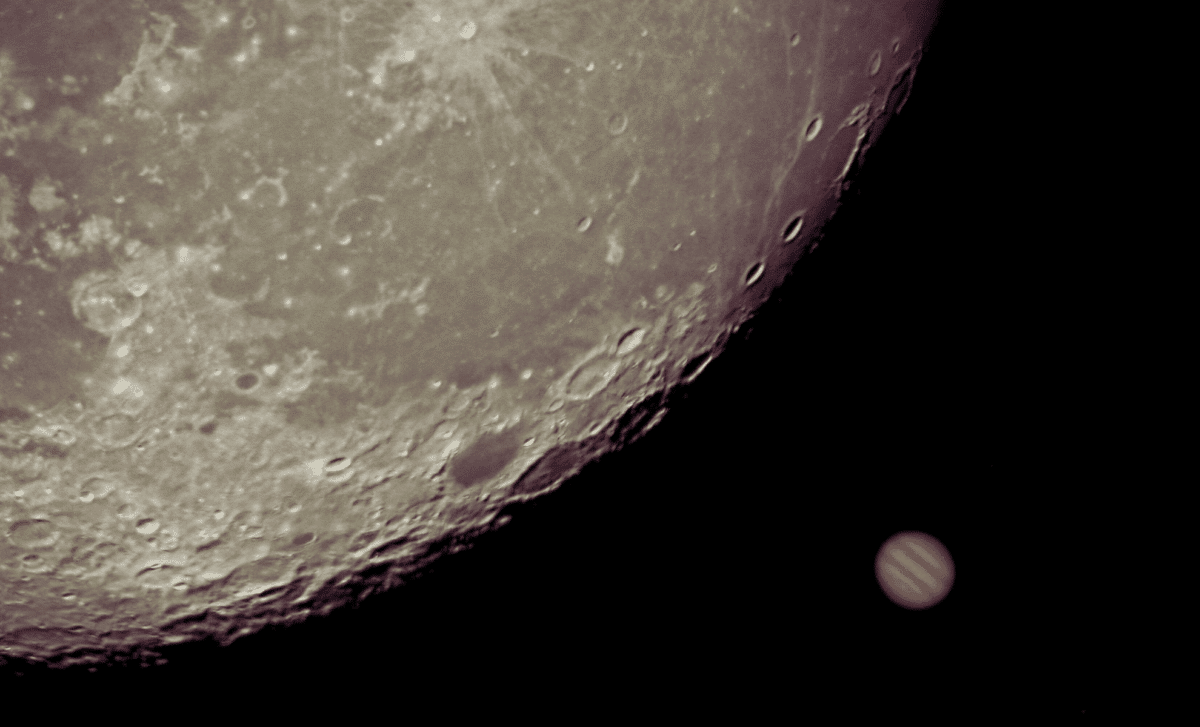
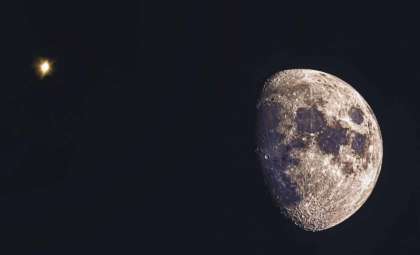
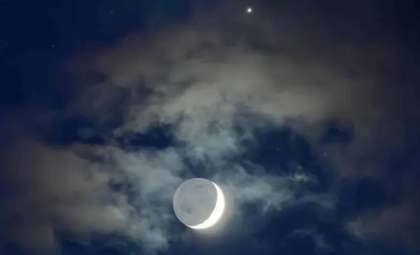
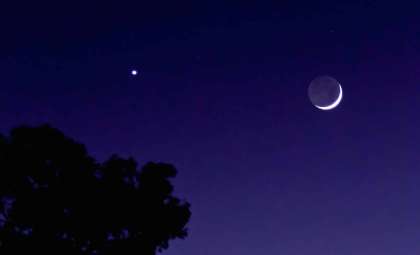
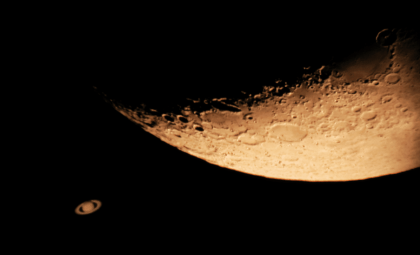
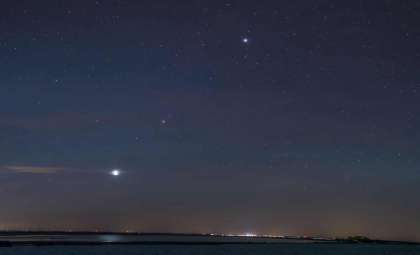
Tonight offers an extraordinary chance for enthusiasts to witness the Moon aligning closely with Jupiter. Merely hours after the Moon enters its third-quarter phase, it will ascend beside the luminous Jupiter, creating a striking visual that blends beauty with astronomical significance. As highlighted by Space.com, this occurrence presents a fantastic moment for viewers worldwide to appreciate these two celestial bodies in tandem.
A Rare Celestial Event: Moon and Jupiter’s Close Approach
On October 13, 2025, the night sky will showcase a remarkable scene for both amateur and seasoned stargazers. The third-quarter Moon will appear just a few degrees away from Jupiter, giving an impression of immediate closeness. While the Moon orbits approximately 235,000 miles from Earth, Jupiter is situated at an impressive distance of about 477 million miles. This pairing highlights a captivating contrast—Earth’s nearest natural satellite alongside the immense gas giant, side by side from our vantage point.
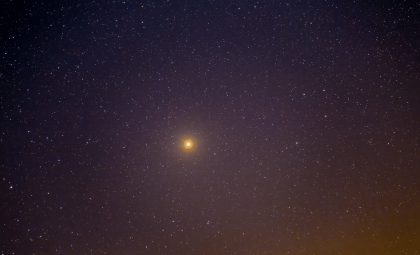
While the alignment is visible without any optical aid, binoculars or telescopes will enhance the experience. Jupiter will shine as one of the sky’s brightest points, captivating observers with its radiant glow. Additionally, its four largest moons—Io, Europa, Ganymede, and Callisto—will be visible as small, brilliant spots encircling the planet. These moons, discovered by Galileo in 1610, remain some of the most intriguing objects within our solar neighborhood.

When and Where to Observe This Celestial Pairing
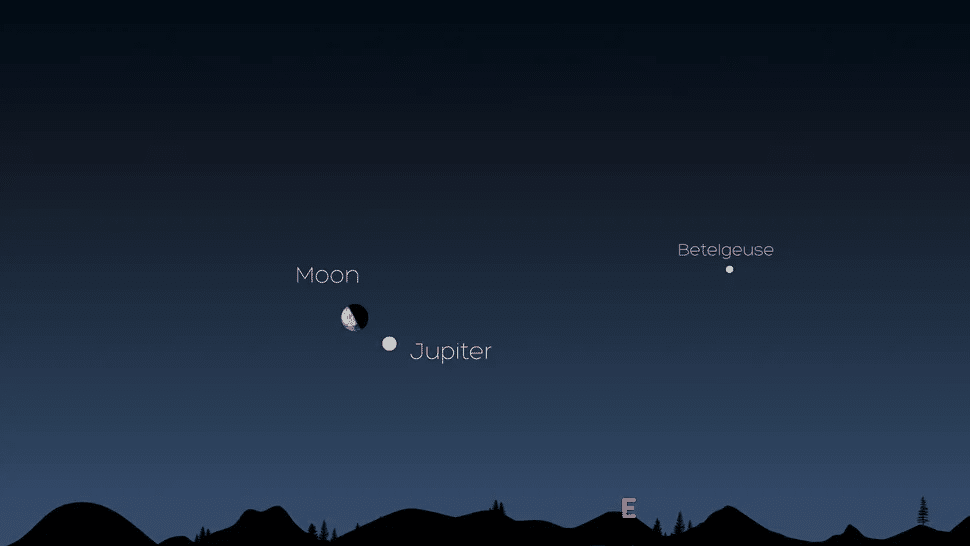
Timing your observation is essential to fully appreciate the event. The ideal window extends from late evening on October 13 into the early hours of October 14. In many regions, the Moon will appear near midnight with Jupiter just to its right. However, Jupiter reaches a more favorable altitude for viewing—around 30 degrees above the horizon—approximately at 2:30 a.m. This elevation minimizes atmospheric distortion, making it optimal for telescopic scrutiny.
In northern latitudes, Jupiter will maintain a longer presence higher in the sky, enhancing visibility. Cities like Portland, Oregon, and Minneapolis offer excellent vantage points as the planet peaks before dawn. Meanwhile, southern locations such as Houston or New Orleans will see Jupiter ascend nearly overhead, granting spectacular observational conditions.
Delving Into Jupiter’s Atmospheric Secrets During the Event
More than a beautiful conjunction, Jupiter’s presence on October 13 represents a chance to examine the planet’s atmospheric complexities. Observers using telescopes can glimpse Jupiter’s distinctive cloud bands circling near its equator, revealing the active nature of its weather patterns. The legendary Great Red Spot, a giant storm persisting for over 350 years, will also be in view. This colossal vortex, larger than Earth itself, continues to evolve in size and shape.
Notably, the Great Red Spot is diminishing over time. From once accommodating three Earths within its span, it has contracted to about the size of one Earth, an enigmatic trend that researchers are monitoring closely. The ferocious winds, reaching speeds up to 400 mph around this storm, might eventually cause it to vanish or transform in unknown ways, adding to the ongoing intrigue surrounding Jupiter's dynamic atmosphere.
- Categories:
- News




0 comments
Sign in to Comment