
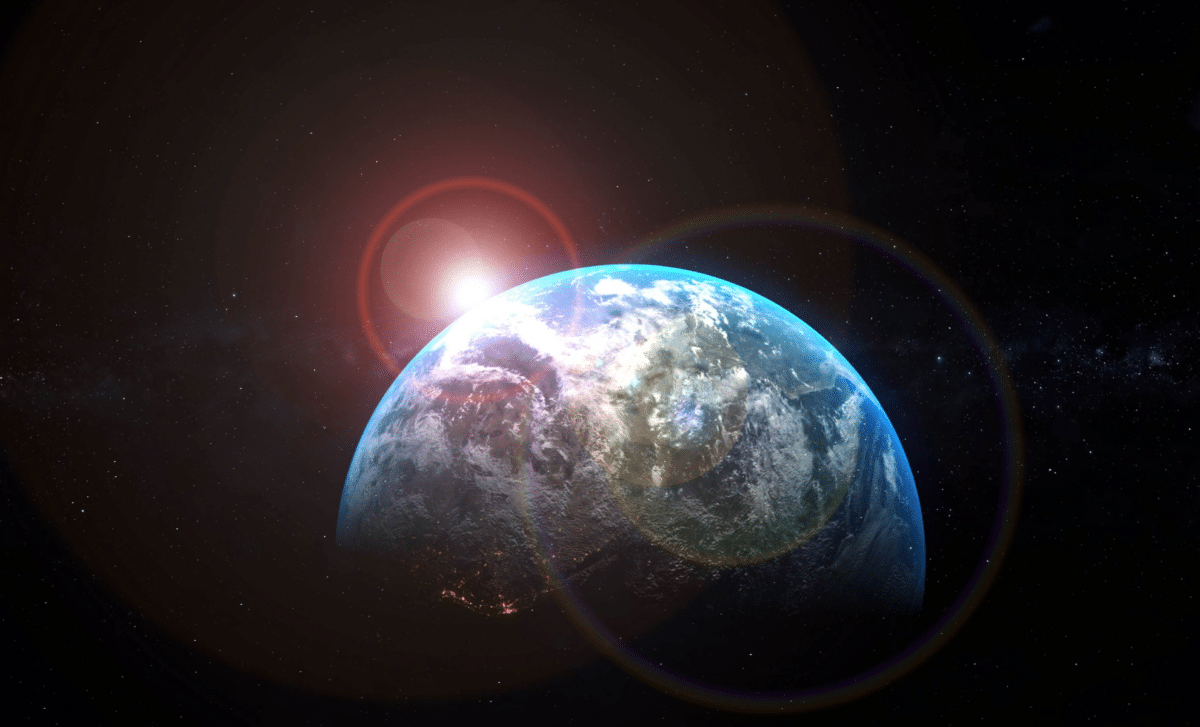
Perihelion refers to the moment in a planet’s orbit when it is nearest to the Sun, a key element in understanding orbital dynamics. Although Earth’s distance from the Sun changes slightly throughout the year, this has minimal influence on seasonal weather patterns.
Defining Perihelion
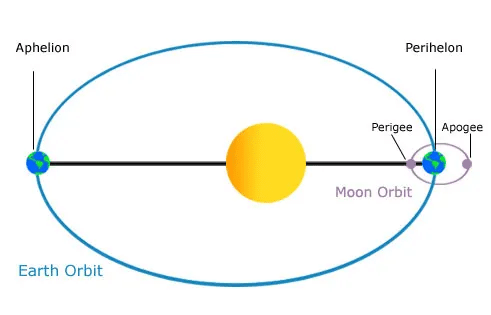
In our solar system, objects orbit the Sun along elliptical paths, with one specific location being the closest point to the star, called perihelion. The term originates from the Greek words peri (around) and helios (sun), meaning the nearest approach to the Sun. For Earth, this event takes place annually in early January, when the planet lies about 91.4 million miles from the Sun.
Earth’s elliptical orbit means there is a slight variation in distance between perihelion and the farthest point, aphelion, which is about 3 million miles. This difference is too small to considerably affect the planet’s weather; instead, our seasons arise primarily due to the tilt of Earth’s rotational axis relative to its orbit.

Historical Milestones in Understanding Perihelion
The idea of elliptical orbits—and thus perihelion—was not initially clear. It was not until circa 1604 that Johannes Kepler revolutionized astronomy by demonstrating that planets travel in ellipses with the Sun at one focus point. This revelation was critical for advancing planetary science.
“In about 1604, Johannes Kepler fitted an ellipse model of Mars’ orbit to observations of Mars,” Bloomer told Space.com. “He came up with the first law of planetary motion that states that planets orbit the Sun on an ellipse with the Sun being the focus on this ellipse.”
Kepler’s findings overturned the long-held assumption of circular orbits, revealing that the Sun is positioned off-center within a planet’s path.
How Orbital Eccentricity Shapes Planetary Orbits
Celestial bodies orbiting stars do so in ellipses with varying eccentricities. While planets like Venus and Neptune maintain nearly circular tracks, others such as Mercury have more elongated orbits. This causes planets to travel faster when near perihelion and slower as they approach aphelion.
Earth’s orbit is only mildly elliptical, so the fluctuation in its orbital speed is less extreme compared to other planets. Nevertheless, as the year progresses, the distance between Earth and the Sun experiences a subtle shift.
“They were already talking about the difference between the solar day and the ideal day, the average value of that,” said Bloomer. “Things were running behind and ahead, which, as we later learned, is because of the changes of the speed at which Earth orbits the Sun due to the elliptical nature of its orbit.”
Perihelion’s Effect on Earth's Climate and Seasons
Despite Earth being closest to the Sun at perihelion, this proximity does not cause seasonal shifts. Instead, the tilt of Earth’s axis leads to variations in sunlight intensity across regions over the year, which is the primary factor behind changing seasons.
A common misconception is to think that the Earth's distance from the Sun controls seasonal climate, but the small difference between perihelion and aphelion distances barely alters the amount of solar energy reaching Earth.
Comets and Their Highly Eccentric Orbits
Unlike planets, numerous comets and asteroids move in orbits with very high eccentricity. Their perihelion positions shift significantly due to gravitational interactions, causing dramatic changes in their proximity to the Sun each orbit. A comet’s perihelion is often the hottest point along its path, prompting gas and dust emissions that create the luminous tail visible from Earth.
Comets’ variable orbits make their behavior less predictable than planets'. For many, the perihelion is the most spectacular moment, as the celestial traveler blazes near the Sun and becomes visible to observers worldwide.
Is Perihelion Observable Soon?
Though the moment of perihelion can’t be directly seen, phenomena linked to it can be witnessed, especially involving comets. Earth’s closest approach to the Sun, occurring in early January, marks the shortest distance between us and the solar center, but it lacks conspicuous visual events like eclipses.
Still, the fascinating activity of comets nearing perihelion may offer remarkable viewing experiences. As these icy bodies heat up while approaching the Sun, they produce bright tails that sometimes become visible from Earth, thrilling skywatchers.
While the Earth’s own perihelion might go unnoticed visually, certain comet perihelions can provide captivating celestial displays. The next perihelion on January 3, 2026, could coincide with comet passages through the inner solar system. Stay tuned to updates from astronomers and observatories for the latest sightings.
- Categories:
- News











0 comments
Sign in to Comment