

We often assume that "down" is simply the way our feet point, but this intuitive notion collapses when viewed from outer space. What does "down" mean when you’re orbiting Earth or drifting through the endless void between galaxies, where no gravity, floor, or sky defines direction? A new piece from The Conversation unpacks this intriguing question through astronomical perspectives, revealing that what lies beneath our planet transcends simple spatial terms in a universe where direction is relative.
The Role of Gravity in Defining “Down”
Gravity is the subtle force that anchors our perception of orientation here on Earth. To us, "down" always means toward the planet's center. Whether you stand in Kenya or California, pointing "down" directs you inward to Earth's core. This gravity-based frame works well locally but breaks down when extended beyond Earth or even the solar system's vast reaches.
From Earth's surface, it's easy to forget our globe spins in space. Beyond Earth, "down" becomes relative to nearby celestial bodies. Astronomers use the ecliptic plane—the flattened region where planets circle the Sun—to define directions in our solar system. In this perspective, looking "down" on the solar system shows planets orbiting counterclockwise, which reverses when viewed from the opposite side. This reveals that "down" is less a universal constant and more a convention based on viewpoint.

The Universe Structured by Layers, Not Single Points
The Conversation offers compelling evidence that the cosmos is organized around planes of massive structures. Our solar system originated from a chaotic cloud called the solar nebula, which collapsed and flattened over millions of years into a spinning disk. This disk-shaped structure set the paths of the Sun and planets, which we now recognize as the ecliptic plane.
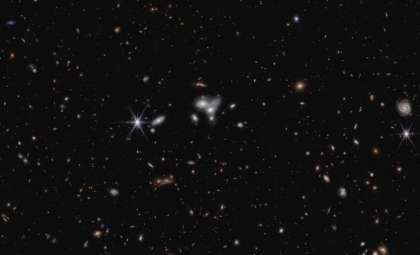
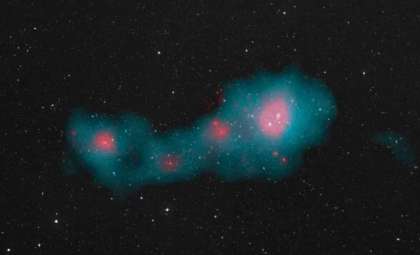
This pattern repeats throughout the universe: stars orbit within the flat galactic plane of the Milky Way, and galaxies themselves are arranged along the extensive supergalactic plane. However, these planes are not perfectly aligned—the galactic plane tilts roughly 60 degrees to the solar ecliptic, and the supergalactic plane lies nearly perpendicular to the galactic one. These angles arise from the original angular momentum and gravitational forces rather than any absolute spatial directions.
What’s “Below” Earth Changes With the Scale of Your Journey
If you were to travel straight "down" from your current spot on Earth, you would pass through empty space within the solar system, eventually crossing under the ecliptic plane. Beyond this, you'd encounter other stars and planetary systems orbiting in different orientations.
There’s no literal bottom to space—no barrier or cosmic surface beneath Earth. “Down” is just one direction among countless others, and often it’s a relatively sparse path compared to the busy traffic of objects orbiting the solar plane. Venturing further would bring you to stars in the Milky Way’s galactic disk and ultimately to galaxies arrayed along the supergalactic plane. Each step outward reveals new structural planes and shifts what “down” means, proving it’s a concept without a universal reference.
Understanding Direction in Space Depends on Your Viewpoint
A key conclusion from the article is that spatial directions like "up" and "down" have no absolute meaning in the universe—they depend entirely on perspective. While pedestrians on Earth unanimously agree on "down" as the ground beneath them, people scattered across different continents point "down" towards vastly different regions of space. And an observer on a distant planet would describe "down" in yet another way entirely.
In the vast cosmos, direction is defined by local forces like gravity or the orbital planes around nearby stars, not by a universal coordinate system. Our familiar up/down distinctions are rooted in human experience rather than cosmic principles. As The Conversation succinctly states, what lies beneath Earth isn’t a fixed place but a question shaped by location, surroundings, and the scope of one’s cosmic perspective.
- Categories:
- Science







0 comments
Sign in to Comment