
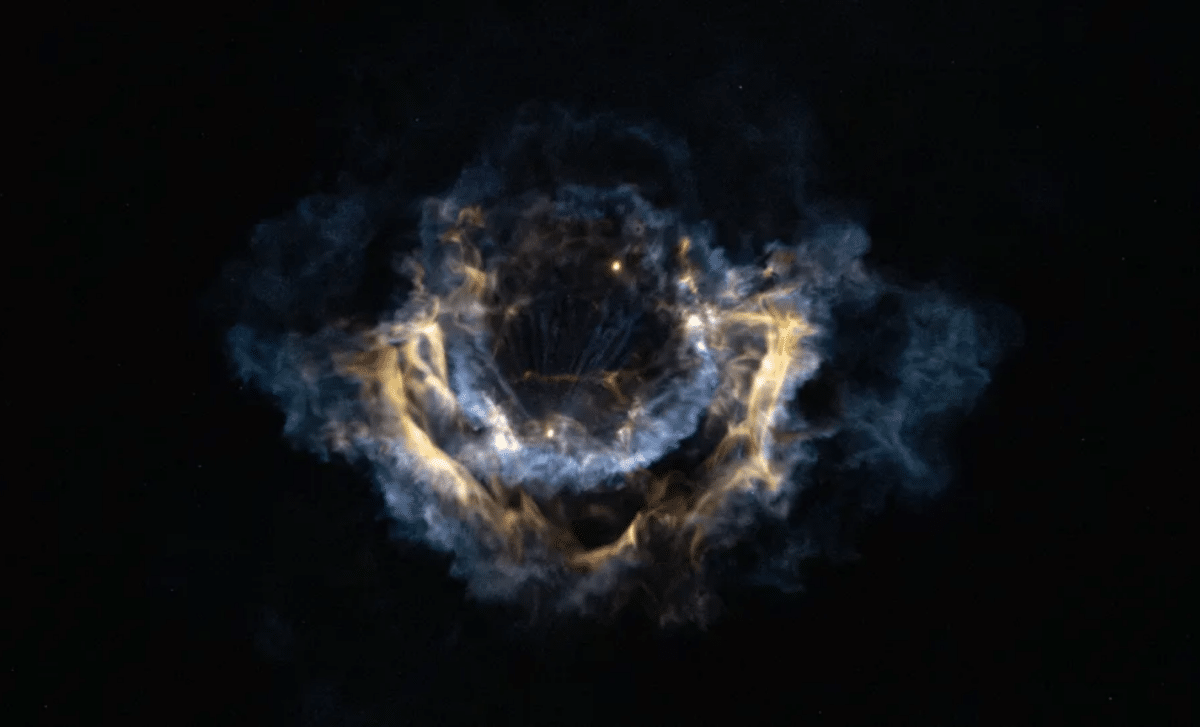
A striking image capturing the Falcon 9 rocket’s exhaust plume during NASA’s Crew-12 launch has captivated audiences worldwide. This ethereal, cloud-like formation, born from the rocket’s powerful emissions, reveals the magnificent force and elegance of journeying beyond our planet. As rockets surge through Earth’s atmosphere, they produce mesmerizing displays that highlight the ingenuity and might fueling contemporary space missions.
Exploring the Falcon 9’s Spectacular Exhaust Cloud
Photographed by John Kraus, this remarkable snapshot of the SpaceX Falcon 9 rocket’s exhaust plume presents a captivating “jellyfish” effect that immediately draws the eye. During ascent, the rocket’s nine Merlin engines combust a blend of liquid oxygen and kerosene, generating immense thrust to escape Earth’s pull. This combustion releases searing gases, vapor, and soot that rapidly inflate into the atmosphere. Captured from just beneath the plume, the image reveals the intricate and fluid patterns created by these forces in real time.
While not uncommon, SpaceX rockets often generate similar spectacular plumes. When observed from optimal vantage points, these gaseous formations resemble blooming flowers or cosmic nebulae. This particular image stands out for vividly illustrating the interaction between engine exhaust and ambient air, crafting a breathtaking spectacle. It acts both as an artistic expression of raw rocket power and a technical showcase of the dynamics at play during launch.

The Crew-12 Expedition: A Pivotal Mission to the ISS
Launched from Cape Canaveral Space Force Station in Florida, the Crew-12 mission marked a significant milestone in the ongoing collaboration between NASA and SpaceX. Carrying four crew members aboard the Crew Dragon capsule—NASA astronauts Jessica Meir and Jack Hathaway, ESA’s Sochie Adenot, and Russian cosmonaut Andrey Fedyaev—the mission set course for the International Space Station (ISS). Their work aboard the ISS includes conducting scientific experiments and fostering international partnerships in orbit.
On February 14, 2026, the Crew Dragon successfully docked with the ISS, marking the commencement of Expedition 74 and demonstrating the mission’s accomplishment. Following the Crew-11 medical evacuation, maintaining full staffing aboard the station was crucial. This diverse crew brings valuable expertise vital for advancing research and operational objectives, deepening our understanding of life in space.
Falcon 9’s Technological Breakthroughs Empowering Space Missions Ahead
SpaceX’s Falcon 9 rocket has revolutionized spaceflight with its groundbreaking reusability, dramatically cutting launch expenses and setting the stage for future missions. This capability is central to NASA and SpaceX’s ambitions to send astronauts to the Moon, Mars, and other destinations. Falcon 9’s ability to land vertically, return safely, and undergo refurbishment represents a crucial step toward more sustainable and frequent space travel.
By enhancing cost-efficiency and performance, Falcon 9 charts a course for the new age of exploration. Beyond reusability, its engineering endures extreme launch conditions, vital for planned deep-space ventures. This innovation underpins SpaceX’s vision of expanding space access for government agencies and commercial enterprises alike.
Decoding the Science Behind Falcon 9’s Impressive Launch Plume
The mesmerizing exhaust plumes produced by the Falcon 9 are not only visually stunning but reflect complex scientific principles. Rocket engine combustion generates a rapid expulsion of hot gases that include water vapor and carbon particulates. As these gases expand and cool after exiting the nozzle, the plume takes shape and becomes visible.
The plume’s distinct form is influenced by rocket thrust, atmospheric pressure, and exhaust velocity. The iconic “jellyfish” appearance emerges from the interaction between hot exhaust and cooler upper-atmospheric air, producing shockwaves that mold the plume’s elegant structures. Far from simply artistic, these phenomena exemplify fluid dynamics and thermodynamics, essential fields for rocket engineering.
Assessing Rocket Launches’ Environmental Footprint and Future Solutions
With increasing launch frequency, the environmental consequences of rocket exhaust are gaining attention. The plumes from rockets like the Falcon 9 emit pollutants such as carbon dioxide, soot, and uncombusted fuels. These contribute to climate change and could harm the ozone layer, especially at the altitudes where rockets operate.
Space agencies including NASA acknowledge these challenges and are striving for greener launch technologies. Research into cleaner fuels and efficient propulsion aims to minimize ecological impacts. Balancing the excitement of space exploration with Earth’s environmental stewardship remains a critical priority for the industry’s future.
- Categories:
- News








0 comments
Sign in to Comment