
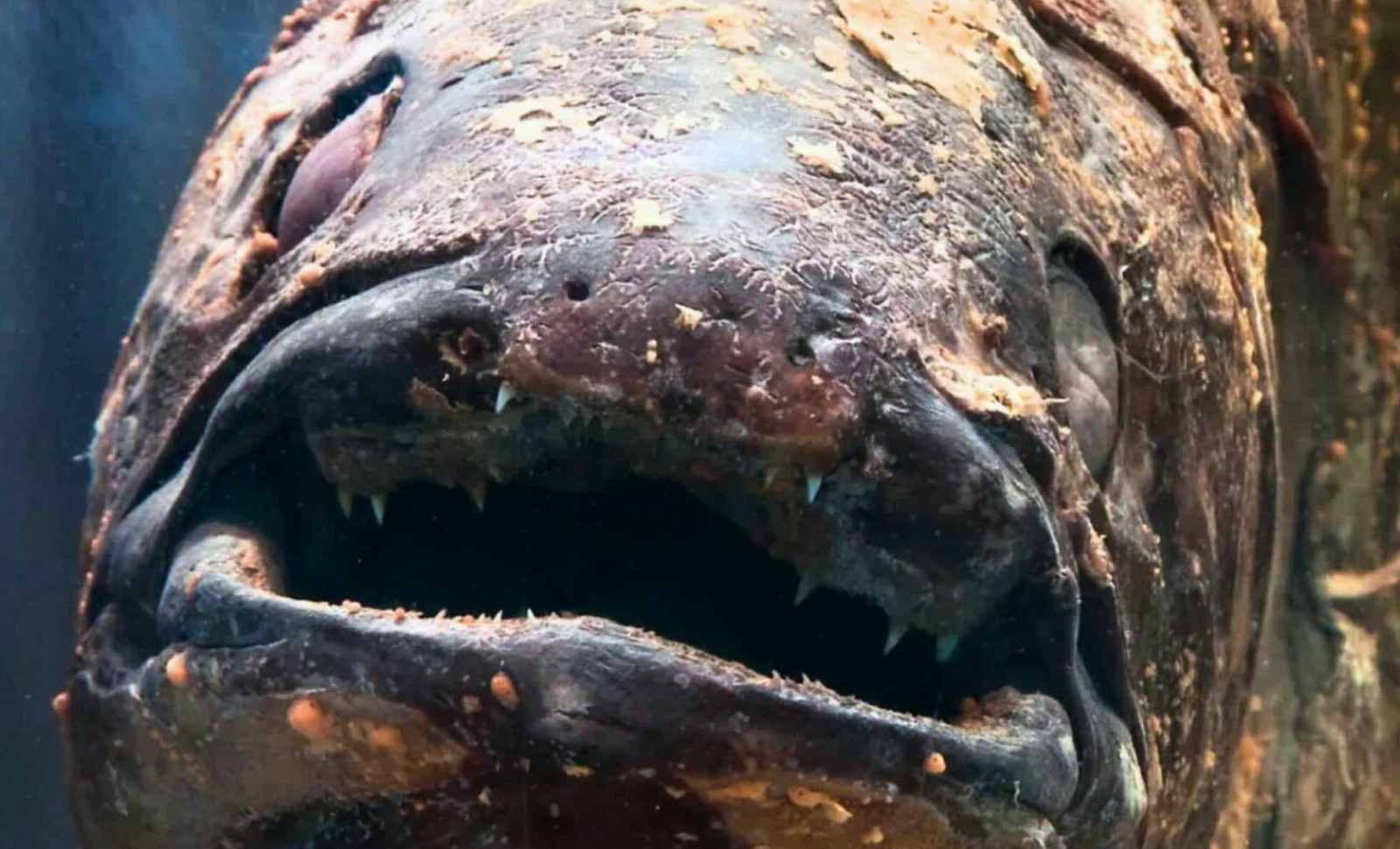
In October 2024, expert technical divers exploring the waters off North Maluku, Indonesia, succeeded in capturing the inaugural underwater footage of a live Sulawesi coelacanth (Latimeria menadoensis). Once thought to be extinct for millions of years, this ancient fish was seen calmly drifting 144 meters below sea level over a volcanic rock slope adorned with deep reef corals.
Published in Scientific Reports, this footage marks the first-ever human-filmed observation of a coelacanth in its natural underwater environment. Additionally, it represents the initial verified sighting of the species L. menadoensis within the Maluku Islands, broadening its previously known habitat range as listed under the Vulnerable category of the IUCN Red List.
Visual Evidence Confirms Continuation of an Elusive Lineage
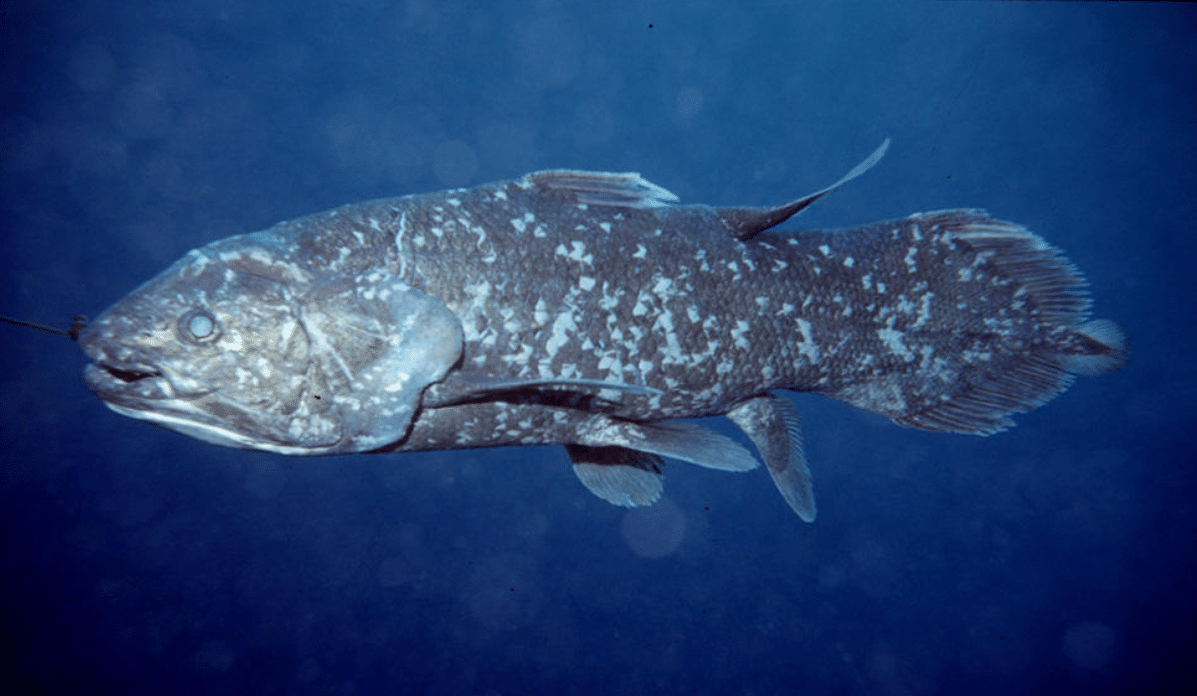
Belonging to the Sarcopterygii subclass, commonly called lobe-finned fishes, coelacanths are evolutionary cousins to the first vertebrates that ventured onto land. These remarkable animals have existed for over 400 million years, with fossil findings predating the dinosaurs. Before a groundbreaking catch in the Indian Ocean in 1938, coelacanths were presumed extinct since the end of the Cretaceous period, more than 70 million years ago.

Today, two living species are known: the African coelacanth (Latimeria chalumnae) and the Indonesian Sulawesi variant (L. menadoensis), which was officially classified in 1999 after a specimen surfaced at a fish market in Manado, northern Sulawesi.
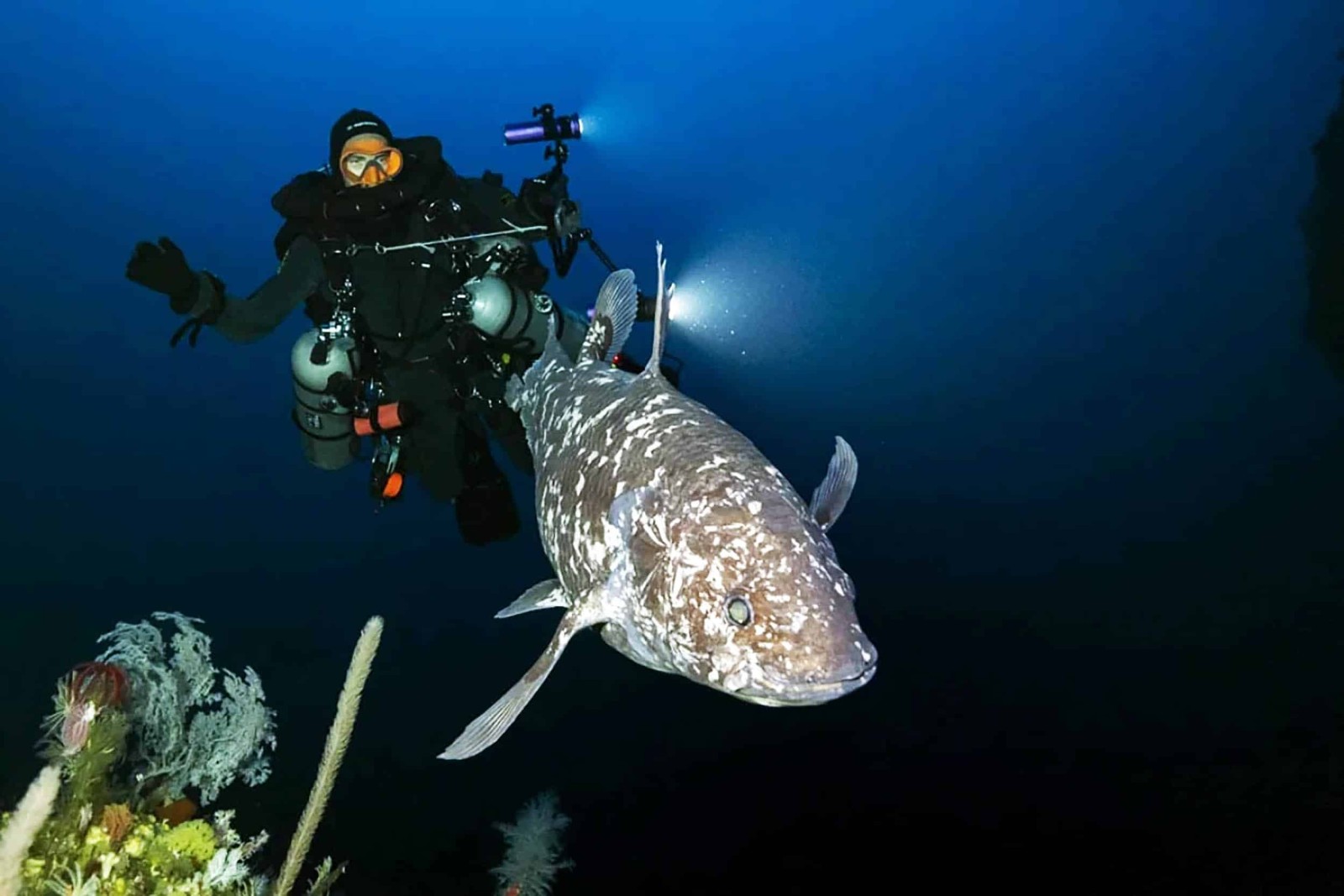
Before this new footage, L. menadoensis sightings were limited to visual records obtained by Remotely Operated Vehicles (ROVs) and submersibles, primarily near Sulawesi and West Papua. The recent sighting in Maluku fills a significant distribution gap, indicating that this species inhabits a more extensive range than once thought.
Divers Alexis Chappuis and Julien Leblond conducted multiple deep technical dives employing closed-circuit rebreathers and mixed gases (trimix). On their second dive, they encountered the coelacanth at 144 meters, within water temperatures ranging from 19 to 20°C and with visibility exceeding 30 meters.
“We’ve seen shapes on sonar, vague silhouettes from ROVs,” said Chappuis. “But to look it in the eye, to hover just meters from it—that’s different. That’s history alive.”
The fish measured roughly 1.1 meters in length, with a notably raised first dorsal fin during both observations—interpreted by biologists as a sign of alertness or activity. Interestingly, the individual was observed swimming in open water instead of sheltering in caves or crevices, challenging previous assumptions that coelacanths only remain hidden during daylight hours.
Slow Growth and Vulnerability Highlight Conservation Needs
The open-access marine database FishBase notes that L. menadoensis is a deep-water species with limited migration tendencies, typically residing at depths between 150 and 200 meters. It has one of the slowest developmental rates among vertebrates, reaching maturity around age 40 with a gestation period that may last up to five years.
These life history traits—characterized by low reproductive output, , and slowed metabolism—make the species particularly susceptible to human impacts. The IUCN Red List states the species confronts ongoing risks from incidental capture, environmental degradation, and pollution, with its population described as both small and severely fragmented.
The mesophotic reef ecosystems inhabited by coelacanths are increasingly threatened by industrial trawling, marine debris, and potential future exploitation such as deep-sea mining. Scientists also express concerns that viral popularity of the footage may encourage unregulated dive tourism, possibly disturbing these sensitive ecosystems.
Urgent Research and Protection Efforts Underway
For this newly discovered habitat, researchers have deliberately kept the dive location confidential to prevent unauthorized intrusion. Upcoming expeditions plan to gather environmental DNA (eDNA) via non-invasive approaches to clarify whether the Maluku individual belongs to a broader metapopulation or represents a unique genetic variant.
The Indonesian Ministry of Marine Affairs is currently evaluating the evidence to inform new deep-reef preservation measures, including expanded Marine Protected Areas (MPAs) and revised fisheries management. However, there are no dedicated conservation policies specifically aimed at L. menadoensis in this region yet.
While celebrated by marine scientists, those involved in the dive caution against overinterpreting the significance of a single sighting. As Dr. Gino Limmon, co-author of the study in Scientific Reports, states:
“Protecting this fish isn’t about nostalgia. It’s about recognizing that the deep sea still holds critical biodiversity—and some of it is hanging by a thread.”
This rare observation highlights the species’ delicate ecological existence. Whether the solitary fish seen over two days is part of a larger population or one of a handful of survivors in a rapidly changing underwater realm remains unknown.
- Categories:
- News







0 comments
Sign in to Comment