
NASA’s Galileo spacecraft transformed our knowledge of gas giant planets during its historic mission, notably through its daring entry into Jupiter’s atmosphere. Launched in October 1989, Galileo made history as the first probe to orbit an outer planet, accomplishing groundbreaking science throughout its 14-year expedition.
This mission offered unprecedented insights into Jupiter’s dynamic environment, revealing intricate details about its vast magnetosphere and diverse moons. Galileo’s journey culminated in a purposeful descent that exposed the planet’s intense atmospheric conditions.
Unlocking Jupiter’s Hidden Complexities
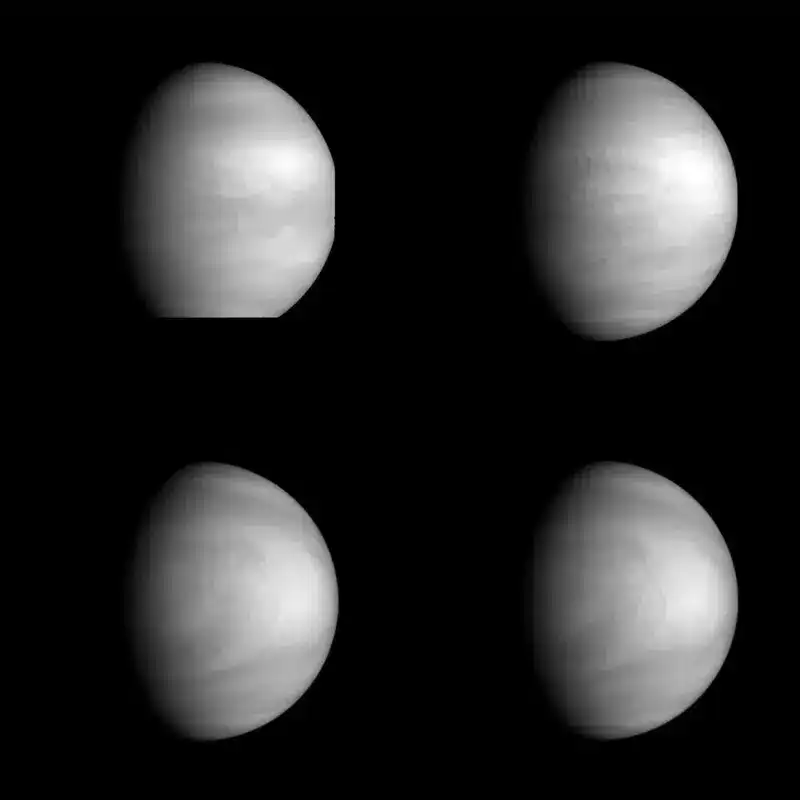
Galileo’s voyage began with a crucial gravity boost from Venus, capturing breathtaking images of the planet’s dense clouds before setting off for Jupiter. Upon arriving in 1995, it became the inaugural spacecraft to circle a gas giant, embarking on a planned 23-month campaign featuring 11 orbits and numerous close encounters with key moons.

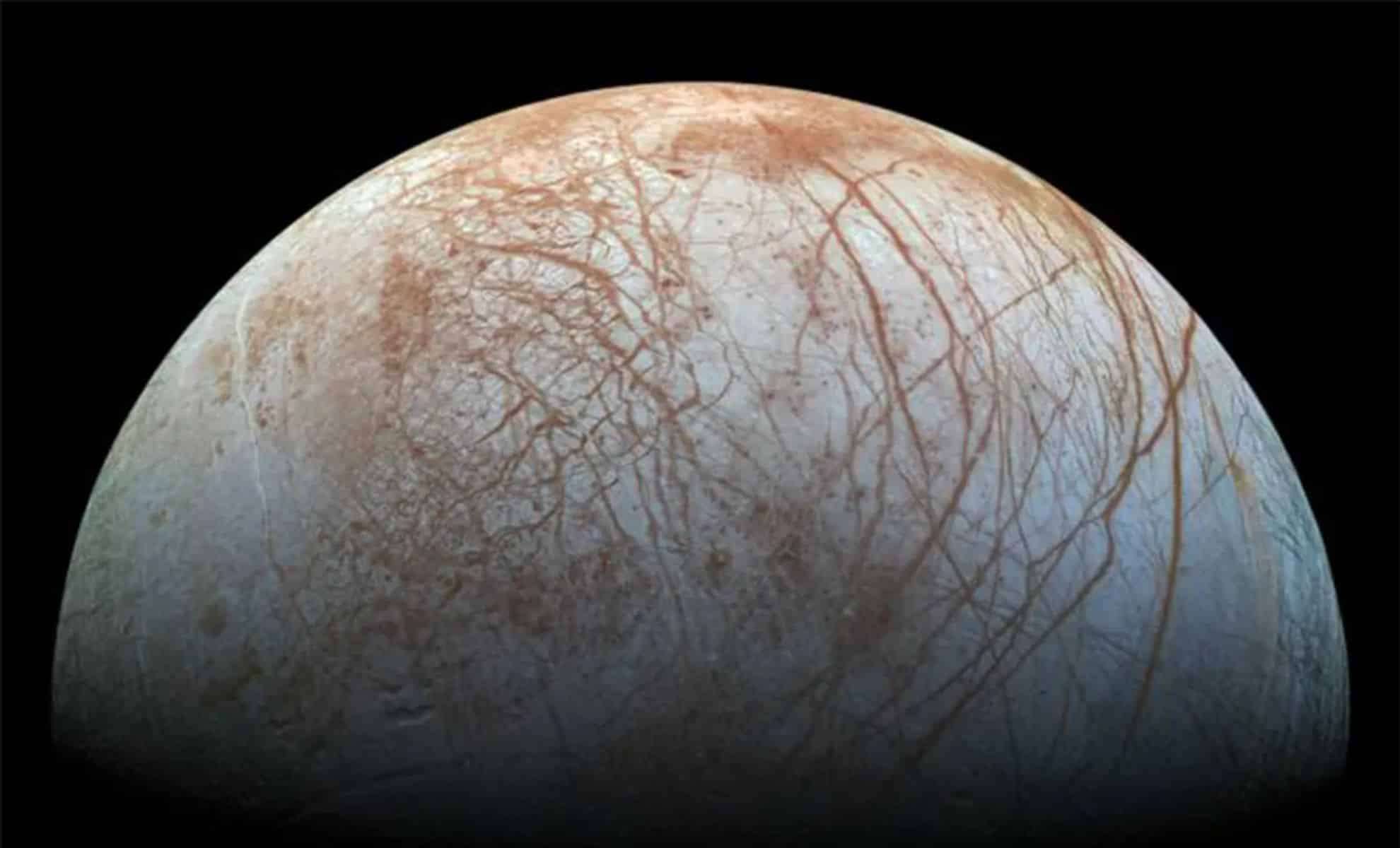
The mission collected a wealth of data far surpassing initial goals. Galileo conducted 35 flybys of Jupiter’s moons—11 near Europa, eight near Callisto, eight near Ganymede, seven near Io, and one near Amalthea—unveiling critical phenomena such as intense volcanism on Io and hints of a hidden liquid ocean beneath Europa’s icy surface.
The probe also discovered a unique magnetic field surrounding Ganymede, the first known of any moon. Galileo provided the only ever in-situ observation of Comet Shoemaker-Levy 9 colliding with Jupiter, marking a landmark event in space exploration.
Braving Jupiter’s Harsh Atmosphere
One of the mission’s most remarkable feats was the release of a descent probe into Jupiter’s atmosphere in July 1995. Without any propulsion, this compact “wok-shaped” device plunged freely into the upper atmosphere at a staggering velocity of 170,000 kilometers per hour (106,000 mph), comparable to the speed of a comet.
Facing temperatures soaring to twice the Sun’s surface heat, the probe endured extreme conditions, slowing down aerodynamically before deploying both a parachute and heat shield. Over a period of 58 minutes, it descended roughly 200 kilometers (125 miles) into Jupiter’s dense cloud layers, sending back critical real-time information on sunlight exposure, heat flux, pressure, temperature, lightning, wind dynamics, and atmospheric chemistry.
Despite the harsh environment ultimately disabling its instruments, the probe surpassed expectations by operating at depths where pressure reached 23 times Earth's surface pressure. These findings offered scientists vital knowledge about the makeup of Jupiter’s atmosphere.
Safeguarding Europa with a Final Descent
Galileo’s mission, extended well beyond its initial objectives, concluded in September 2003 when the spacecraft was intentionally directed into Jupiter’s atmosphere.
This controlled termination was designed to avoid any risk of contaminating Europa, whose subsurface ocean—discovered from Galileo’s data—may harbor conditions suitable for life. The probe entered Jupiter roughly a quarter degree south of the equator at a speed of 48.2 kilometers per second (nearly 108,000 mph).
NASA illustrated that a hypothetical observer floating in Jupiter’s clouds would witness Galileo appear to streak in from about 22 degrees above the horizon, covering a span equivalent to the distance between Los Angeles and New York City in just 82 seconds.
- Categories:
- News








0 comments
Sign in to Comment