
The Atacama Large Aperture Submillimeter Telescope (AtLAST), spearheaded by a European consortium, is set to explore regions of the cosmos obscured by dense dust clouds. Nearly half of the light from distant galaxies is absorbed by this dust, limiting current understanding of galactic evolution.
AtLAST aims to break through this barrier with a 50-meter single-dish submillimeter telescope designed for extensive sky surveys and entirely powered by renewable energy sources. Scientists anticipate discovering millions of previously unseen galaxies, mapping the cold gas that drives star formation and expanding knowledge of cosmic structures.
Charting the Dust-Covered Universe
While submillimeter astronomy has revolutionized our view of the universe, instruments like ALMA (Atacama Large Millimeter/submillimeter Array) provide only limited, narrowly focused snapshots of the sky. Claudia Cicone, an astrophysicist at the University of Oslo and key member of the AtLAST team, emphasized:

“Without a submillimeter, we’re getting a very biased picture of what’s out there. We are missing the regions of space that are most obscured by dust.”
As reported by Phys.org, this pioneering telescope will work like a wide-field camera, covering much broader regions of the sky than ALMA, providing comprehensive surveys of galaxies and the cold gas that permeates the universe.

Many galaxies, including the Milky Way, are enveloped by thick dust lanes that obscure visible light, hindering observation of key astrophysical activities. Scientists estimate that approximately half of the light emitted by galaxies is concealed behind such dust, which only submillimeter wavelengths can effectively penetrate.
The AtLAST telescope will utilize a 50-meter main dish coupled with a 12-meter secondary mirror. Tony Mroczkowski, an astronomer based at Spain’s Institute of Space Sciences, pointed out:
“ALMA is powerful, but you can’t map the sky with a microscope. In comparison, AtLAST will image an area up to 16 moons in size with every observation, so we can map the hell out of the universe.”
Set high in Chile’s Atacama Desert at more than 5,000 meters elevation, the observatory will benefit from some of the clearest, driest atmospheric conditions on the planet for optimal cosmic viewing.
Green Technology and International Teamwork
The AtLAST2 initiative, running through 2028, focuses on fine-tuning telescope components with sustainability at its core.
“The telescope would be entirely powered by renewable energies, using a novel, tailored hybrid energy regeneration,” Cicone highlighted.
Energy will be harvested through innovative methods including recovering kinetic power during telescope movements, along with solar energy and advanced battery and metal hydride storage systems. Construction materials like steel and aluminum will be sourced with minimal carbon footprint.
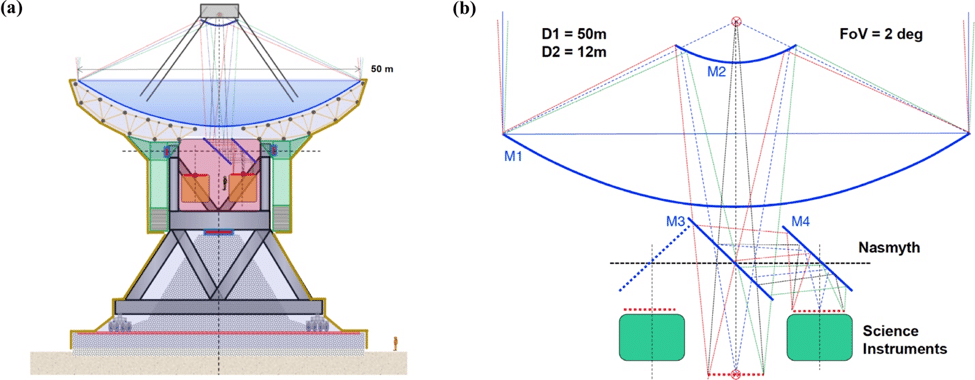
AtLAST’s development represents a global effort, with contributions from scientists and engineers across Europe, Chile, South Africa, Canada, Taiwan, Thailand, New Zealand, Japan, and the U.S. Their diverse expertise supports all stages from design through prototyping and operations.
Revealing Galaxies Veiled by Dust
Once operational, AtLAST will allow detailed study of cosmic regions previously unreachable. Dust-shrouded galaxies, today appearing as blurred masses, will be dissected with clarity, while the distribution of cold gas and dust that underlies star formation will be mapped extensively.
Mroczkowski estimates that within just 1,000 hours of observing time, the telescope could identify up to 50 million galaxies. The instrument will also provide invaluable data on molecular clouds, protoplanetary disks, and even characteristics of the sun’s outer atmosphere, aiding understanding of stellar and planetary formation.
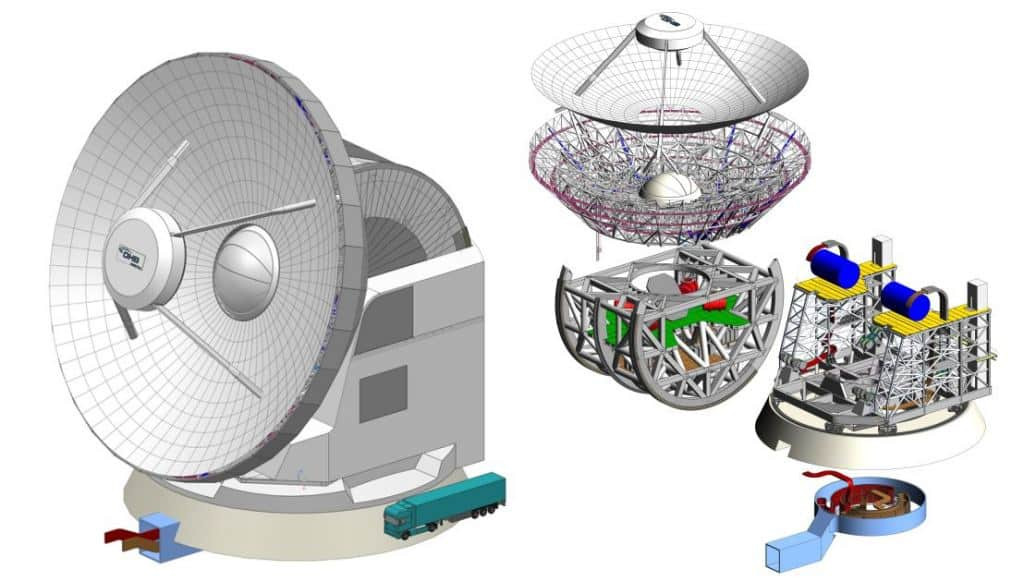
The project aspires to detect molecules linked to the origins of life and observe transient phenomena visible only in submillimeter wavelengths. Cicone emphasized that AtLAST is engineered for decades of use, with modular instruments to accommodate advancements benefiting astronomers well into the future.
- Categories:
- Science







0 comments
Sign in to Comment