
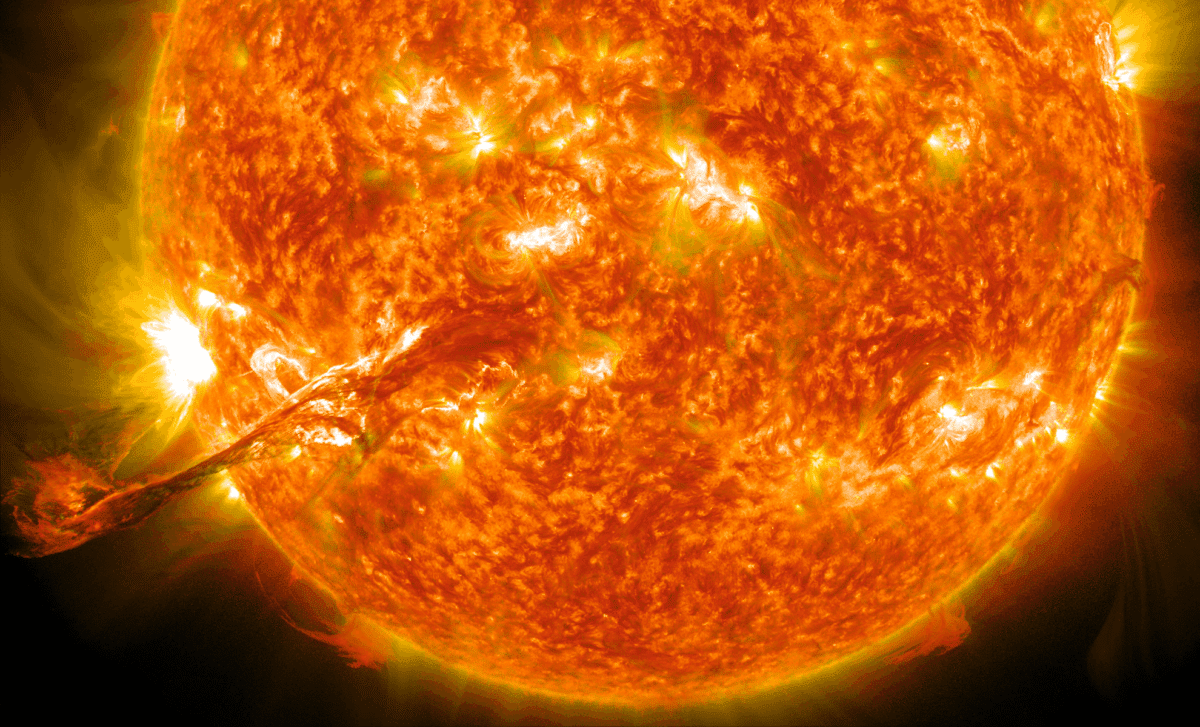
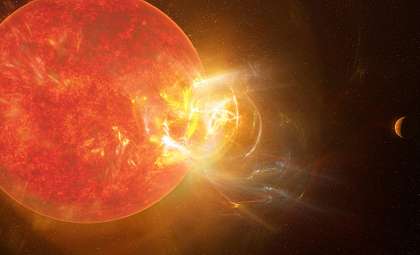
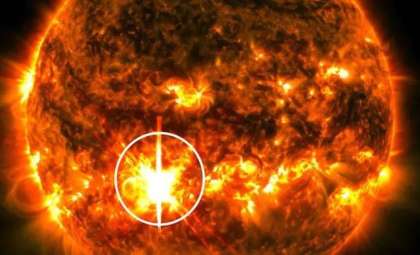
An intense solar flare erupted from the Sun’s far side, invisible from Earth but revealed by sophisticated satellite technology. This powerful event was recorded in high detail by space-based instruments tracking solar phenomena. Researchers are currently evaluating its possible impact on space weather conditions and satellite functionality. Preliminary findings indicate a highly energetic burst that could significantly influence current solar activity models.
NOAA and Space.com Unveil a Concealed Solar Explosion
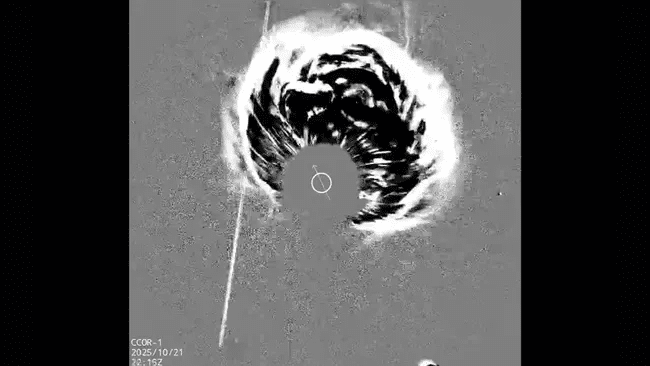
The National Oceanic and Atmospheric Administration (NOAA) initially identified this outburst through data from the Solar Dynamics Observatory (SDO). The striking images were later featured on Space.com as the “Space Photo of the Day.” Occurring on the Sun’s far side, a region obscured from terrestrial view, these potent coronal mass ejections (CMEs) frequently go unnoticed. NOAA’s advanced heliophysics monitoring technology captured the vast plasma eruptions, signaling an exceptionally forceful discharge.
Though this portion of the Sun faces away from Earth, solar experts employ helioseismic techniques combined with satellite triangulation to detect such phenomena. By analyzing solar oscillations, they can infer activity beyond the visible edge. This flare showed pronounced magnetic reconnection, representing a major energy release in active solar regions. Analysts note that if this explosion had occurred on the Earth-facing side, it might have triggered strong geomagnetic disturbances capable of interfering with power and satellite systems.

The Rising Importance of Monitoring the Sun’s Hidden Hemisphere
As space endeavors grow, keeping watch on the Sun’s far side is becoming critical. Both NASA and NOAA emphasize the necessity of constant solar observation, especially with the approach of the Solar Maximum, anticipated within the next year and a half. This period sees an uptick in flares, CMEs, and sunspot activity.
Tracking eruptions on the Sun’s far side enables scientists to forecast solar events before they rotate into view. NOAA incorporates 3D solar imaging and AI-driven forecasting into their models, enhancing early warnings for disruptive space weather. These observations also contribute to understanding the movement of magnetic flux across the Sun’s surface, shaping the 11-year solar cycle.
Advancing Solar Research and Space Weather Predictions
This dramatic solar flare highlights the Sun’s dynamic and often unpredictable nature. Each flare and CME provides key insights into how solar energy travels through the heliosphere, the charged particle environment enveloping our solar system. Collaborative efforts between NOAA and global observatories help create a comprehensive view of solar activity, extending beyond direct observation.
Future missions like the ESA Solar Orbiter and NASA’s Parker Solar Probe promise to close gaps in our understanding, delivering unmatched details on solar winds and magnetic phenomena. This recent event underscores the critical need for accurate space weather forecasting as reliance on satellite technologies continues to increase, making it pivotal for the sustainability of our technological infrastructure.
- Categories:
- News




0 comments
Sign in to Comment