
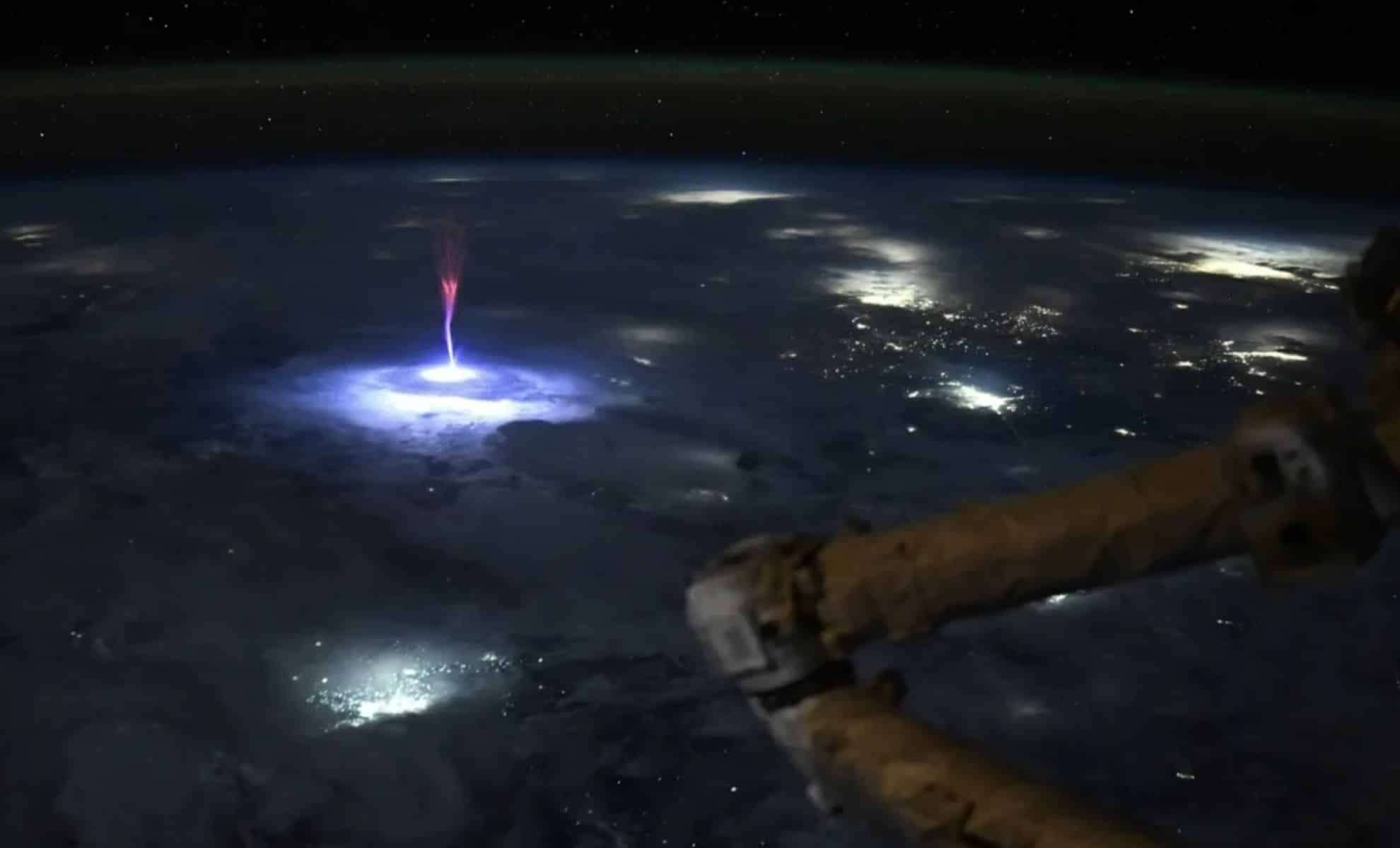
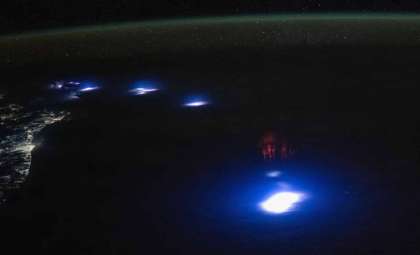
On July 3, 2025, NASA astronaut Nichole Ayers aboard the International Space Station (ISS) captured a fleeting yet invaluable photograph of a gigantic jet, a rare electrical discharge that surges from thunderstorm tops upward into near-space. This remarkable event, featured on NASA’s official site, not only produced breathtaking imagery but also provided critical insight into the dynamics of Transient Luminous Events (TLEs) occurring in Earth’s upper atmosphere.
What Makes Gigantic Jets So Intriguing to Scientists
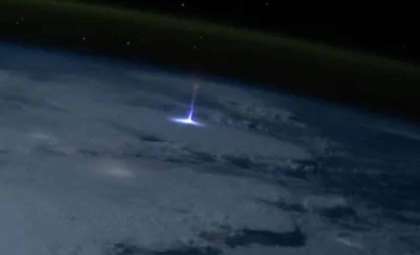
Gigantic jets represent one of the rarest and least understood atmospheric phenomena. Unlike typical lightning bolts that descend from clouds to the ground, gigantic jets propel electrical currents upward from thunderstorm tops all the way to the ionosphere, roughly 100 kilometers above Earth’s surface. They appear as towering plasma columns that often branch out like tree limbs as they extend skyward.
These jets are far less common than ordinary lightning and require very specific atmospheric and electrical triggers, making them notoriously difficult to photograph, especially from orbit. The clarity and detail of Nichole Ayers’ photo stands out because of the unique perspective offered by the ISS, which orbits at about 400 kilometers altitude and provides an unobstructed view through multiple atmospheric layers, making it an extraordinary platform to observe such elusive events.

The scientific value of this captured gigantic jet goes beyond its striking visuals. Documenting such phenomena from space helps researchers better understand how electrical energy transfers between the troposphere and the ionosphere, a process essential to Earth’s electromagnetic system. Insights gained can improve forecasts for space weather, impacting satellite functionality, communication networks, and astronaut safety.
Distinguishing Gigantic Jets from Sprites and Other Atmospheric Phenomena
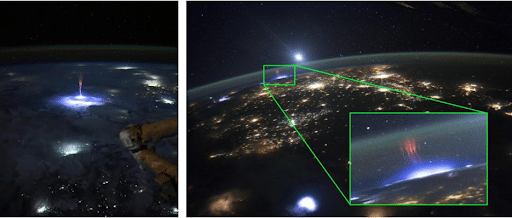
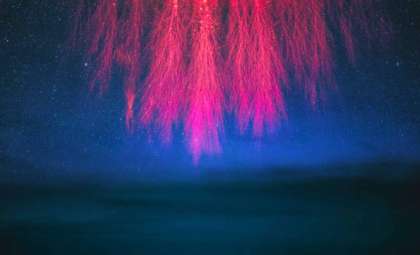
At first glance, gigantic jets may look similar to sprites, another type of Transient Luminous Event. Both are caused by intense lightning activity and involve brief plasma emissions extending upward into the upper atmosphere. However, sprites generally appear as red, jellyfish-like flashes high above thunderclouds, while gigantic jets have a more structured, brighter form, usually originating lower in the atmosphere.
Sprites typically form around 80 kilometers altitude and are somewhat diffuse. In contrast, gigantic jets initiate near 20 kilometers above the surface and pierce upward through the mesosphere with distinct, sharply branched patterns. Their colors tend toward blue or purple hues and are often faint unless viewing conditions are ideal.
These differences are important scientifically because they reveal distinct physical mechanisms behind each event. Sprites usually result from positive cloud-to-ground lightning strikes, while gigantic jets emerge from charge accumulation within thunderclouds that find no path to the ground and discharge upwards. Decoding these processes is key to understanding the electrical storm dynamics and their coupling to Earth’s upper atmosphere.
Citizen Science Expands Frontiers in Atmospheric Phenomena Research
Following the release of Ayers’ photograph, NASA spotlighted Spritacular.org, a platform inviting enthusiasts worldwide to contribute images and videos of sprites, jets, and other luminous upper-atmospheric events. This crowdsourcing initiative helps gather data on unpredictable phenomena that evade continuous monitoring by professional sensors.
Transient Luminous Events like gigantic jets can manifest globally, but their visibility relies on precise conditions and fortunate timing. Enthusiasts such as amateur astronomers, pilots, and high-altitude balloonists play a vital role by submitting verified observations. Their participation enriches research databases, enabling scientists to better map the spatiotemporal distribution of these rare events.
By engaging the public in this high-profile research, NASA demonstrates a shift towards more inclusive scientific inquiry. Providing open access to observational platforms broadens data collection while inspiring new contributors to become active participants in cutting-edge atmospheric and space science.
- Categories:
- News




0 comments
Sign in to Comment