
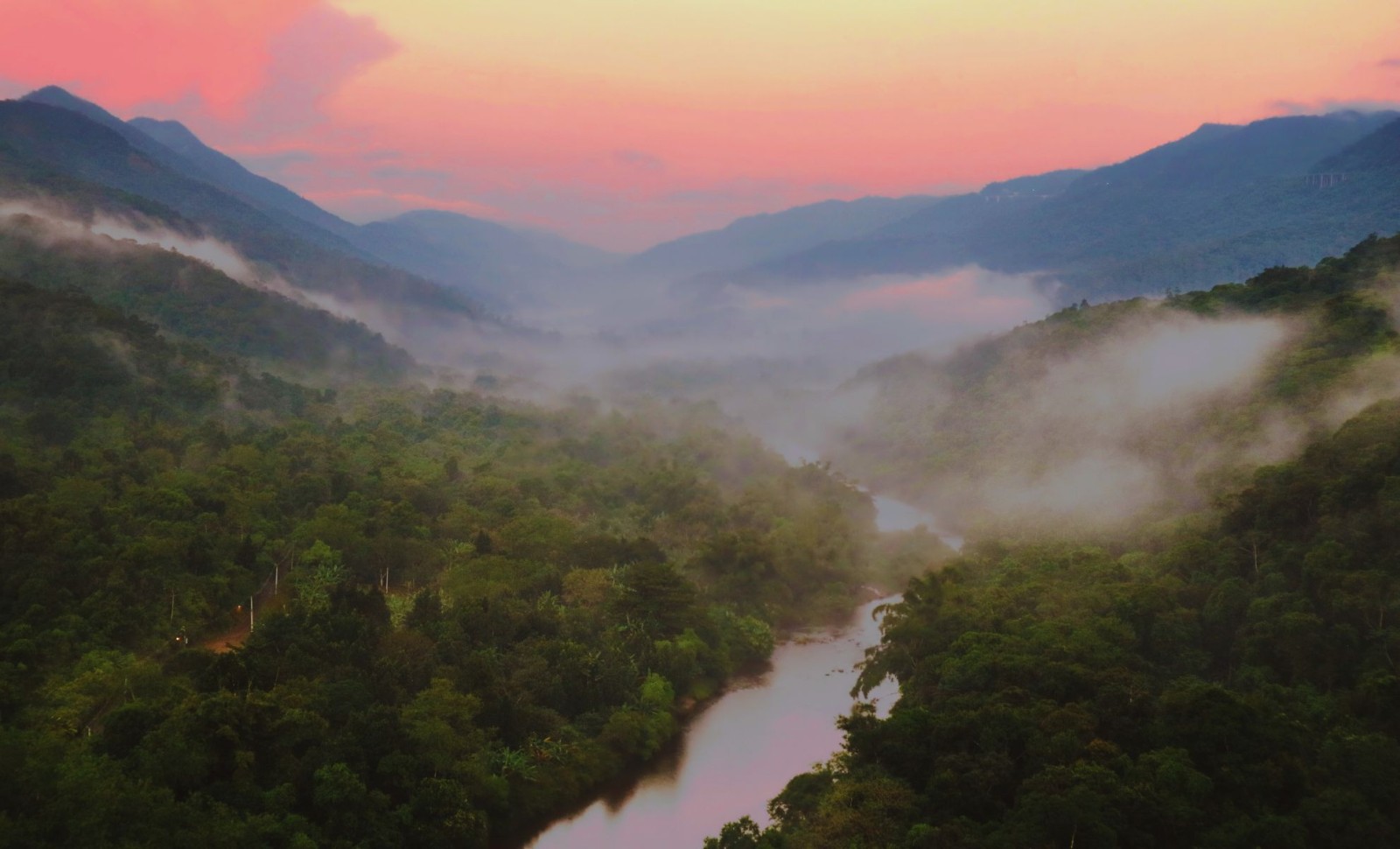
The Perseverance rover operated by NASA has discovered rocks within Jezero Crater that point to Mars having once experienced a climate akin to Earth’s tropical rainforests. These geological samples hint at a vastly different Mars, featuring a warmer and more humid environment than the frigid and desolate planet we know today.
Released on December 1 in Communications Earth & Environment, this breakthrough has sparked enthusiasm among researchers about Mars’ potential to have harbored life billions of years ago. The key to this revelation is kaolinite, a mineral rich in aluminum that forms under conditions of persistent rainfall, indicating that ancient Mars could have been far more life-friendly.
Understanding Mars’ Moist Past Through Kaolinite
The recent publication highlights the discovery of kaolinite, a mineral that on Earth only develops in humid tropical regions with heavy rainfall. Earth’s rainforests, known for soil that has been consistently saturated with rain over extensive time periods, are where kaolinite is commonly found.

Briony Horgan, planetary scientist at Purdue University and co-author of the study, explains,
“You need so much water that we think these could be evidence of an ancient warmer and wetter climate where there was rain falling for millions of years.” It’s a striking notion when you consider Mars’ current state.
This discovery challenges the notion that Mars has always been an arid, lifeless desert. Instead, the kaolinite rocks discovered in Jezero Crater may preserve traces of a period when Mars’ environment resembled Earth’s more hospitable settings.
The Mystery of the Rocks’ Origins
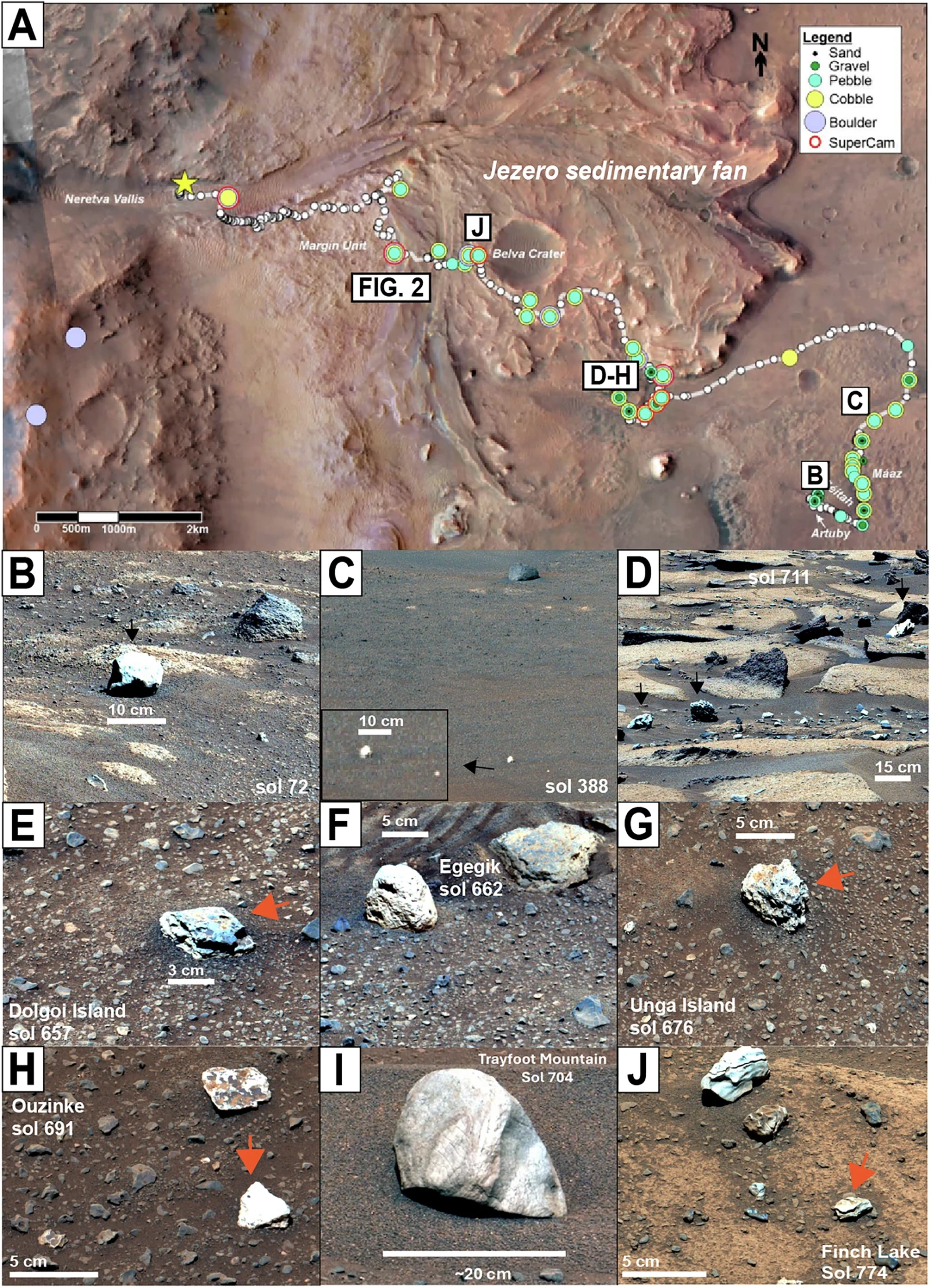
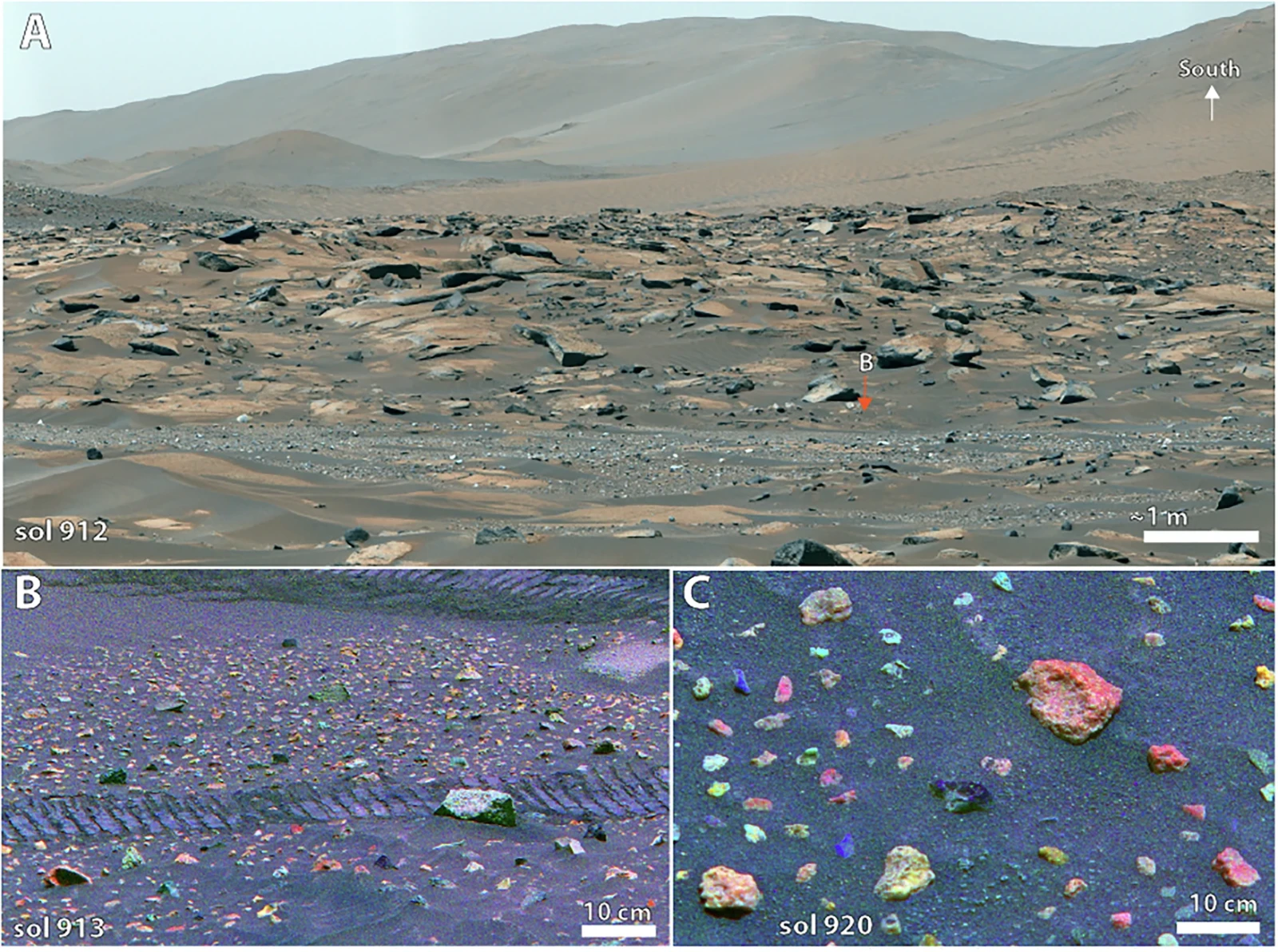
The story becomes more intriguing when considering the origin of these kaolinite pieces. These fragments, ranging from small pebbles to larger stones, have been found scattered across Jezero Crater, but no nearby source has been identified. As Horgan points out,
“They’re clearly recording an incredible water event, but where did they come from?” She added, “But until we can actually get to these large outcroppings with the rover, these small rocks are our only on-the-ground evidence for how these rocks could have formed.”
Several hypotheses exist: one suggests the rocks were transported by a river feeding an ancient lake that once existed in the crater, aiding in delta formation. Another proposes that an impact event could have thrown the rocks across the area. Regardless, these kaolinite samples remain our sole direct geological clues about how such minerals might have developed on Mars.
Could Life Have Flourished on Mars?
This discovery raises an enduring question: was Mars capable of supporting life? According to Adrian Broz, the study’s lead author, “All life uses water,” and the existence of liquid water is fundamental for life as we know it. The formation of kaolinite requires prolonged rainfall periods, which could only have happened if liquid water was present.
Broz draws parallels to similar kaolinite formations on Earth in regions such as San Diego and South Africa, where tropical climates generate this mineral naturally.
“When we think about the possibility of these rocks on Mars representing a rainfall-driven environment, that is a really incredible, habitable place where life could have thrived if it were ever on Mars,” said Broz.
If Mars once had conditions warm and wet enough to support life, what then led to its transformation into today’s cold, dry world? This mystery might best be unraveled through human missions that can perform detailed geological exploration, experiments, and gather insights beyond the capabilities of robotic rovers.
- Categories:
- Science









0 comments
Sign in to Comment