
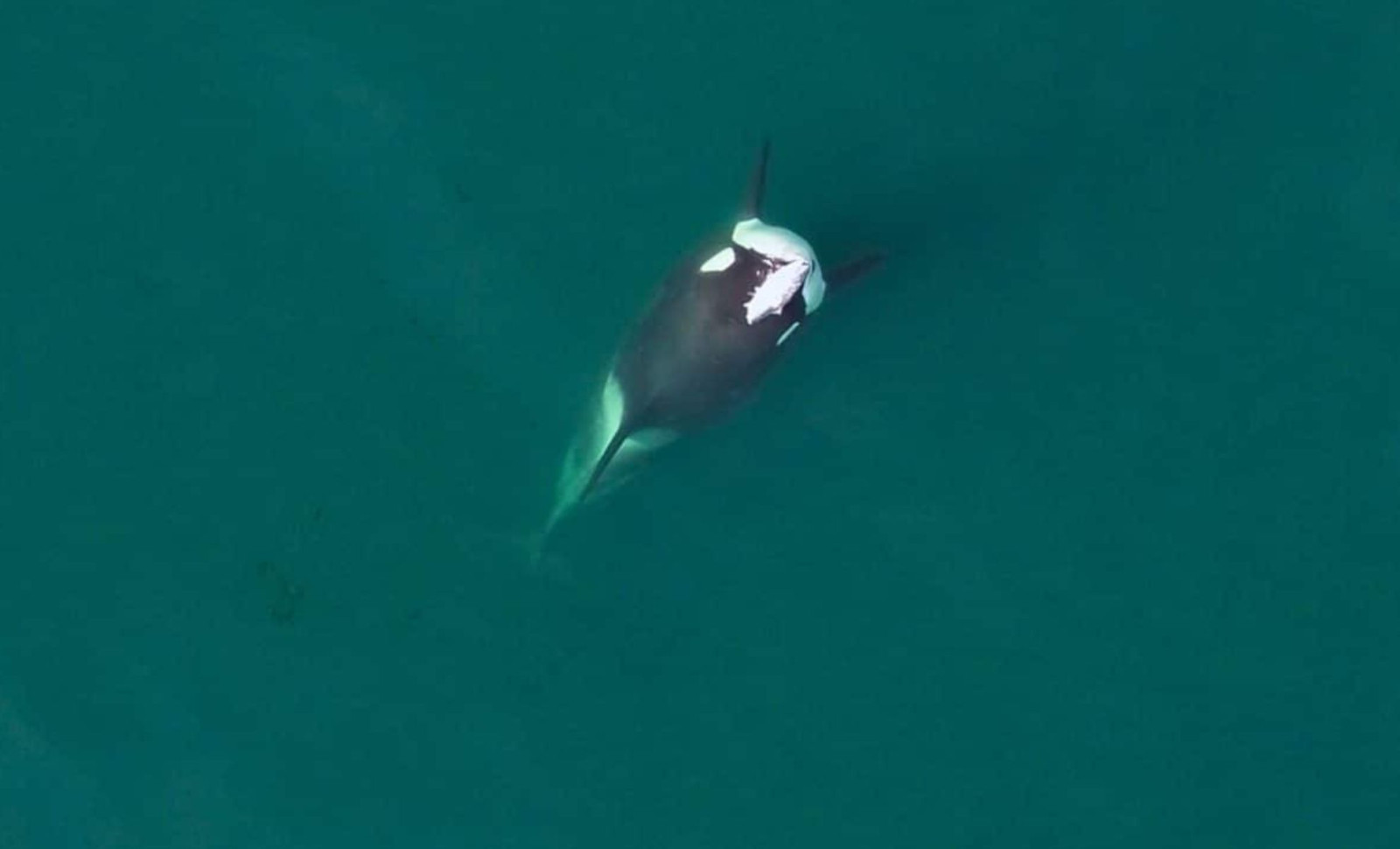
A Southern Resident killer whale was spotted in Puget Sound with a dead salmon perched atop its head, captivating observers worldwide. This unexpected occurrence, recorded in late 2024, surprised scientists and rekindled memories of a similar phenomenon last documented nearly 40 years ago.
The striking photo, taken close to Point No Point in Washington State, showcases a well-known male orca named J27, affectionately called Blackberry. Balancing the salmon across his head, this orca was seen engaging in a peculiar activity not commonly witnessed in recent decades.
This curious behavior, informally known as the “salmon hat” display, had previously attracted the curiosity of marine researchers during the late 1980s. Back then, several members of this endangered orca group performed the same act briefly before it vanished.

Iconic Photo Sparks Scientific Nostalgia
The image featuring J27 was shared for the first time by the Orca Network’s Whale Sighting Report on October 29, 2024. Photographer Jim Pasola captured the scene four days prior during the Southern Resident pod’s seasonal return, coinciding with the peak Chinook salmon migration—the orcas’ main food source.
Experts quickly linked this to similar observations from 1987, when multiple orcas from this population were seen carrying dead fish on their heads repeatedly. Despite the excitement around the recent sighting, no additional verifiable incidents have been reported since then.
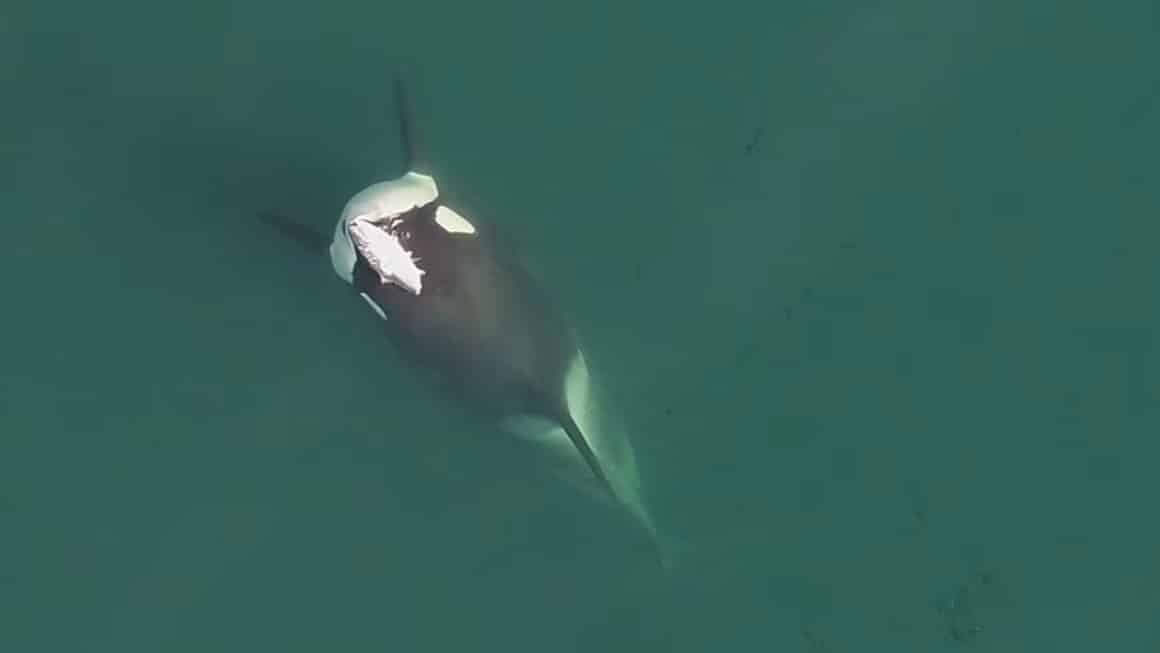
Stephanie Raymond, program manager at Orca Network, told CNN that there have been no subsequent images documenting orcas wearing salmon hats. She emphasized that with the extensive monitoring by researchers and authorized vessels in Puget Sound, any further displays would likely be documented.
Meanwhile, Dr. Deborah Giles, Wild Orca’s science and research director, described a possible sighting during a field expedition around the same time: her team briefly noticed an orca with what seemed like a salmon on its head, but could not confirm the individual’s identity or photograph the event.
A Once-In-A-Generation Behavior or Cultural Quirk?
The last well-substantiated observation of this fish-balancing act took place in the summer of 1987. Researchers like Giles have noted the behavior appeared rapidly, spread among multiple Southern Resident pods, then disappeared within the same season. This was later examined in scientific studies and recently highlighted in media coverage, including a feature by Earth.com on the 2024 sighting.
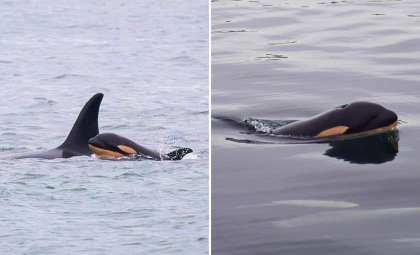
In 2019, Canadian group Ocean Wise recorded a similar incident via drone, capturing a Northern Resident juvenile male, A99 “Alder,” briefly placing a salmon on his face. Researchers speculated this might be playful behavior or social learning, though there’s no definitive conclusion.
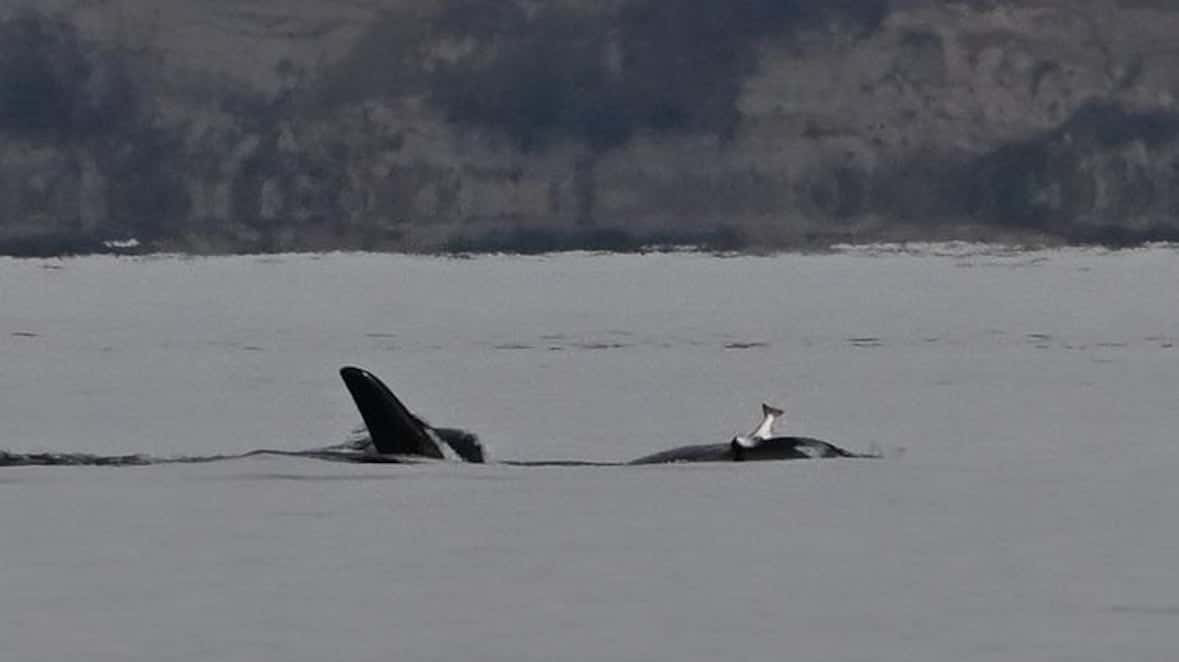
Southern Resident killer whales (Orcinus orca) represent a unique ecotype inhabiting the eastern North Pacific. They rely exclusively on Chinook salmon for food, live in tightly knit matrilineal pods, and communicate with distinct pod-specific calls. These orcas maintain clear boundaries from other groups like the Transients and Offshores, and much of their foraging and social behaviors are passed through generations.
NOAA Fisheries has implemented extensive efforts to safeguard this population, focusing on reproductive trends, prey supply, and evolving behaviors. Nevertheless, the purpose of the fish-on-head action remains unknown. Scientists are exploring whether it serves as social bonding, a form of celebration after feeding, or spontaneous playfulness.
Insights Into the Cultural Depth of Southern Resident Orcas
Even isolated behaviors like this may reveal deeper cultural significance. Southern Resident orcas exhibit remarkable cultural stability, where rare acts could signify preserved traditions or learned practices. Orcas rank among the few animal species to transmit cultural knowledge, vocal dialects, and behaviors across generations.
Tracked comprehensively since the 1970s, NOAA’s latest census counts 75 individuals—a modest increase but still well below the historic population of roughly 140. Challenges such as dwindling salmon supplies, contamination in prey, and disturbances from boats persist.
The recent sightings have coincided with intensified conservation campaigns. Organizations like the Orca Network and Wild Orca continue to gather sighting data, promote education, and support long-term research that guides protective policies.
- Categories:
- News










0 comments
Sign in to Comment