
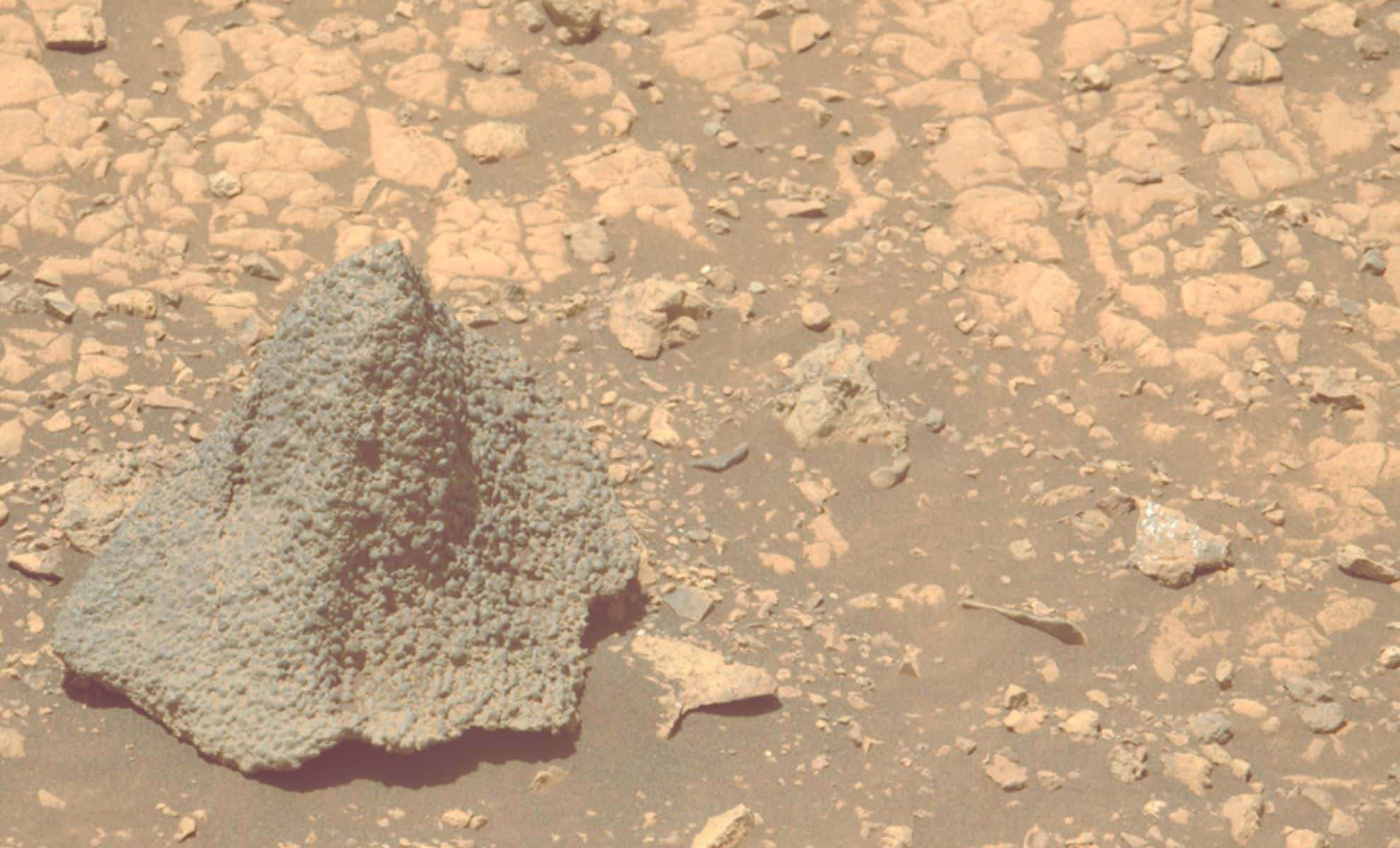
The Perseverance rover, currently exploring Mars, keeps sharing compelling findings that intrigue researchers and space fans alike. Among these is a unique rock formation, spotted by the rover’s Mastcam-Z camera, which bears a striking resemblance to a medieval helmet. This discovery, highlighted in a Space.com report, adds to the fascinating roster of oddly shaped Martian stones. The helmet-like rock serves as a reminder of the complex geological processes shaping Mars, as scientists edge nearer to unraveling the planet’s ancient past and overall development.
Examining the Helmet-Like Rock’s Distinct Characteristics
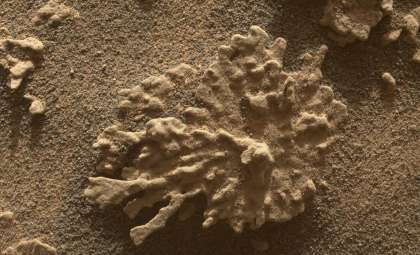
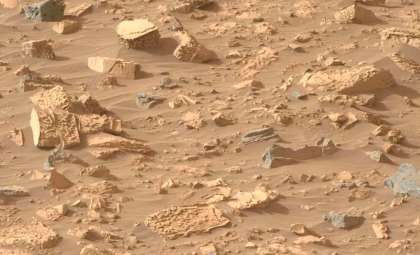
Perseverance’s latest capture reveals a rock with a pointed summit and a rough, cratered surface that strongly evokes the image of a medieval helmet. This unique shape has captured widespread interest. Yet, appearances can be deceiving; the “helmet” is actually a volcanic rock that has undergone intense weathering, involving chemical alterations, mineral deposits, and possibly volcanic forces. Such textures occur under certain geological conditions on Earth, suggesting that comparable processes took place on Mars.
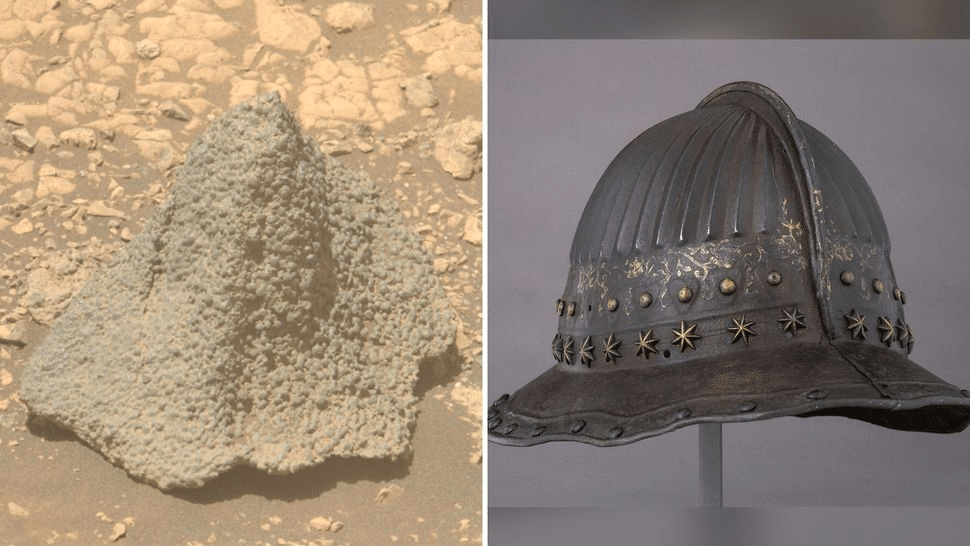
David Agle, spokesperson for NASA’s Perseverance mission at the Jet Propulsion Laboratory, noted that the rock’s structure is even more intriguing than its helmet-like form: “This hat-shaped rock is composed of spherules. This rock’s target name is Horneflya and it’s distinctive less because of its hat shape (which looks to me to be generally consistent with the pyramid shape we often see in of wind-eroded float blocks on the surface of Mars) and more because it’s made almost entirely of spherules.” These tiny spherical formations remain a puzzle, but they might be linked to groundwater activity, where mineral-rich fluids circulate through rocks, leaving behind these small spheres.

How Pareidolia Shapes Our Views of Martian Finds
A compelling aspect of the “helmet” rock is how human perception influences our interpretation of the Martian terrain. Pareidolia—the brain’s tendency to spot familiar images in random shapes—is central to how such objects are seen. Just like spotting faces in cloud shapes or animal outlines on the lunar surface, this rock’s helmet resemblance is a classic example of pareidolia. Nonetheless, this formation isn’t related to ancient artifacts but is the outcome of natural geological phenomena that coincidentally mimic human-made objects.
Since Perseverance’s arrival, it has encountered numerous examples where pareidolia plays a role, from rocks shaped like donuts to ones resembling avocados. These odd formations invite curiosity and discussion about how our minds interpret randomness. However, scientists emphasize the importance of relying on empirical evidence. Despite their familiar appearances, these formations reveal important information about Mars’ geology and environment.
The Geological Implications of Martian Spherules
The spherules composing the “helmet” aren’t mere curiosities; they are vital clues to Mars’ geological narrative. Often found in sedimentary deposits, these tiny spheres—sometimes called Martian blueberries—form through processes such as chemical weathering, mineral precipitation, and volcanic activity. Their presence in this rock suggests past interactions with water, which likely influenced the rock’s transformation over time.
Researchers have been especially interested in these features because they can shed light on Mars’ ancient climate and its potential to have supported life. The possibility that groundwater once moved through these rocks, depositing spherules, indicates that liquid water played a significant role in shaping Mars’ surface. This raises intriguing questions about whether the Red Planet could have harbored conditions suitable for life in its early history.
- Categories:
- News





0 comments
Sign in to Comment