
Dark matter is thought to constitute the majority of the universe's matter, but it has never been observed directly. One hypothesis suggests it consists of ultra-light particles that exhibit wave-like behavior rather than acting as typical solid particles. This makes detection through conventional experimental setups extremely challenging.
Researchers from the University of Tokyo and Chuo University, led by Hajime Fukuda, are employing cutting-edge quantum technologies to overcome these obstacles. Their innovative technique centers on quantum sensor arrays designed to detect the movement of light dark matter by sensing its passage across space, rather than detecting collisions with ordinary matter.
Tracking Elusive Particles with Quantum Technology
Contrary to traditional methods that look for atomic recoil caused by dark matter impacts, Hajime Fukuda and his team propose collecting spatially distributed signals from an array of quantum sensors. These devices, which operate on quantum principles, are capable of detecting incredibly subtle influences that may reveal the presence and trajectory of dark matter particles.

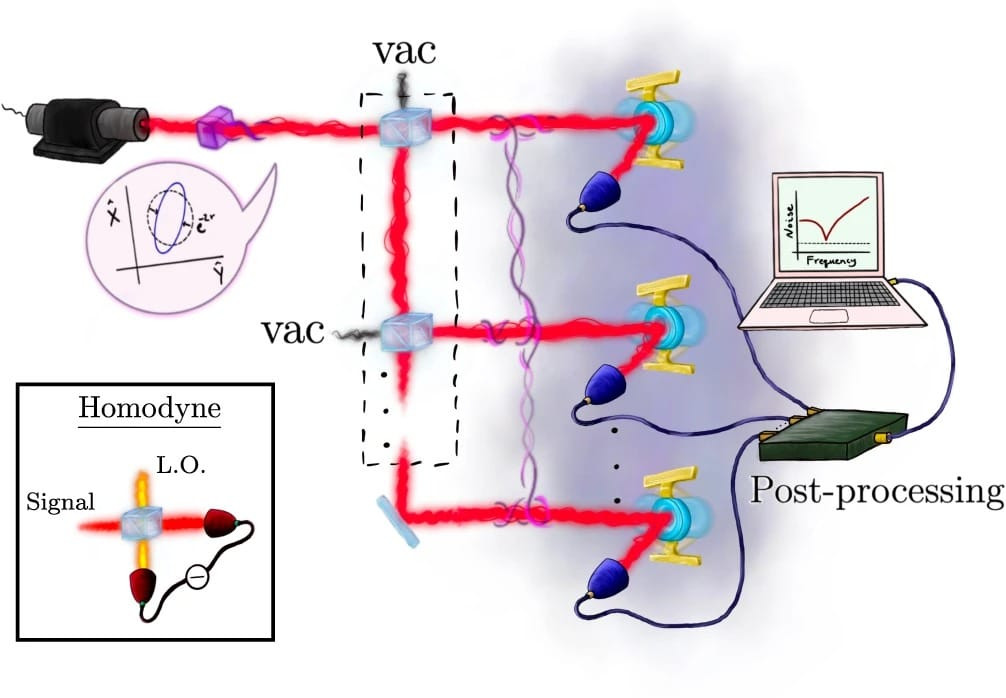
As detailed in Physical Review Letters, this technique aims to identify both the speed and direction of dark matter particles. From the research:
“We found that we can measure the velocity of light dark matter not by measuring spatially extended signals (recoil tracks) but by measuring by spatially extended detectors.”
The distributed quantum sensing strategy exploits the arrangement and coherence between sensors to extract directional data that traditional methods cannot provide.
Broadening the Horizon Beyond Conventional Models
Earlier detection attempts for light dark matter have largely depended on specific theoretical frameworks. For example, approaches using elongated detectors or classical sensor networks often require assumptions about the interaction type between dark matter and normal matter, limiting their sensitivity and applicability.
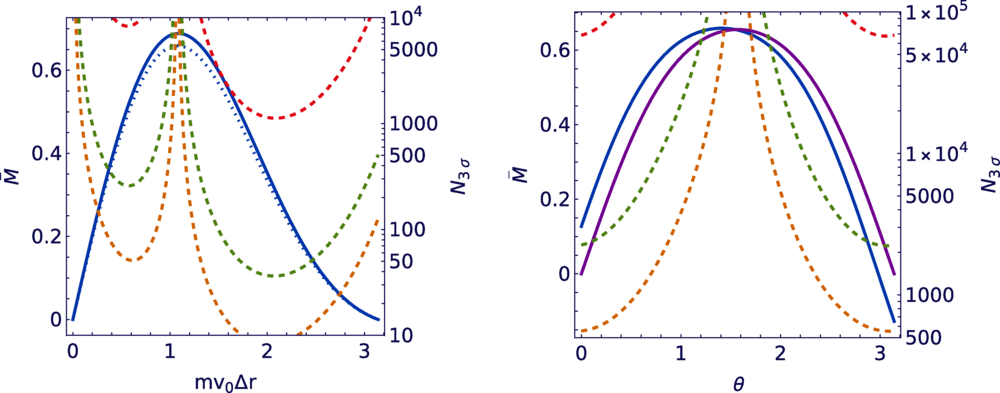
Fukuda highlights that their quantum-based method is more universally applicable and significantly more sensitive by avoiding dependence on the nature of interactions. Instead, it derives the particle trajectory from the spatial pattern of sensor data. This flexibility could broaden the scope of dark matter investigations.
The article notes that previous proposals were "tailored to interaction specifics," whereas the quantum sensor layout introduced here bypasses this limitation, positioning it as a promising foundation for upcoming experiments.
Towards Experimental Validation
While this approach is currently theoretical, it offers a promising new avenue for practical experimentation. The researchers envision refining their system to detect spatial variations in dark matter distribution, which will demand advancements in quantum engineering and enhanced data processing techniques from quantum sensor networks. :
“We showed that quantum methods could play an important role in high-energy physics,” stated Fukuda in the interview with Phys.org.
He also mentioned that future efforts might expand this technique to map how dark matter is spatially distributed, not just track its motion.
- Categories:
- Astronomy





0 comments
Sign in to Comment