

Scientists have uncovered the fastest winds ever observed on a planet, located on the exoplanet WASP-127b. These powerful gusts reach incredible speeds of up to 20,500 miles per hour (33,000 km/h), surpassing previous records. Traveling at speeds roughly seven times faster than a military jet, these winds complete a full revolution around the planet in under 24 hours.
Extraordinary Wind Velocity Found on WASP-127b
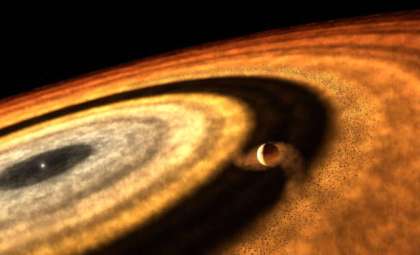
An international research team led by Lisa Nortmann from the University of Göttingen detected these extreme winds. Nortmann stated, “The planet exhibits a remarkably rapid jet stream encircling its equator with surprisingly high speeds.” These winds represent a phenomenon unseen within our own solar system. WASP-127b, a hot Jupiter located approximately 520 light-years away in the Virgo constellation, is a gas giant orbiting very close to its star, resulting in an expanded, heated atmosphere.
The planet's relatively low mass combined with its enlarged atmosphere lets starlight penetrate deeply, causing sharp thermal differences between the illuminated and dark sides. This makes WASP-127b an excellent subject for atmospheric examinations, showcasing severe and unusual weather phenomena. Measuring 30% wider than Jupiter yet only holding about one-sixth of its mass, the planet boasts an ultra-low density comparable to a marshmallow, further influencing its unique properties.

Using Spectroscopy to Analyze Wind Speeds
The scientists employed transmission spectroscopy to investigate the wind characteristics. The method involves studying how light from the star filters through the planet’s atmosphere, where molecules like water and carbon monoxide imprint identifiable signatures that shift in wavelength due to motion. These observations revealed two distinct Doppler peaks that indicated the extreme velocity of the wind jets. The peak speeds reached approximately Mach 3, far exceeding the speed of sound through WASP-127b’s hot, hydrogen-rich atmosphere.
Moreover, the winds were found to blow at about six times the speed predicted from the planet's tidally locked rotation. Although WASP-127b completes one rotation per orbit, which would normally produce winds around 1 mile per second (1.6 km/s), the measured speeds soared to 5.6 miles per second (9 km/s), emphasizing the extraordinary force of the equatorial jet stream.
Impact of the Inflated Atmosphere on Wind Dynamics
The inflated atmosphere of WASP-127b is a key factor in generating these extreme winds. Enormous temperature variation between the day and night sides creates a persistent eastward airflow. The planet’s weak gravity reduces atmospheric drag, enabling air masses to accelerate to unprecedented speeds. This results in a dominant equatorial jet stream that carries hot air eastward, preventing it from cooling efficiently.
The planet’s poles, in contrast, seem to have minimal influence on its atmosphere. The researchers noted that these areas contribute little to the transmission spectrum, hinting they may be cloaked in dense clouds or are significantly cooler compared to the equator. This observation aligns with general circulation models predicting turbulent, superheated equatorial flows, while polar regions remain cooler and more stable.

Advancing Climate Models for Exoplanetary Atmospheres
This groundbreaking finding challenges existing concepts of planetary meteorology and will help refine climate simulations for gas giant exoplanets. Researchers suggest that superrotation—where wind speeds surpass the planet’s rotation rate—could be widespread among hot Jupiters like WASP-127b. This implies that atmospheric processes on such planets differ vastly from Earth, influencing global heat redistribution and weather patterns.
The study also provided fresh insights into WASP-127b’s atmospheric makeup. Measurements of its carbon-to-oxygen (C/O) ratio and metallicity were found to be similar to solar values, countering earlier theories that predicted a carbon-poor atmosphere. This suggests the planet’s formation and migration history might be more complex than previously believed.
- Categories:
- News











0 comments
Sign in to Comment