
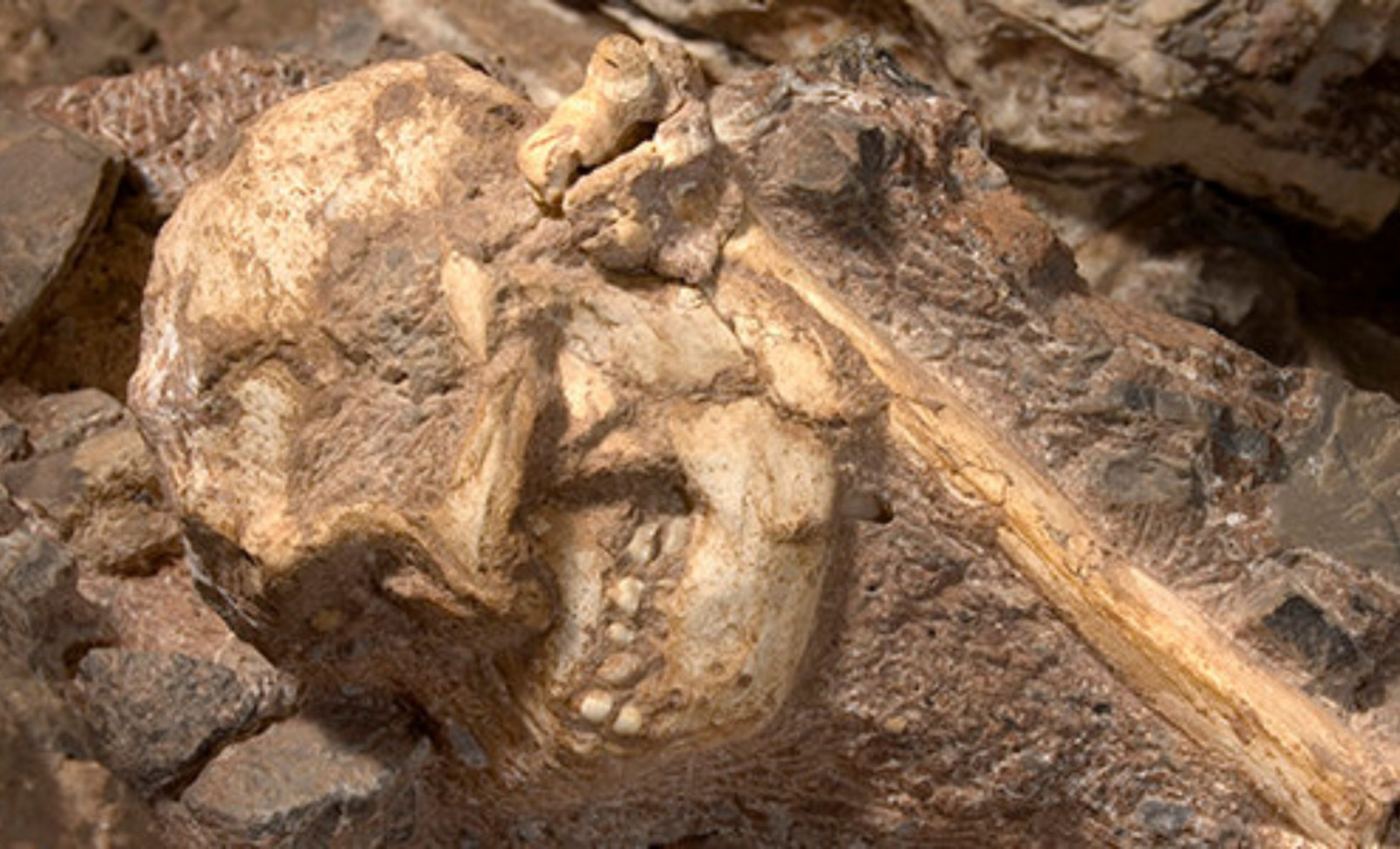
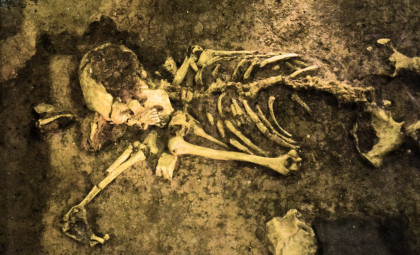
What appeared to be an ordinary rock in a university lab has revealed an extraordinary find: one of the most intact early human ancestor skeletons ever discovered. Experts in South Africa now attribute this fossil to Karabo, the cornerstone specimen of Australopithecus sediba.
This revelation was shared by scientists at the Wits Institute for Human Evolution located in Johannesburg. Although the skeleton remains encased within the stone, preliminary assessments indicate the fossil includes substantial sections that could offer an unprecedented glimpse into an ancient human relative.
The project is also notable for its transparency. Instead of waiting until completion, researchers invited the public to observe the fossil preparation process in real time.

Among the Most Intact Early Human Fossils Found
The recovered fossil is believed to represent Karabo, the iconic skeleton of Australopithecus sediba, originally discovered in 2009 at the Malapa Site within South Africa’s Cradle of Humankind.
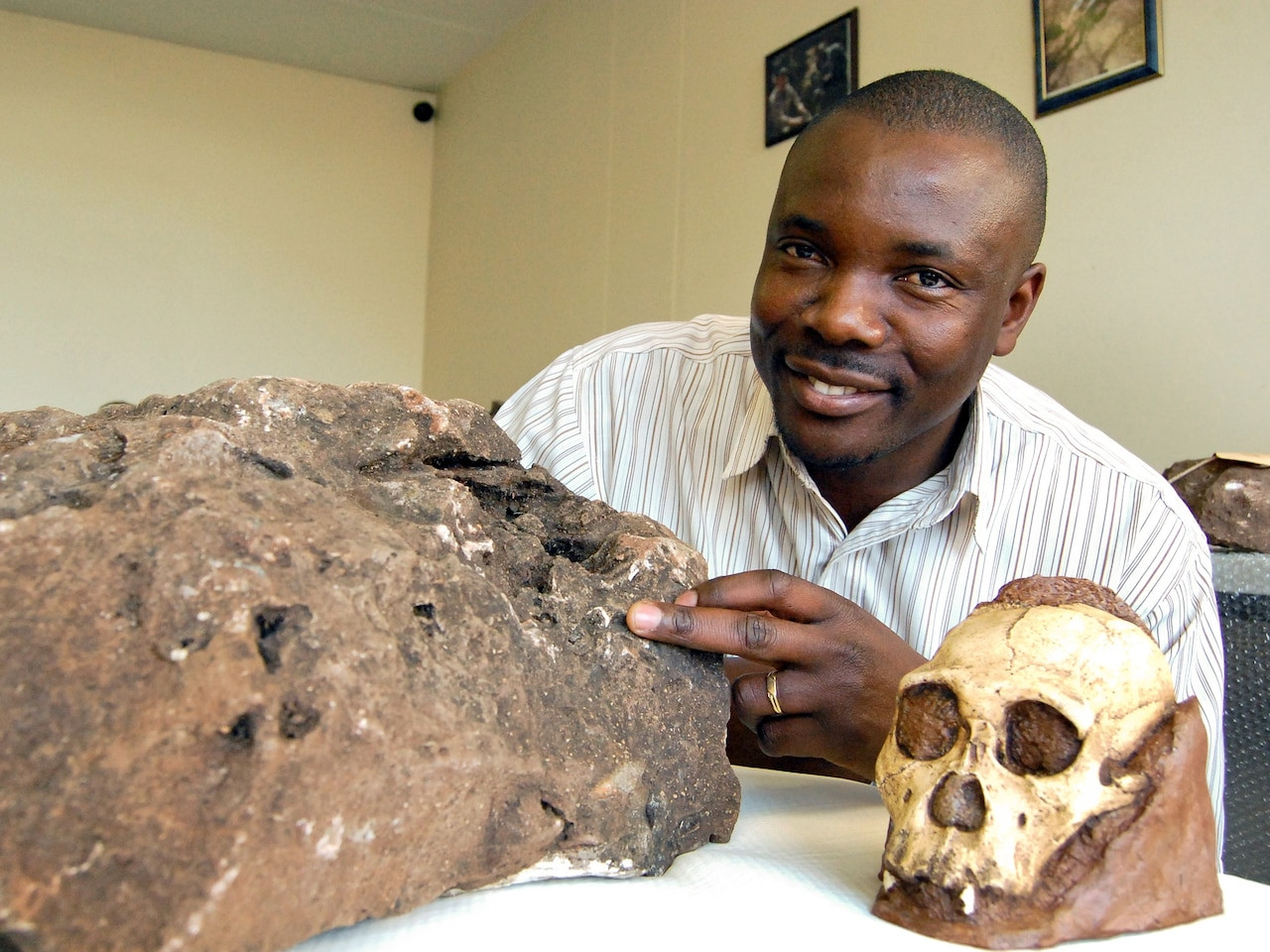
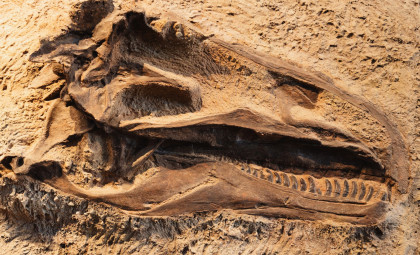
Prof. Lee Berger explained that the fossil contains several significant skeletal parts, including a section of the jaw, a nearly complete femur, along with ribs, vertebrae, and other important limb bones.
“We have discovered parts of a jaw and critical aspects of the body including what appear to be a complete femur (thigh bone), ribs, vertebrae and other important limb elements, some never before seen in such completeness in the human fossil record,” Berger said.
Berger highlighted that some of these elements represent unprecedented completeness in human fossil findings. As the skeleton remains embedded in hard rock, further details will surface as the fossil is carefully extracted.
A Rock That Sat Idly for Years
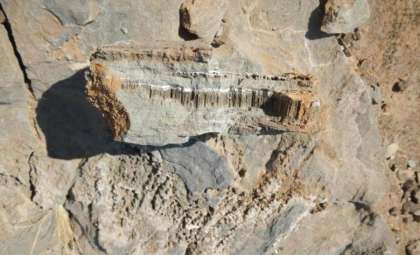
What makes this discovery even more intriguing is that the rock was actually collected years ago. According to Phys.org, this roughly one-meter-wide block had been in Wits University’s possession for nearly three years, yet its contents remained unnoticed until recently.
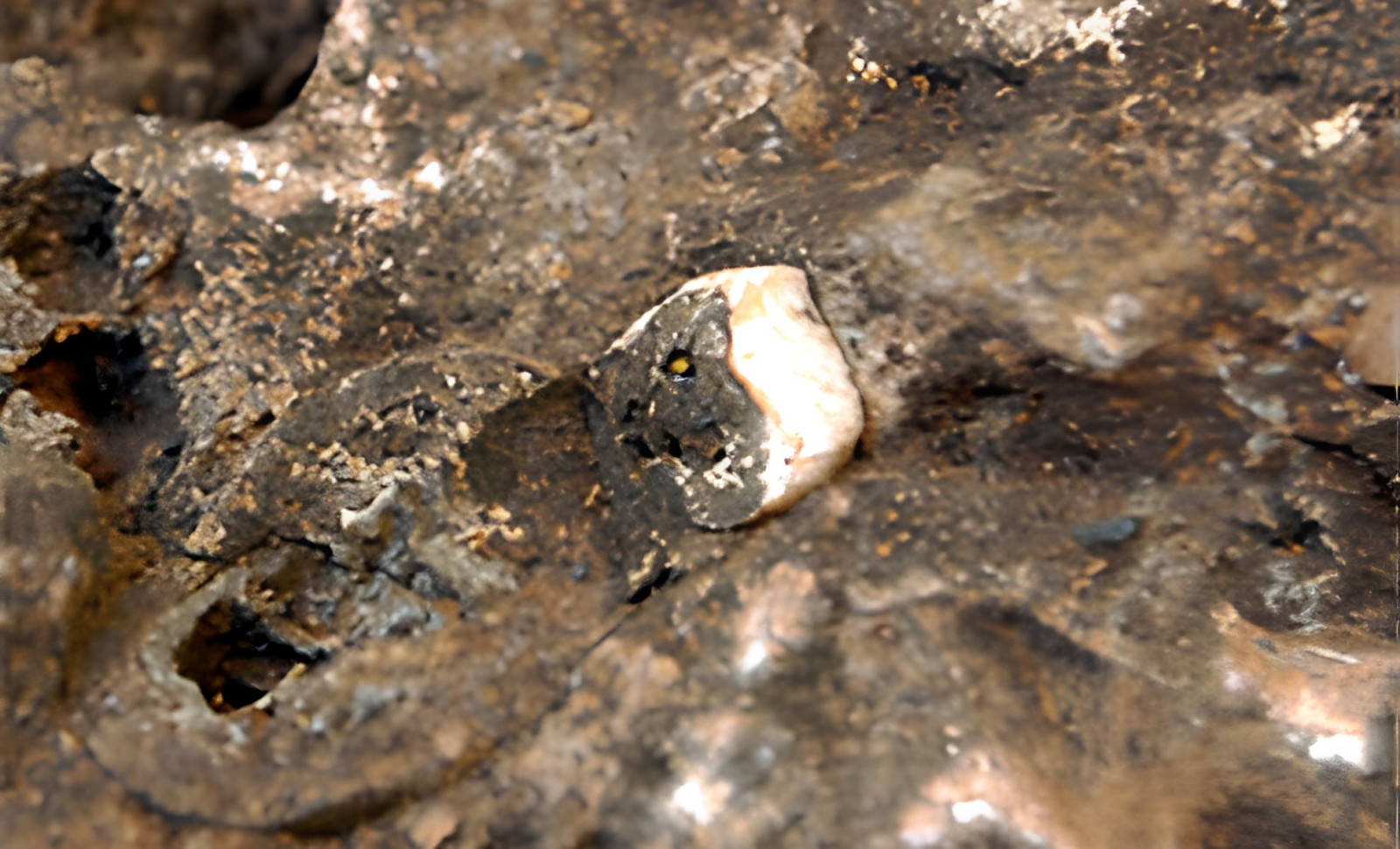
Externally, there were no obvious hints of the fossil inside, and the remains remained fully concealed until researchers recognized their importance. Berger expressed enthusiasm, noting the find includes some of the most informative skeletal parts ever uncovered.
“We are obviously quite excited as it appears that we now have some of the most critical and complete remains of the skeleton, albeit encased in solid rock. It’s a big day for us as a team and for our field as a whole,” he said.
Fossil Excavation Open to the Public
Alongside the announcement, the University of the Witwatersrand, the Gauteng Provincial Government, and South Africa’s national government unveiled an innovative initiative: inviting the public to witness the fossil preparation firsthand.

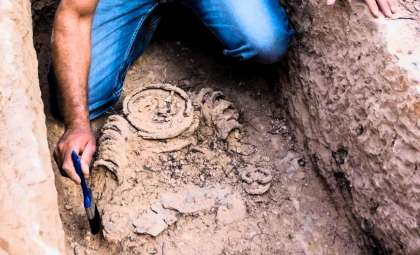
In collaboration with the National Geographic Society, a special laboratory studio was set up at the Maropeng Visitor Centre within the Cradle of Humankind World Heritage Site. Visitors had the opportunity to observe the meticulous work in person, while others could follow the process via online streams.
“The public will be able to participate fully in live science and future discoveries as they occur in real time — an unprecedented moment in palaeoanthropology,” said Berger.
Now, Karabo’s fossil moves into a new stage of examination. Researchers anticipate that ongoing preparation will unlock valuable insights into early human evolution.
- Categories:
- Science


0 comments
Sign in to Comment