
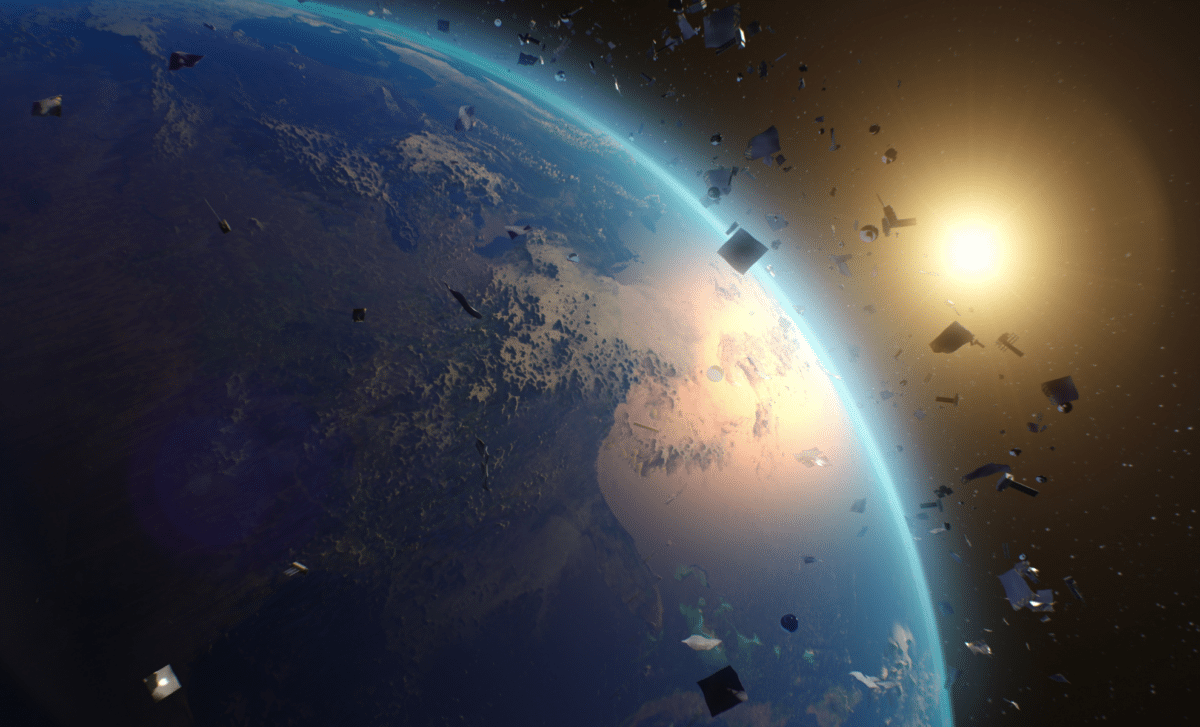
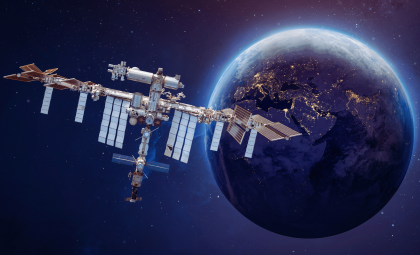
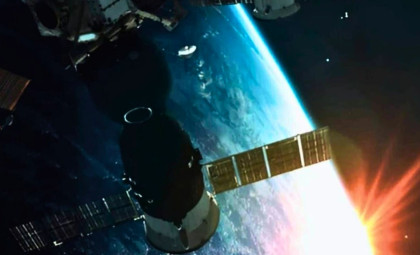
Thousands of satellites orbit our planet, creating an essential, unseen network that supports communication, navigation, and weather monitoring. This orbital system relies heavily on constant monitoring and precise maneuvers to prevent collisions. However, recent research indicates that this carefully balanced ecosystem may be more vulnerable than once believed. A study featured on arXiv and led by Sarah Thiele of Princeton University reveals that a severe collision in low Earth orbit could occur in less than three days if satellites lose coordination or maneuvering capabilities.
The CRASH Clock Highlights Limited Time Before Orbital Crisis
The research introduces the Collision Realization And Significant Harm (CRASH) Clock, a tool designed to predict how rapidly a major orbital collision might happen when systems degrade. By analyzing satellite data from June 2025, researchers simulated conditions where spacecraft could no longer avoid collisions due to impaired tracking or maneuvering.
The findings expose a striking rise in orbital risk: a significant collision could happen in approximately 2.8 days without maneuvering, extending to 5.5 days when considering all tracked objects in low Earth orbit. This tight timeline contrasts sharply with past data—back in 2018, before the surge of mega-constellations, the collision risk period was 164 days.

This rapid decrease stems from the swelling number of satellites and debris, making today’s orbital environment densely packed and unforgiving. The CRASH Clock starkly illustrates how minimal the buffer for errors has become in space operations.
Solar Storms Pose a Systemic Disruption
Published on arXiv, the study points to solar storms as a major threat, not necessarily due to direct collisions but by disabling systems critical for collision avoidance. Satellites depend on continuous tracking, communication, and navigation, all vulnerable to solar activity.
When solar storms intensify, Earth’s upper atmosphere expands, creating drag that disrupts satellite orbits and demands frequent adjustments. For instance, during the May 2024 Gannon Storm, nearly 50% of active satellites required maneuvering due to these atmospheric effects.
The danger escalates when communication networks and navigation aids become unreliable, hampering operators’ ability to track and control satellites. The study highlights how these simultaneous technical interruptions could rapidly trigger a breakdown in orbital safety.
The Challenge of Mega-Constellations and Crowded Orbits
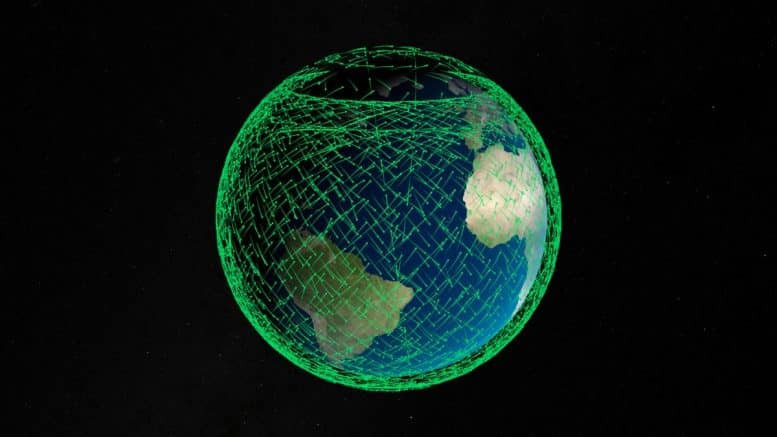
The swift growth of large satellite constellations, such as Starlink, has dramatically increased traffic in low Earth orbit. Although these networks deliver global internet and other vital services, their vast sizes introduce significant orbital management challenges.
Data referenced in the study notes that Starlink satellites alone executed over 144,000 collision avoidance maneuvers during a six-month period from late 2024 to mid-2025. This translates into near-constant positional adjustments across the constellation.
The satellite density at approximately 550 kilometers altitude now exceeds the concentration of tracked debris at higher orbital bands, creating particularly vulnerable zones where a single failure could escalate rapidly. Close approaches between objects—defined as within one kilometer—occur roughly every 36 seconds in low Earth orbit, each representing a potential hazard demanding active management.
The Domino Effect of a Single Catastrophic Collision
While discussions about orbital hazards often revolve around Kessler Syndrome—a chain reaction of collisions rendering orbit unusable—the new analysis concentrates on the immediate impact caused by just one major crash.
Such an event could generate thousands of debris fragments traveling at high velocities, spreading hazards across multiple orbits and complicating satellite navigation. Historical events, like the 2007 Fengyun-1C anti-satellite test and the 2009 crash of Iridium 33 with Kosmos 2251, still influence today’s debris environment.
Current orbital conditions are even more precarious due to increasing object densities and reliance on real-time coordination. A single disruption, especially amid solar storm activity, could ignite a fast-moving cascade of catastrophic collisions.
- Categories:
- News




0 comments
Sign in to Comment