
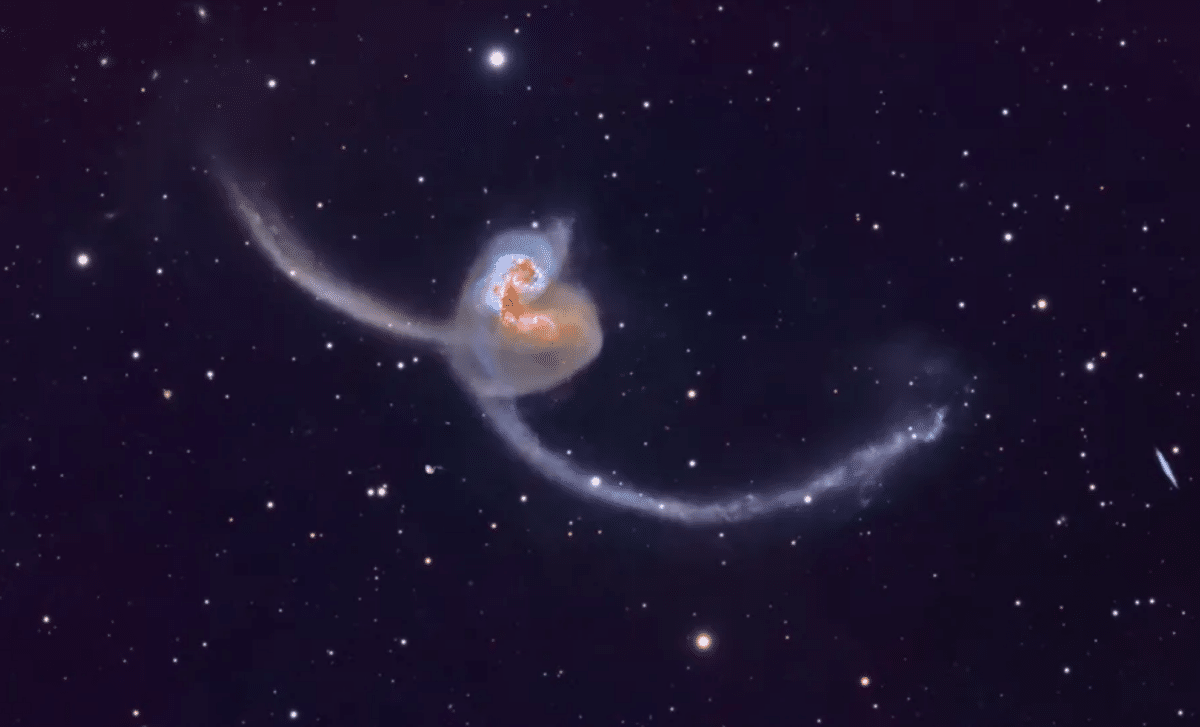
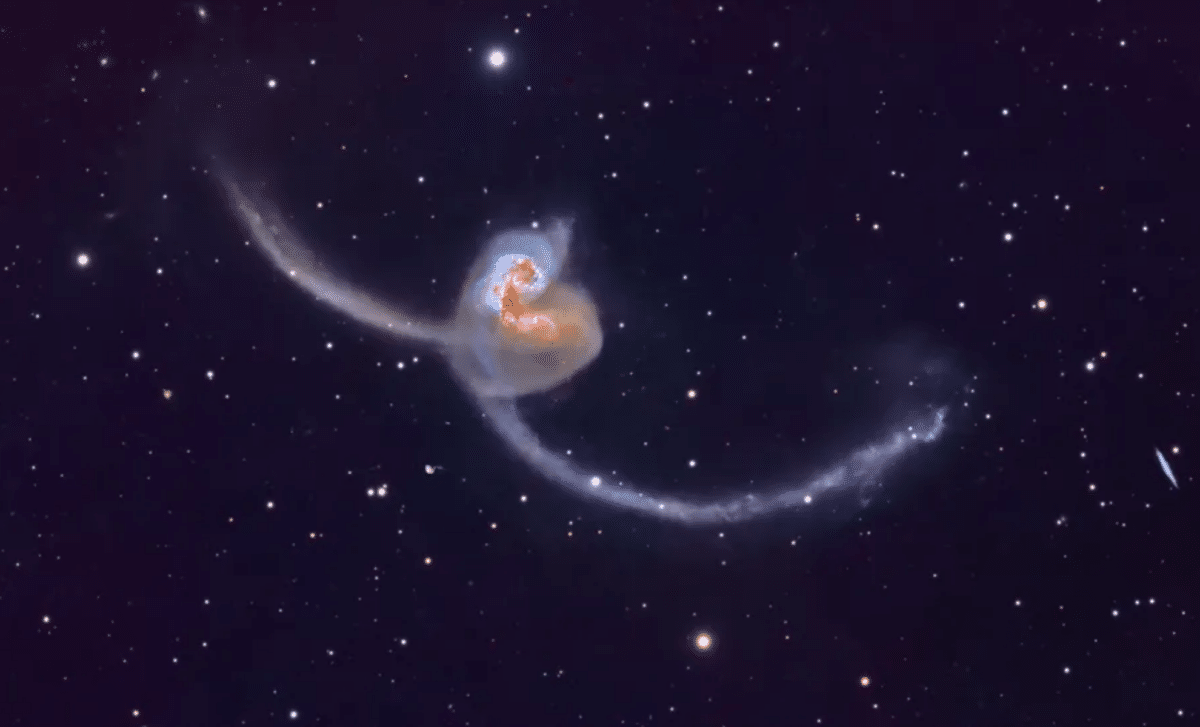
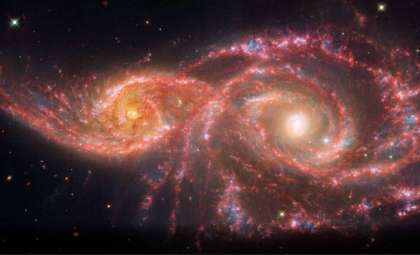
An exceptional new image captures the Antennae Galaxies locked in an extraordinary cosmic encounter, providing a vivid snapshot of galactic evolution driven by intense gravitational forces. Situated approximately 45 million light-years away, this well-known duo, NGC 4038 and NGC 4039, is shown entwined in a dynamic merger that is actively transforming their structures. The photograph exhibits sweeping tidal streams, dense regions where stars are rapidly forming, and swirling clouds of gas and dust—key indicators of galactic collisions that continue to deepen scientists' understanding of galaxy life cycles.
An Intimate View of Galactic Interaction
The latest imagery highlights the Antennae Galaxies—also identified as NGC 4038 and NGC 4039—engaged in a slow gravitational dance roughly 45 million light-years distant within the Corvus constellation. These systems represent some of the closest and youngest merging galaxies visible, attracting interest from astronomers and astrophotographers alike.
Beyond its aesthetic appeal, this photo reveals intricate galactic structures. The long, antenna-like tidal tails form due to powerful gravitational pulls, stretching stars, gas, and dust into the spaces between galaxies. Such characteristics are hallmark features of galaxy mergers, a process unfolding over hundreds of millions of years and often sparking prolific star formation.

Taken by astrophotographer Damian Meyer, the image demonstrates meticulous craft and technical expertise. The challenge in capturing the Antennae lies in their vast distance and relatively small appearance from Earth, yet this shot successfully highlights details in the complex overlap zone where the galaxies actively interact.
The Gear and Dedication Behind the Image
Securing such crisp detail demanded perseverance along with thoughtful selection of gear. Meyer shared how he gauged whether his telescope setup was capable before launching the project.
“I have a Sky-Watcher Esprit 120 [telescope] with a focal length of 840mm, which is a little short for most galaxies, this being galaxy season now,” Meyer told Space.com in an email. “So whenever I see a picture of a galaxy, I see if it is within reach for me by checking Astrobin for photos taken with the same scope. And since this is such a cool image of 2 galaxies, with an amazing backstory, I had to go for it.”
Meyer’s method reflects a growing trend among astrophotography enthusiasts who utilize online resources and collaborative communities to extend the capabilities of mid-range equipment. Through careful stacking of multiple exposures and improving capture conditions, he unveiled faint structures typically visible only through large observatories.
The Scientific Importance of the Antennae Galaxies
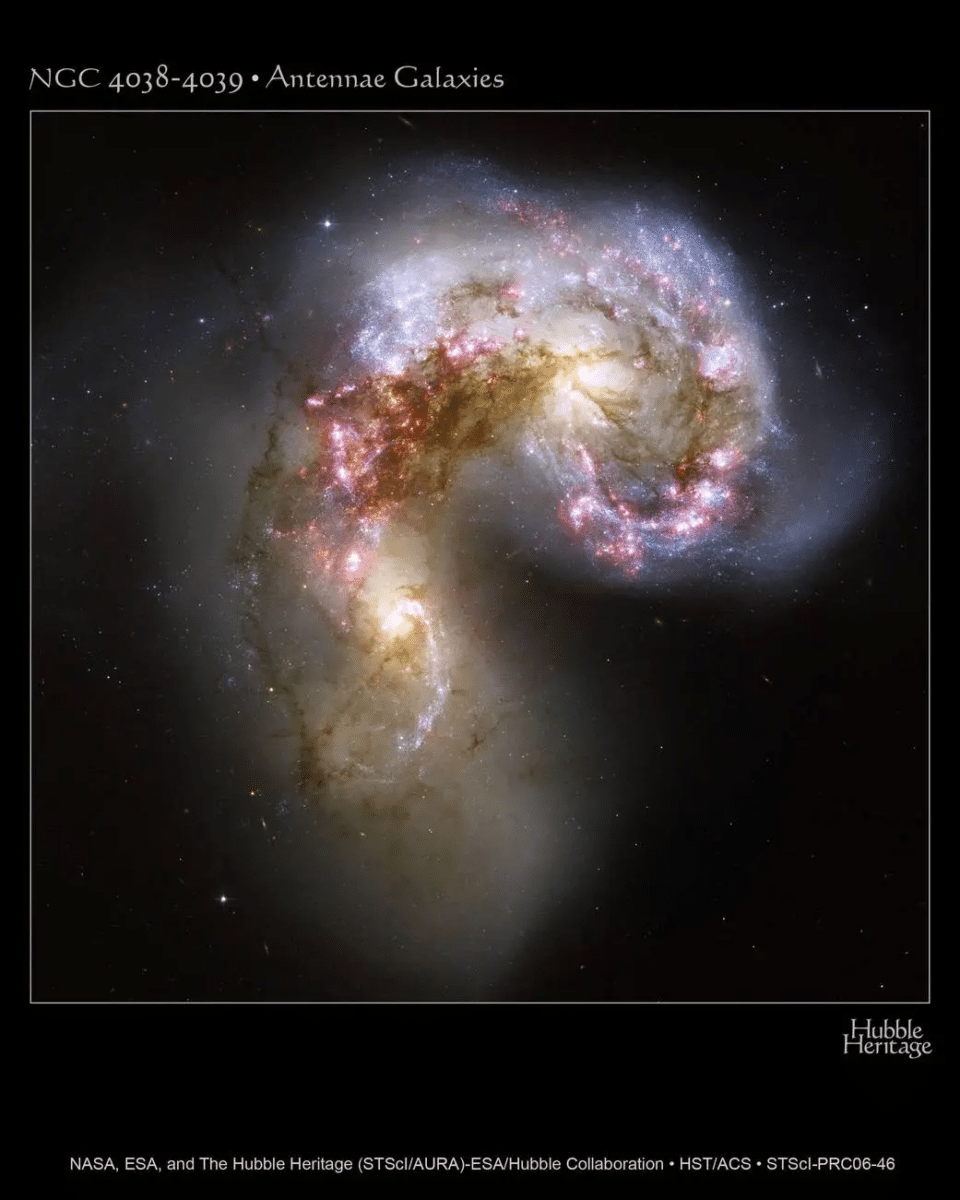
Beyond their visual allure, the Antennae Galaxies offer critical insights into the fate of galaxies like our own Milky Way, expected to collide with the Andromeda Galaxy in the far future. Observing such mergers is key to understanding their influence on star formation and galactic structure evolution.
The overlap zone between the Antennae hosts a turbulent environment filled with collapsing gas clouds that birth new stars at a significantly accelerated pace. These starburst areas emit strong signals across various wavelengths, making them important targets for both visible and infrared observation efforts.
The elongated tidal tails visible in the scene trace the gravitational interplay of the two galaxies and contain clusters of newborn stars, offering vital clues about how matter shifts during collisions.
The Rise of Advanced Amateur Astronomy
This photograph demonstrates how technological advancements have empowered amateur astronomers to make significant contributions to the field. The widespread availability of superior telescopes, sensitive imaging devices, and sophisticated editing software enables enthusiasts to capture breathtaking phenomena once accessible only to professional observatories.
Meyer’s feature on Space.com highlights the value of dedication and strategic planning in astrophotography. It also highlights how shared knowledge within the astronomy community boosts global observation quality.
As more astrophotographers aim at distant cosmic targets, such images continue to connect scientific discovery with public interest, providing clearer views of far-off universal events.
- Categories:
- Astronomy









0 comments
Sign in to Comment