
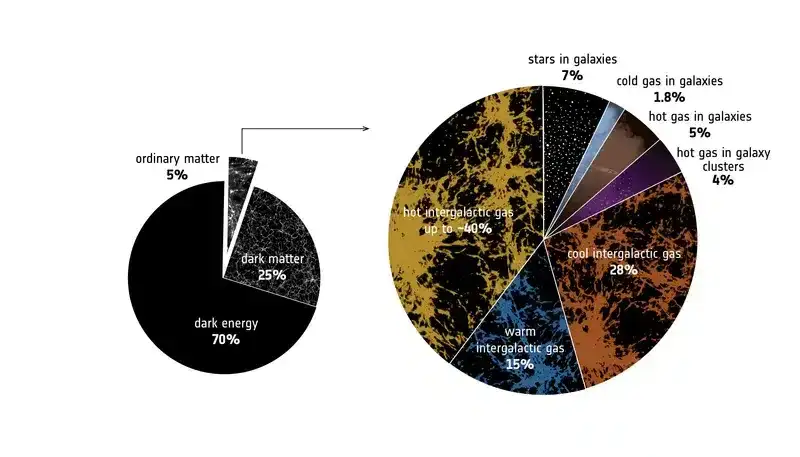
For decades, scientists have grappled with a cosmic mystery: a substantial portion of the universe’s ordinary matter has eluded detection. While the visible matter forming stars, planets, and galaxies is well documented, almost 40% of the universe’s baryonic matter remained undiscovered—until recent findings shed light on where it resides.
A latest investigation corroborates simulation predictions, revealing that this elusive matter is dispersed in an expansive, faintly illuminated cosmic framework bridging the vast spaces between galaxies.
Fast Radio Bursts Illuminate the Invisible
The key to uncovering this matter came through analysis of Fast Radio Bursts (FRBs), brief but intense surges of radio waves lasting only milliseconds. These enigmatic emissions experience “dispersion” when passing through material in intergalactic space, altering their signal frequencies. By scrutinizing the way these bursts dispersed, researchers estimated the quantity of intervening matter scattered between galaxies.

The landmark work, published in Nature and involving data from 69 FRBs with identified origins, tracked signal delays caused by interactions with diffuse gas in the cosmic medium. Liam Connor, an assistant professor at Harvard and the study's lead, described it this way: "The FRBs pass through the fog of the intergalactic medium, and by measuring the precise slowing of their light, we can weigh this otherwise invisible fog."
These measurements allow astronomers to finally put a figure on the once unseen mass in the voids between galaxies, bringing empirical support to long-standing theoretical forecasts.
Validation Through X-Ray Astronomy
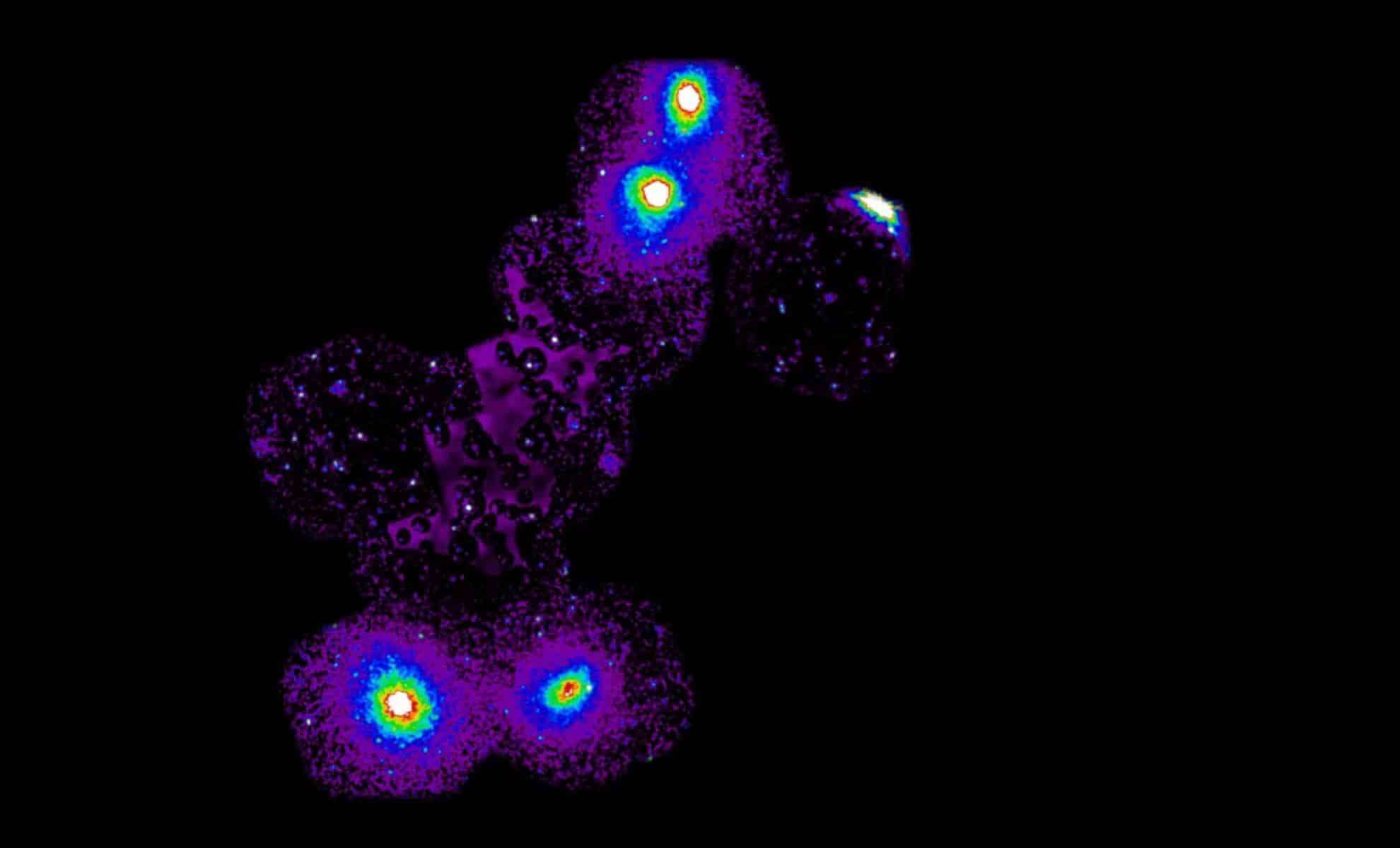
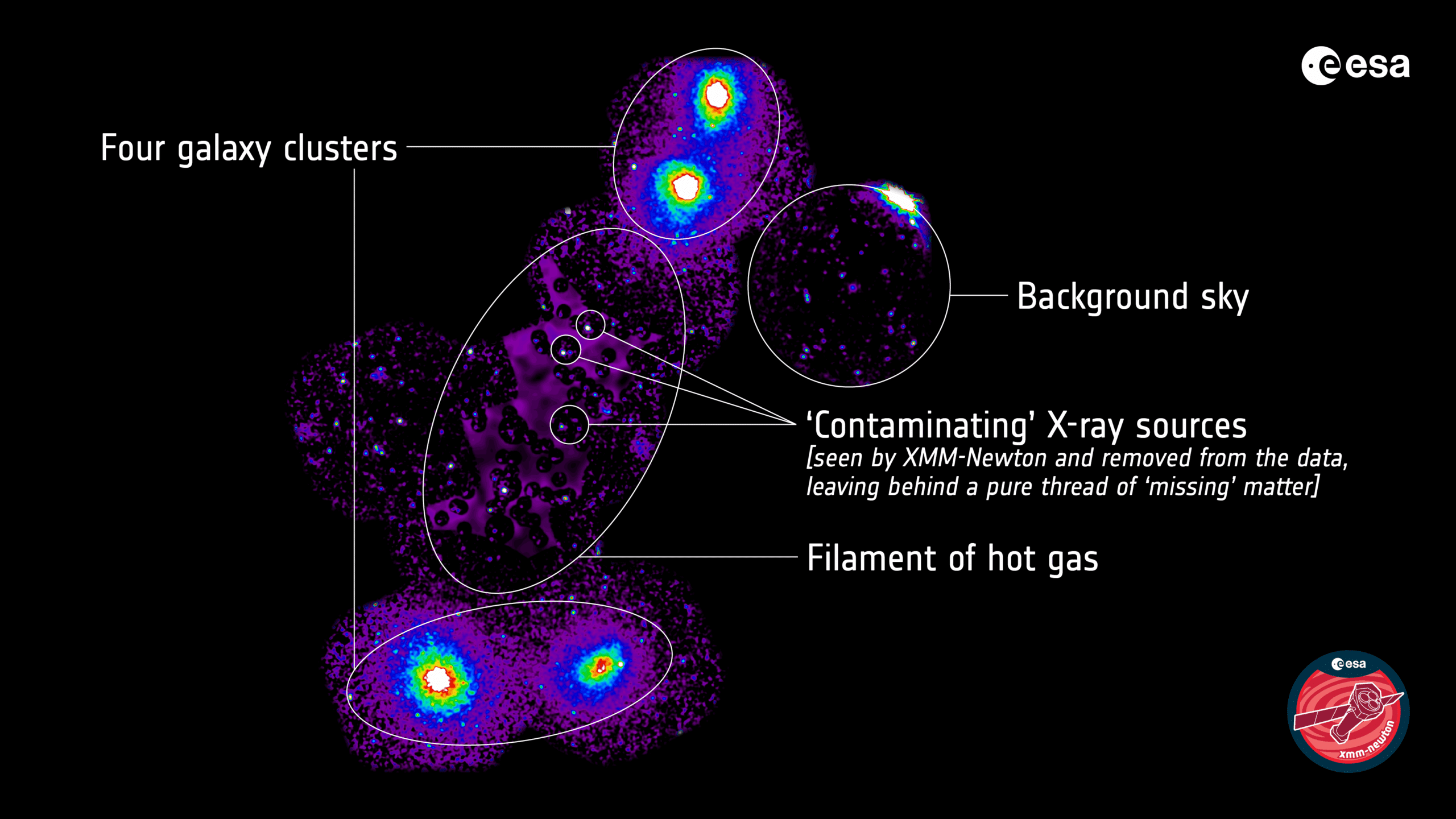
Complementing this discovery, X-ray telescopes provided additional verification by detecting the faint glow of hot intergalactic gas. This gas emits X-rays because of its extreme temperatures, often reaching millions of degrees, but its weak emissions make observation challenging. Two space-based observatories—Europe’s XMM-Newton and Japan’s Suzaku—were instrumental in gathering this vital data, focusing on the massive Shapley Supercluster, a region hosting over 8,000 galaxies.
By examining the X-ray emissions from the supercluster and its encompassing gas, scientists determined the density of gas flowing through the colossal filaments linking galaxy clusters. These filaments extend over immense scales, including a staggering 23-million-light-year-long stretch. The findings from both radio wave dispersion and X-ray imagery closely matched existing cosmological predictions.
Revolutionizing Our Understanding of Cosmic Structure
Discovering this hidden matter does more than just close a knowledge gap about the universe's composition; it enriches our comprehension of the cosmic web’s architecture. This intricate network, formed by galaxies, gases, and other components, determines the universe’s large-scale structure. Grasping the distribution of matter within it is crucial for advancing cosmological studies.
Konstantinos Migkas, spearheading the research at Leiden Observatory, reflects on the impact of these revelations: “Our data now aligns spectacularly with the leading cosmological model — a harmony that has not been achieved until now.” This breakthrough confirms and strengthens the framework scientists use to interpret the cosmos.
- Categories:
- News






0 comments
Sign in to Comment