
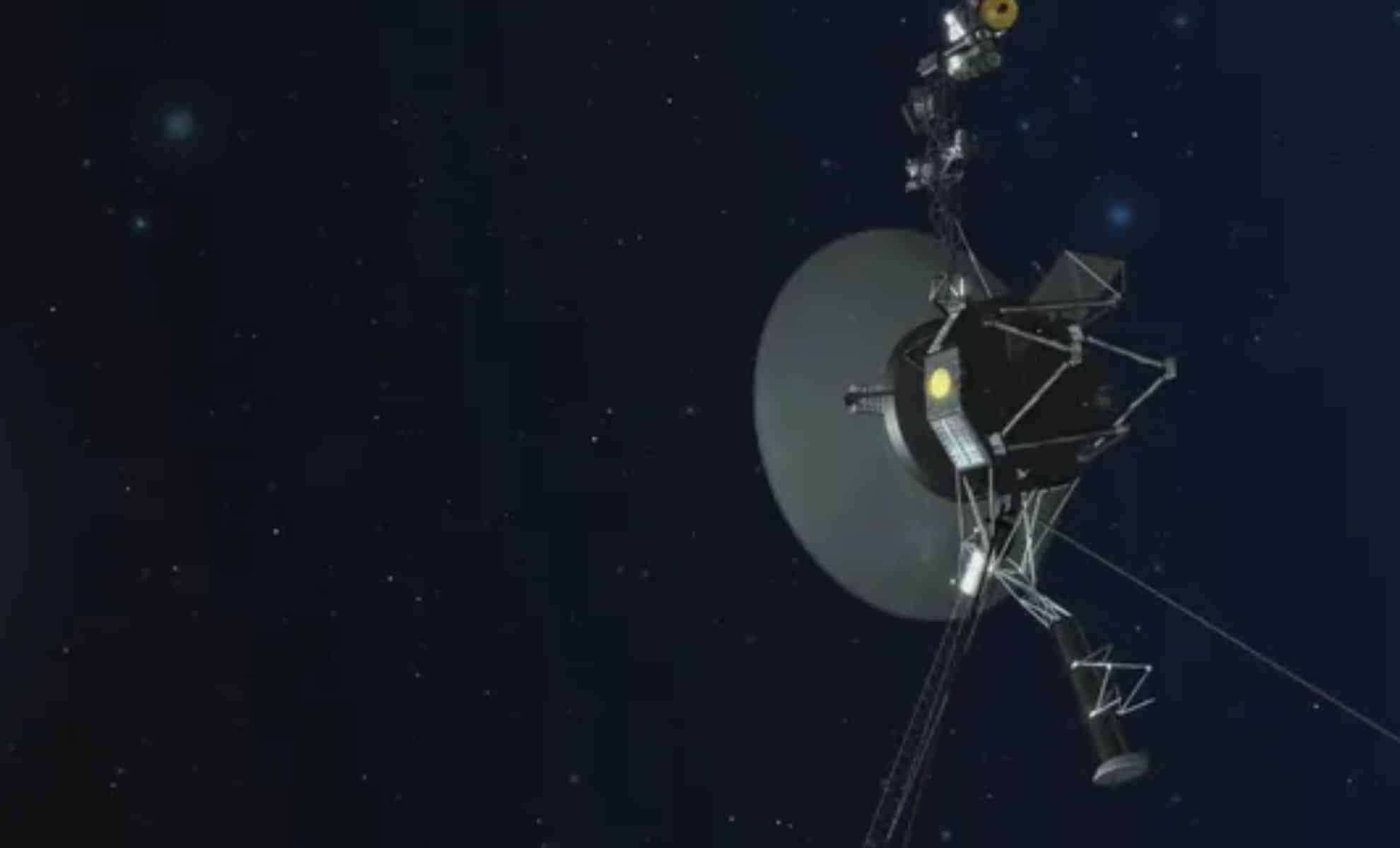
After a five-month communication blackout, NASA’s Voyager 1 spacecraft has resumed transmitting data from the brink of interstellar space. In a report released on April 22, 2024, by NASA’s Jet Propulsion Laboratory (JPL), mission teams confirmed the spacecraft’s engineering telemetry was successfully restored. More intriguingly, the signals Voyager now captures at the solar system’s frontier suggest surprising new features beyond the Sun’s protective boundary.
Ingenious Software Solution Revives Voyager 1
Launched in 1977, Voyager 1 holds the record as humanity’s most distant object, currently more than 15 billion miles from Earth. In November 2023, it ceased returning usable data, although it still responded to commands. Engineers traced the fault to the Flight Data Subsystem (FDS), one of its three onboard computers, where a crucial chip storing parts of the FDS software had malfunctioned. This glitch disrupted the spacecraft’s data packaging before transmission.
Since the hardware chip cannot be replaced, the engineering team devised a workaround. They fragmented the corrupted software segment and relocated each part to separate healthy memory areas. On April 18, NASA sent the revised code to Voyager. The signal took 22.5 hours to reach the spacecraft, with another 22.5 hours for the reply. By April 20, engineers confirmed that usable engineering data had been received, proving the fix worked.

Further updates to the FDS software are planned in the upcoming weeks to reinstate the spacecraft’s full science data transmission capabilities. Currently, Voyager’s systems remain in a stable state, vital for ongoing research beyond the heliopause, the boundary where the solar wind meets interstellar space.
An Intense Plasma Zone at Solar System’s Boundary
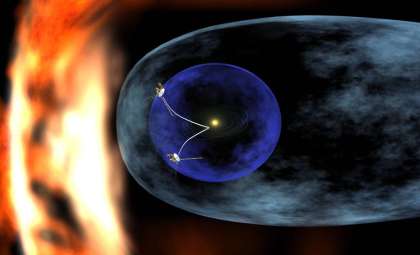
Contrary to earlier expectations of a calm region beyond the solar system, Voyager 1 has identified a highly active zone. Reports from The Valley Vanguard describe a powerful interaction where the solar wind strikes the interstellar medium, producing a phenomenon scientists term a “wall of fire.”
Temperatures here soar to an extreme 30,000 °C (54,000 °F). This heat does not come from combustion but results from particles colliding at tremendous speeds. The area is a thin, scorching plasma sheet energized by magnetic reconnection, where the magnetic fields of the solar wind and the interstellar medium break and reconnect, releasing bursts of energy.
Despite these harsh conditions, Voyager 1 continues its passage without damage. The sparse particle density at this distance keeps collisions infrequent, allowing safe transit.
Unexpected Magnetic Field Continuity
Prior predictions anticipated a sharp magnetic field transition upon Voyager’s departure from the heliosphere. Yet, observations reveal an unexpected link between solar and interstellar magnetic structures. This discovery implies the Sun’s magnetism may reach farther into interstellar space than previously believed.
This new understanding sheds light on galactic magnetic field behaviors, affecting models of space weather, environments around distant worlds, and strategies for future deep-space missions.
Voyager 1 Presses On Toward New Frontiers
Almost 50 years after its launch, Voyager 1 remains a powerhouse of space exploration. Its instruments operate on less power than a typical household bulb, drawing energy from a plutonium-based power source that, while gradually fading, still supports essential functions.
NASA utilizes an extensive array of 230-foot radio antennas to capture the faint messages sent from more than 24 billion kilometers away.
With engineering telemetry reestablished, Voyager is set to resume providing groundbreaking scientific data from a region of space no probe has ever explored. Scientists eagerly anticipate new insights into cosmic radiation, plasma densities, and magnetic field fluctuations.
- Categories:
- News




0 comments
Sign in to Comment