
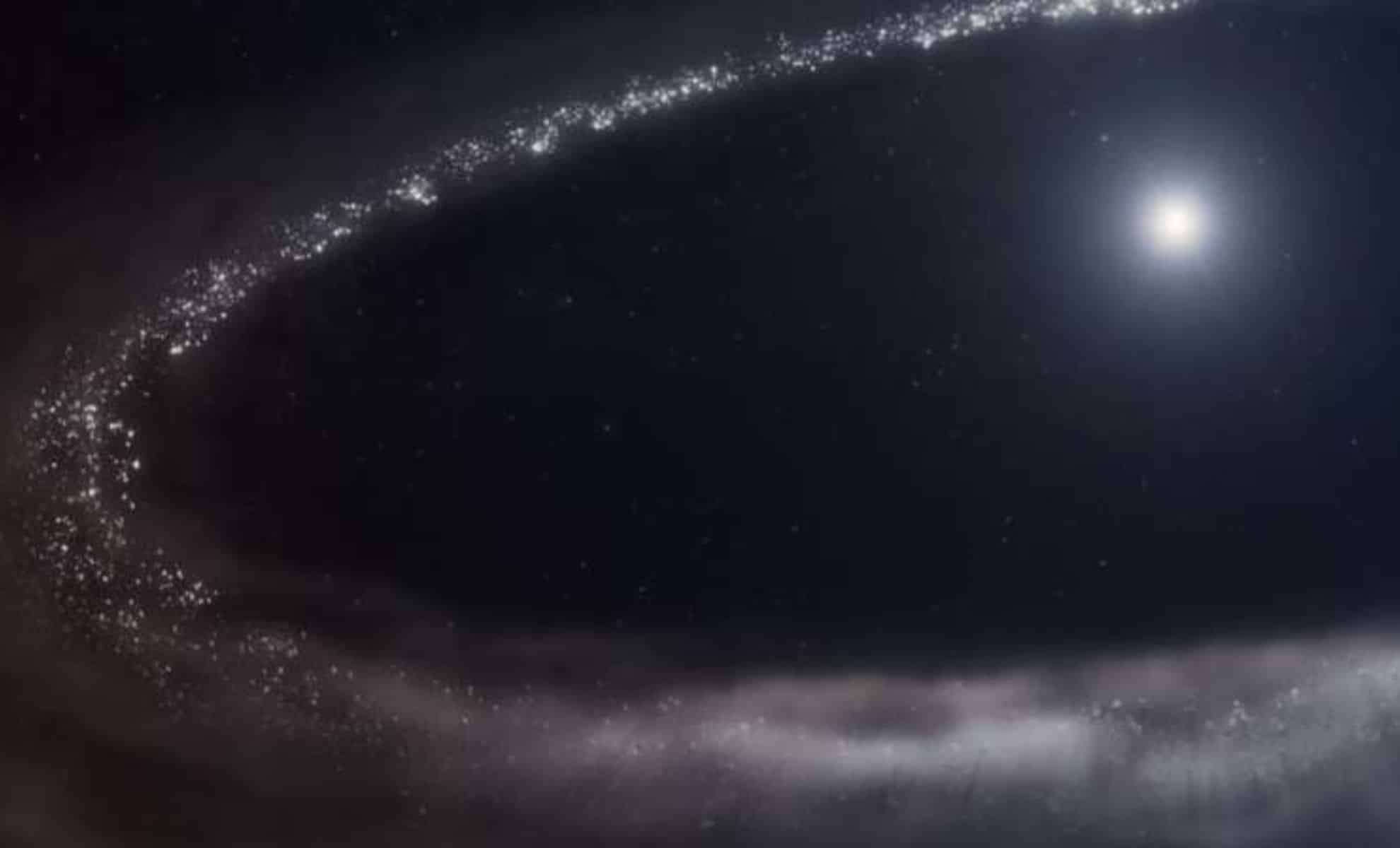
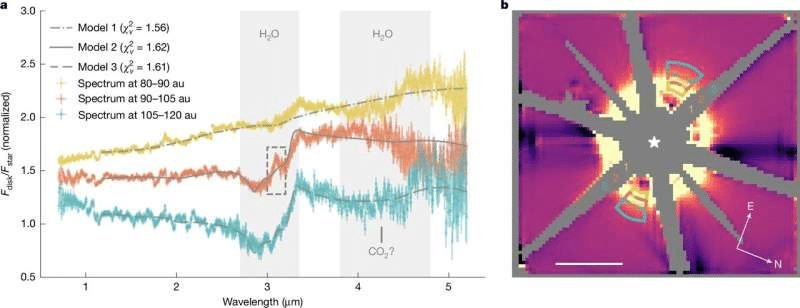
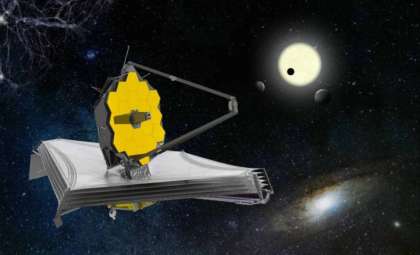
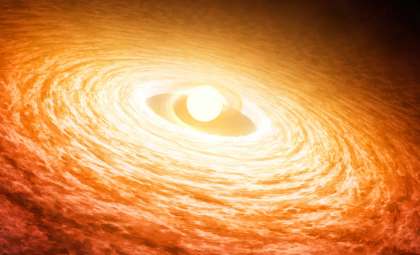
The James Webb Space Telescope has achieved a major milestone by confirming crystalline water ice within the debris disk encircling the youthful, sun-like star HD 181327. Documented in a recent Nature publication, this marks the pioneering clear detection of frozen water in a circumstellar environment outside our own solar neighborhood. Detected alongside fine dust grains, the icy material offers fresh insights into how planetary systems begin to form. Webb's advanced instruments captured detailed spectral data revealing both the composition and spatial spread of ice particles throughout the debris disk, heralding new explorations into the earliest phases of planet formation.
Crystalline Ice Discovery Highlights Similarities With Our Solar System
The crystal-structured water ice discovered by Webb echoes forms previously observed in parts of our solar system, such as Saturn’s ring system and the Kuiper Belt. Chen Xie, the study’s lead author and assistant research scientist at Johns Hopkins University, explained the significance: “Webb has distinctly identified not only water ice, but crystalline water ice, which also exists in places like Saturn’s rings and icy bodies found in the Kuiper Belt.” This discovery suggests parallel processes at work in dust and ice evolution around distant stars and within our own stellar neighborhood. Webb detected minuscule icy grains formed by ongoing collisions within the debris field, connecting the environment to conditions that may have prevailed early in our solar system’s history, supporting the idea that planet-building processes could be universal throughout the galaxy.
The Vibrant Collisional Activity Within HD 181327’s Debris Disk
Estimated to be approximately 23 million years old, HD 181327 is much younger than our 4.6-billion-year-old Sun and boasts slightly greater mass and temperature, affecting its debris disk’s characteristics and activity. Chen remarked, “HD 181327 is a highly active system. Its debris disk experiences frequent collisions.” These impacts among icy objects continuously release fine dust and crystalline ice fragments detectable by Webb. This dynamic is reminiscent of the Kuiper Belt’s environment in our own solar system, where collisions between similar icy bodies generate a steady supply of dust and ice particles. This ceaseless bombardment sustains the icy content of the disk and provides a live glimpse into the formative processes shaping planetary systems.

Nonuniform Water Ice Spread Around The Disk Revealed
Water ice distribution across the debris disk of HD 181327 varies considerably. Webb’s data uncovered a high concentration of ice in the outer disk, where temperatures remain sufficiently low to preserve frozen water. Chen Xie noted, “In the outer parts of the debris disk, over 20% is water ice.” Closer inward, ice abundance diminishes notably, with roughly 8% water ice at intermediate distances, dropping to almost none near the star itself. This pattern likely results from the star’s ultraviolet radiation vaporizing ice in warmer zones. Additionally, water may reside locked inside larger objects called planetesimals, which are more challenging for Webb to detect. This uneven ice distribution casts light on the physical and chemical makeup of evolving planetary systems.
Significance of Water Ice in Shaping Planets and Habitability
Water ice is integral to planetary formation, aiding in the growth of gas giants and contributing to water delivery on rocky planets. Chen Xie highlighted, “Water ice presence promotes planet building. Icy materials may eventually be transported to terrestrial planets forming over hundreds of millions of years in systems like this.” Detection of crystalline water ice around HD 181327 implies that water might be prevalent in young planetary environments, potentially expanding the prospects for habitability beyond the solar system. Gaining a deeper understanding of water’s dispersal and transport in such systems is key to piecing together planetary history and the potential for life elsewhere in the cosmos.
- Categories:
- News




0 comments
Sign in to Comment