
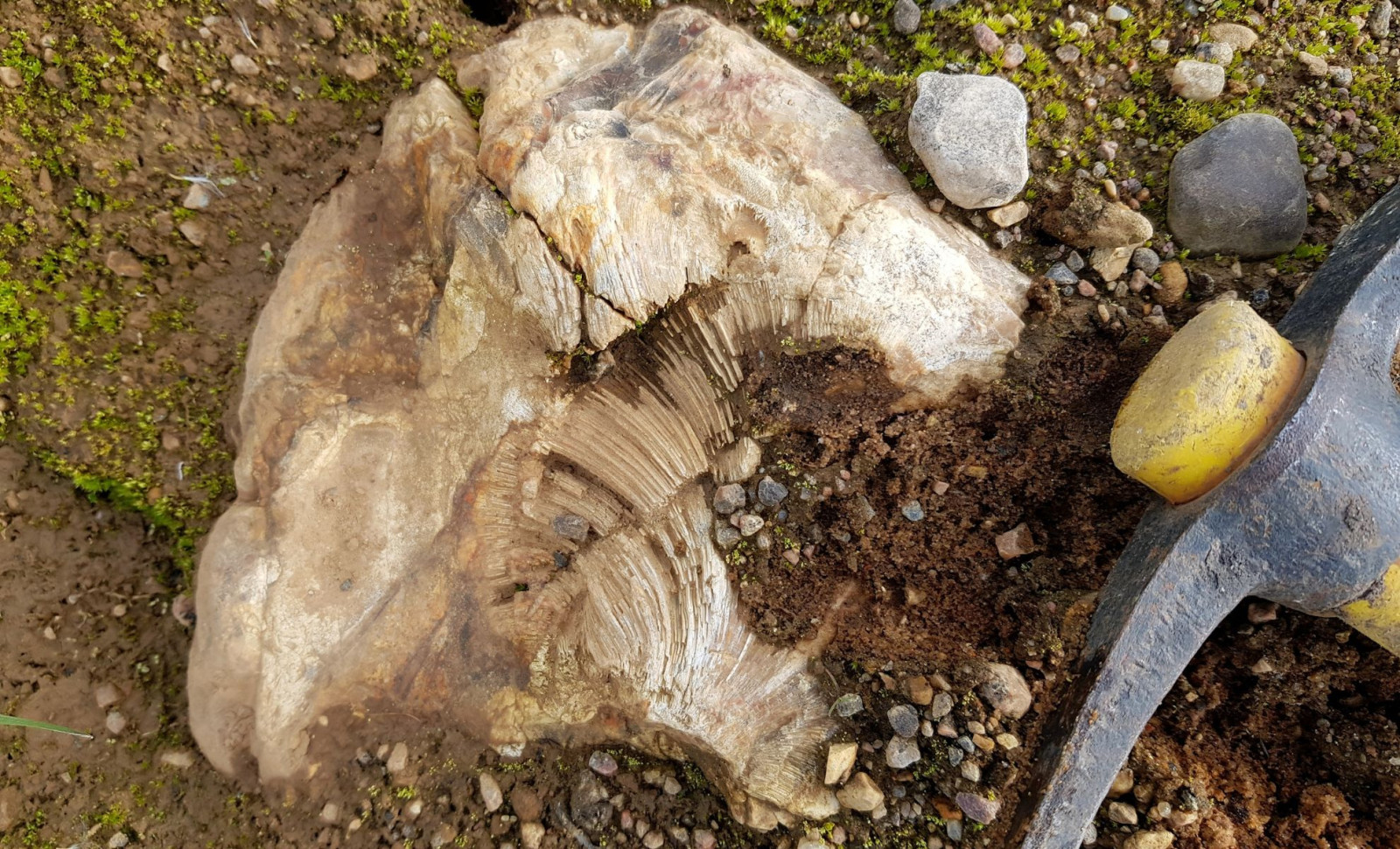
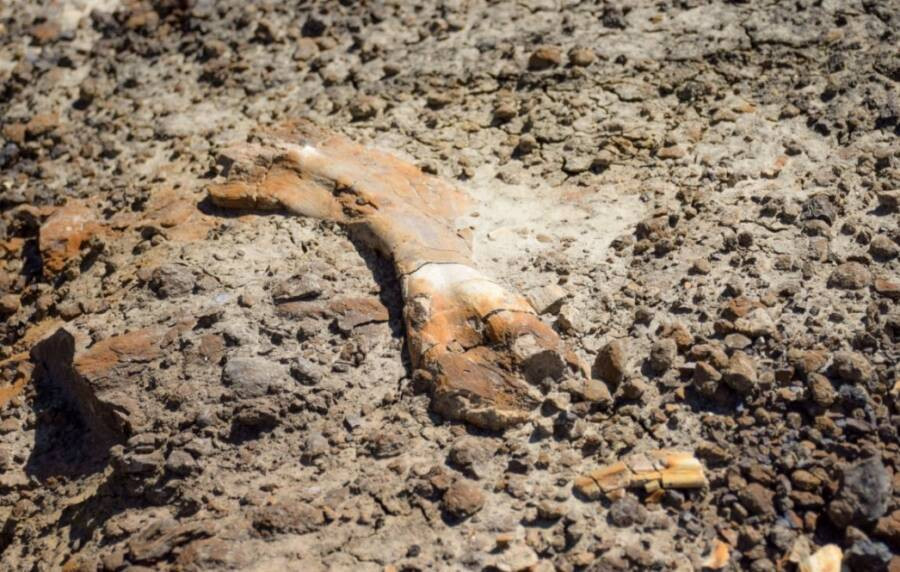
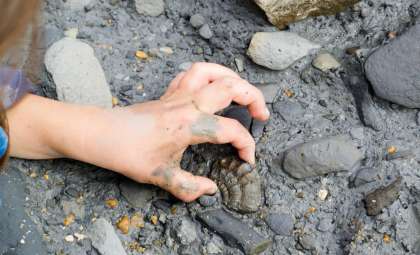
While trekking through Alberta’s Horseshoe Canyon with his dad, 12-year-old Nathan Hrushkin encountered a fossil embedded in the rock. This remarkable discovery was identified as part of a juvenile hadrosaur that lived around 69 million years ago. What started as a routine hike turned into an extraordinary paleontological breakthrough.
After reporting the discovery to the Royal Tyrrell Museum, experts swiftly verified the fossil’s authenticity. The site, safeguarded by the Nature Conservancy of Canada (NCC), produced multiple additional bones from the same dinosaur. Since fossils from this geological stratum are uncommon, this find holds great scientific importance.
Unearthing Treasures from an Uncommon Geological Layer
The specimen found by Nathan Hrushkin originated from a section of the canyon rarely yielding dinosaur fossils. As detailed by a report on CNN, the site features sediment layers dating back between 71 and 68 million years, consisting of ash, sandstone, and mudstone. Though these layers favor fossil preservation, they hadn’t been extensively studied until this discovery drew attention.

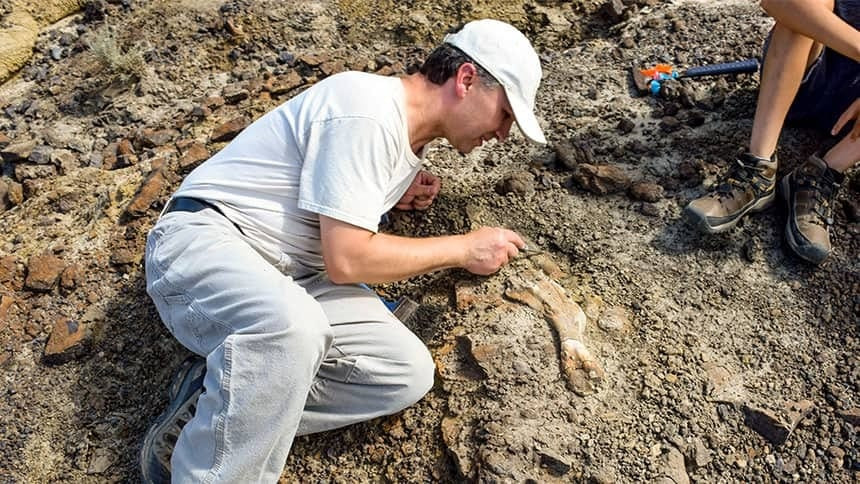
Museum paleontologists examined photos and verified that the bones belonged to a young hadrosaur. They later excavated 30 to 50 more bones at the location, all part of the same dinosaur. The scarcity of fossils in this geological period intrigued researchers. As Dion Hrushkin, Nathan’s father, remarked to All That’s Interesting:
“This young hadrosaur is a very important discovery because it comes from a time interval for which we know very little about what kind of dinosaurs or animals lived in Alberta,” he stated. “Nathan and Dion’s find will help us fill this big gap in our knowledge of dinosaur evolution.”
Conserving Nature and Science Together
The fossils were located on the Nodwell property, a conserved area overseen by the Nature Conservancy of Canada. Months after the excavation, the NCC highlighted how protected lands serve both ecological and educational purposes. They stated:
“The discovery of this dinosaur on a conservation site demonstrates the need for land conservation, not just to ensure the conservation of wild spaces for future generations, but also as an opportunity to learn about our natural heritage.”
This find remained undisturbed for millions of years due to the site’s protected status, allowing scientists to retrieve the fossils almost intact. Researchers carefully transported the bones, encased in burlap and plaster, to laboratories for detailed study.
A Childhood Dream Materializes
For Nathan Hrushkin, this discovery represents a significant step toward a lifelong ambition in paleontology.
“For me it’s just amazing because I’ve been aspiring to be a paleontologist for as long as I can remember,” he said in an interview. “So to actually find something significant is pretty amazing.”
François Therrien, a paleontologist at the Royal Tyrrell Museum, explained that hadrosaurs were as prevalent in Alberta’s Late Cretaceous ecosystem as deer are today. The discovery of juvenile fossils like Nathan’s offers invaluable insights into the growth and development of these creatures.
- Categories:
- News



0 comments
Sign in to Comment