
Researchers excavating the remnants of a medieval church in Austria have uncovered a rare artifact concealed beneath the altar — an ivory box known as a pyx. This extraordinary discovery could shed light on early Christian rituals and the use of sacred relics. The pyx was found in shattered pieces within a marble container and is considered highly rare.
The dig has been ongoing since 2016 at a hilltop location in Irschen, where the University of Innsbruck confirmed that the marble case was retrieved years ago from beneath the church altar's ruins, having lain undisturbed for centuries.
Perhaps the most remarkable aspect was that the pyx remained in place and had not been removed, unlike most reliquary boxes, which are usually taken when churches are abandoned. Excavation chief Gerald Grabherr shared that worldwide, only about 40 such ivory pyxes are known, and very few have been excavated directly from their original archaeological contexts.

Ivory Reliquary Damaged After Centuries Beneath Earth
The marble enclosure measured roughly 20 by 30 centimeters and contained fragmented ivory pieces alongside metal components and wood remnants. The artifact suffered considerable degradation from its long burial.
Conservation expert Ulrike Töchterle noted that ivory absorbs moisture from the soil, which softens and weakens it over time. Some larger fragments became distorted, making a full physical reconstruction impossible.
“Due to the very high humidity of 90 per cent in the marble shrine immediately after salvage, the risk of condensation and mould formation was very high, and the contents could not be allowed to dry out too quickly. This meant we had to ensure a very careful and prolonged drying process,” she explained.
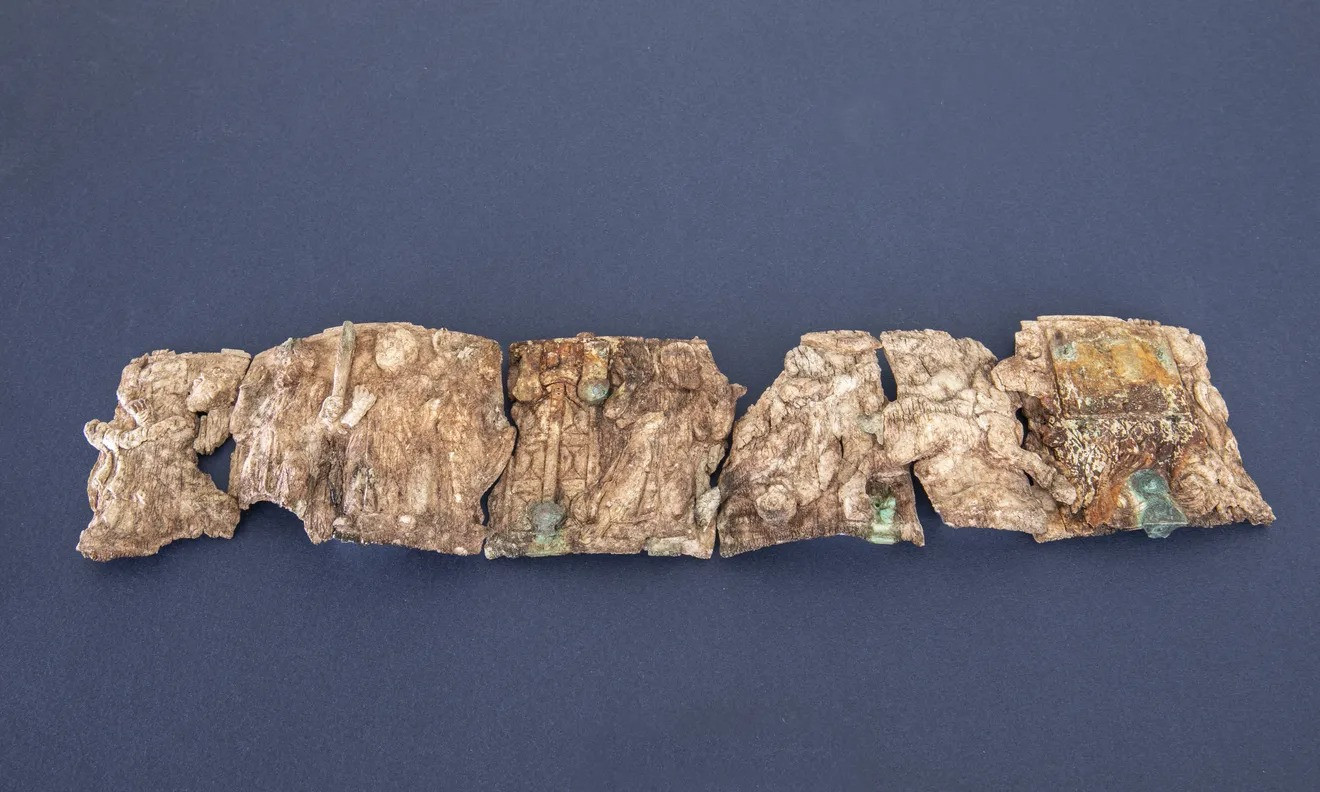
Consequently, the team is working on a 3D digital reconstruction to visualize the pyx’s original form following a meticulous drying procedure aimed at halting further damage to the ivory. In a press release, Grabherr commented:
“As far as I know, the last time one of these was found during excavations was around 100 years ago – the few pyxes that exist are either preserved in cathedral treasures or exhibited in museums.”
Unique Biblical Scenes Carved On The Box
Examination of the pyx’s carvings revealed imagery that intertwines stories from both the Old and New Testaments. One panel appears to portray Moses receiving divine commandments on Mount Sinai, depicted by a hand descending from the heavens.
Various other Biblical characters are illustrated across the ivory surface, culminating in a distinctive scene depicting a man in a two-horse chariot being lifted toward the sky by a hand emerging from clouds.
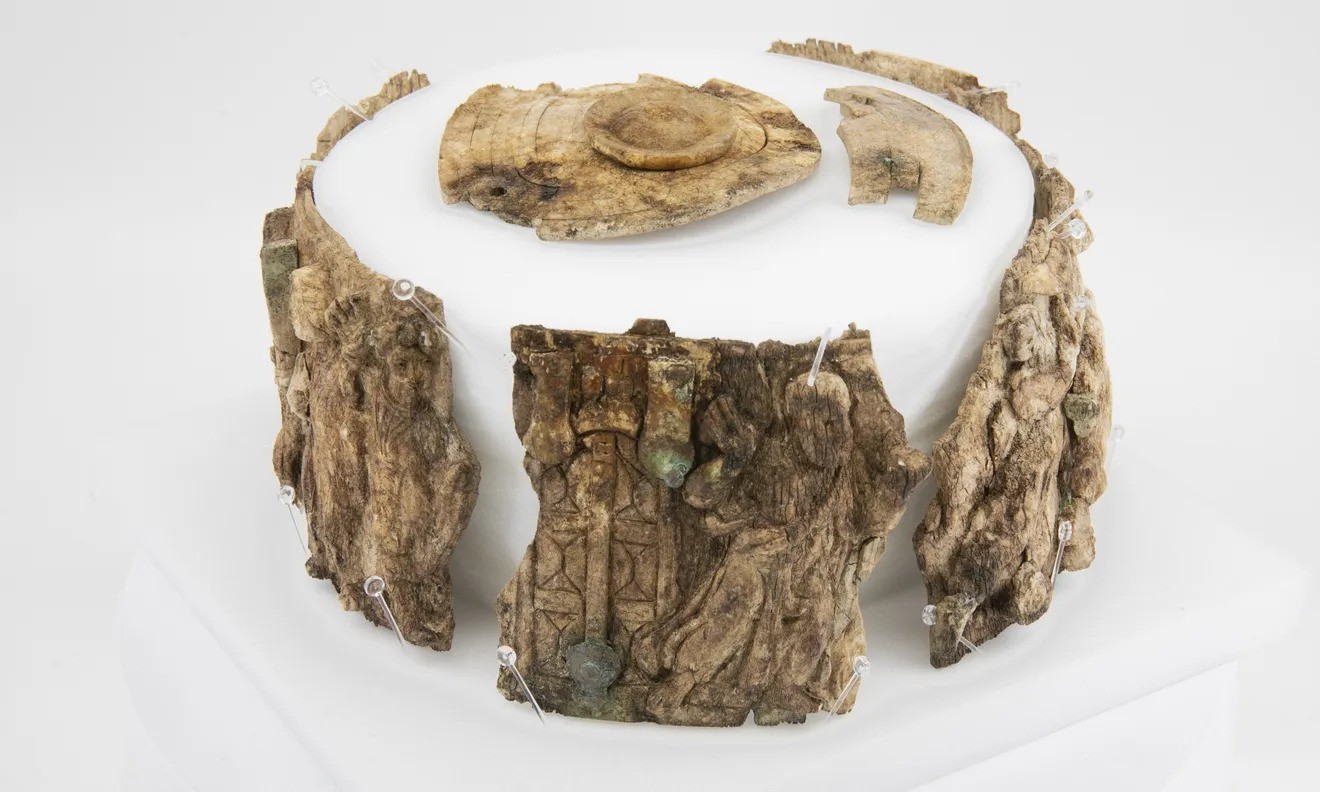
Experts interpret this scene as representing Christ’s Ascension. Grabherr remarked:
“The depiction of scenes from the Old Testament and their connection with scenes from the New Testament is typical of late antiquity and thus fits in with our pyx.” He added that: “However, the depiction of the Ascension of Christ with a so-called biga, a two-horse chariot, is very special and previously unknown.”
The Original Contents of the Box Remain a Mystery
This discovery has prompted several ongoing lines of scientific inquiry. Researchers are analyzing the marble, ivory, metal fittings, and adhesive residues linked to the pyx’s construction.
Töchterle explained that stable isotope testing might reveal the ivory’s geographic origin and potentially identify the elephant source. Additionally, scientists are studying wood fragments found alongside the relic.
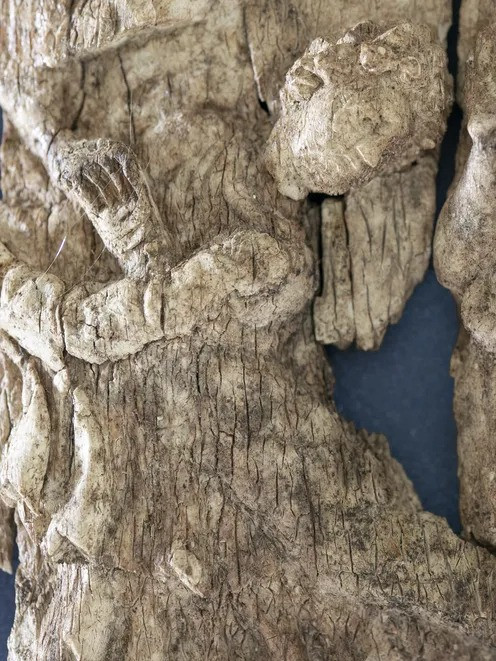
Researchers suspect this wood may have been part of the pyx’s original clasp. Yet, they have not ruled out the possibility that the wooden pieces themselves could have been the sacred relic once housed inside the box.
- Categories:
- News








0 comments
Sign in to Comment