
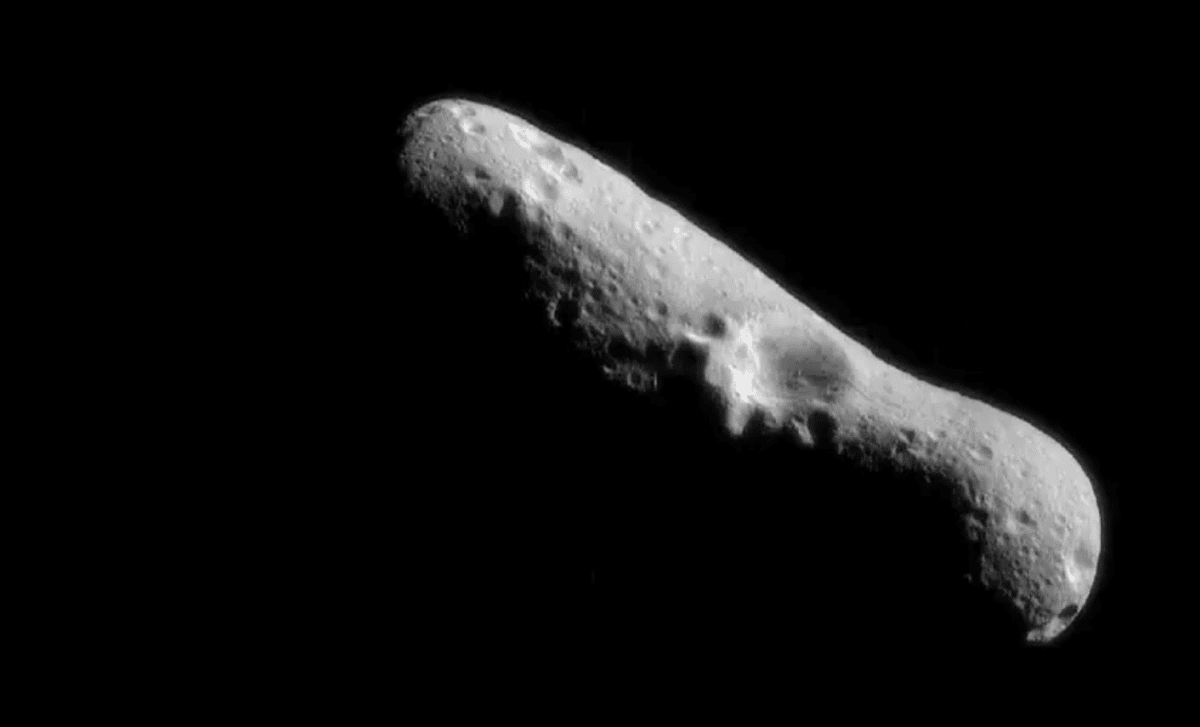
The famed asteroid 433 Eros, a rocky celestial body that revolutionized our knowledge of near-Earth space, is making its anticipated comeback. This weekend, stargazers have a rare opportunity to observe this space traveler as it passes near Earth. The event will be streamed live worldwide, enabling viewers to witness it through virtualtelescope.eu. For astronomers and casual observers alike, this is a unique moment to connect with one of our solar system’s most well-known objects.
An Iconic Space Visitor Returns
Discovered in 1898, 433 Eros sparked a groundbreaking interest in asteroids and the cosmic environment surrounding Earth. More than a hundred years later, it continues to fascinate researchers as it approaches Earth once again this weekend. Stretching roughly 16.8 kilometers (10.4 miles) in length, Eros ranks among the largest near-Earth asteroids identified to date. This flyby is exciting not because of any hazard—it poses no danger—but due to its visibility to observers.
The Virtual Telescope Project (virtualtelescope.eu) will provide a live webcast of the event, giving audiences worldwide front-row access to this astronomical phenomenon. Under the guidance of astrophysicist Gianluca Masi, cutting-edge telescopes stationed in Italy will track Eros as it drifts across the starry sky. This effort keeps continuing the tradition of making space science reachable and engaging, transforming once exclusive cosmic events into shared moments under the stars.

The Enduring Significance of 433 Eros
Aside from its scientific appeal, Eros boasts a historic legacy. It was the first asteroid to be orbited and landed upon by a spacecraft—NASA’s NEAR Shoemaker mission in 2000 and 2001. This mission uncovered a surface marked by craters and huge boulders, shedding light on how asteroids develop and respond to solar radiation. Information gained from Eros also contributed to more precise calculations of the Earth-Sun distance, a key factor in our understanding of celestial mechanics.
Scientists have long used Eros as a model to examine the characteristics and dynamics of near-Earth objects (NEOs). Its elongated, peanut-shaped structure and unique rotation patterns make it ideal for studying how minor bodies interact gravitationally with planets. During this close approach, observatories globally will observe minute changes in its orbit, helping enhance models about asteroid behavior.
Watching the Cosmic Event
You don’t need specialized equipment to join in; an internet connection is enough. virtualtelescope.eu will host the live streaming, featuring expert explanations, real-time visuals, and scientific commentary. Depending on your location’s light pollution, Eros might even be seen faintly through backyard telescopes or powerful binoculars.
This asteroid will appear as a slowly drifting dot among the stars, a quiet reminder that our universe is in constant motion. This moment blends modern astronomical tools with the timeless human urge to gaze upward in awe. Such events emphasize how our expanding global network of observatories bridges the gap between scientific discovery and public fascination.
- Categories:
- News










0 comments
Sign in to Comment