
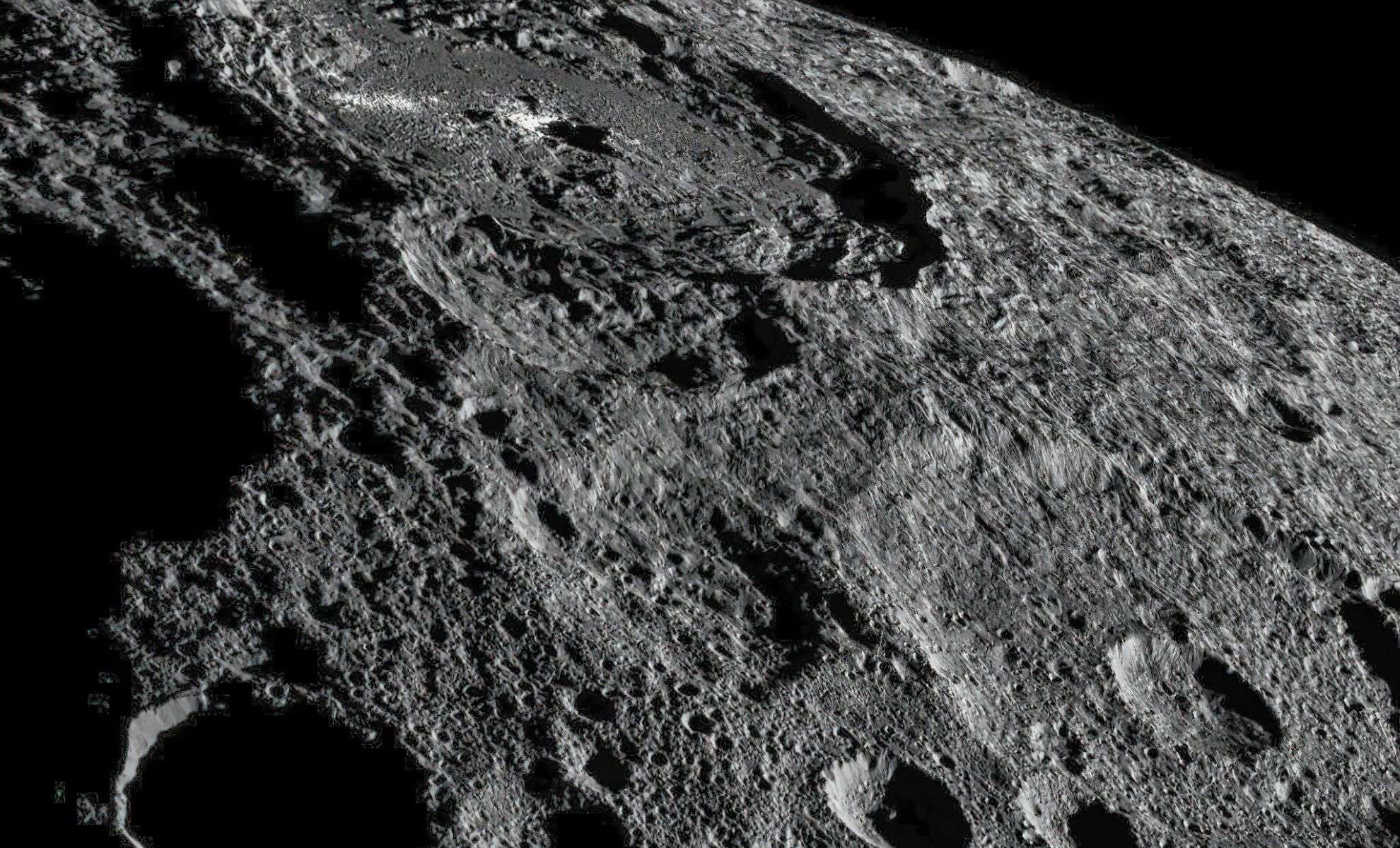
For decades, the Moon has been viewed as a dormant relic — a silent observer of the Solar System’s early history, largely inactive and unchanged across billions of years. However, recent findings are challenging this perception. A freshly published study in National Science Review reveals that lunar activity might be more dynamic than previously believed, as the Moon experiences physical tremors.
A group of Chinese scientists reports that seismic events beneath the lunar surface—known as moonquakes—are initiating active landslides, gradually altering the Moon’s terrain in subtle but significant ways. The growing body of evidence suggests this activity is more widespread than assumed.
The Moon’s Surface Shows Signs of Movement
The collaborative research effort from Sun Yat-sen University, Fuzhou University, and Shanghai Normal University identified 41 landslides on the Moon that have developed since 2009. This discovery was the result of painstaking analysis of more than 500 sets of satellite images, capturing before and after states of 74 geological hotspots known for instability.

The investigation revealed unmistakable signs of material shifting along crater edges, ridgelines, and old volcanic slopes. Contrary to initial expectations, these landslides were not triggered by meteorite impacts but rather linked to internal moonquakes.
While moonquakes themselves aren’t a new revelation—thanks to seismometers deployed by Apollo missions in the 1970s that recorded many events—the connection between these quakes and surface reshaping is a novel insight.
Chinese researchers have identified new landslides on the Moon that have formed since 2009. The primary trigger of such landslides was seismic activity originating within the moon, or "endogenic moonquakes," rather than asteroid impacts, according to a recent research article… pic.twitter.com/s1AMKYJ3Wk
— People's Daily, China (@PDChina) September 18, 2025
Moonquakes: More Intense Than Previously Thought
One might assume moonquakes are faint shakes, but the reality is far more intense. The Moon's extremely dry conditions mean there’s no water to absorb and dampen vibrations. As a result, seismic waves can travel longer distances and persist for hours, easily dislodging material on sufficiently steep slopes.
Most observed landslides occurred on slopes ranging from 24 to 42 degrees, predominantly in the eastern Mare Imbrium, an area already noted for its geological complexity. This clustering hints that the Moon’s interior may still hold enough warmth and internal dynamics to cause these surface movements.
Importantly, fewer than 30% of the newly documented landslides correlate with impact craters, underscoring internal seismic activity as the primary cause. This discovery reshapes our understanding of the Moon’s geology, indicating it’s less inert than previously believed.
Implications for Future Lunar Missions
As nations including China and the U.S. race to establish lunar outposts, these findings carry practical consequences. China plans to build a permanent lunar research facility near the Moon’s south pole by 2035, and ensuring the site’s geological stability is critical to avoid hazardous landslides or prolonged shaking.
To aid this effort, China’s Chang’e-8 mission, scheduled for launch in 2029, will deploy a specialized seismometer to monitor the Moon’s internal activity. This instrument will enable researchers to correlate moonquake occurrences with surface changes captured by satellites, ultimately leading to the creation of a comprehensive seismic map of the Moon—something not previously available.
Beyond safety, understanding how energy and heat circulate within the Moon offers valuable insight into the processes shaping planetary bodies throughout the Solar System.
- Categories:
- News











0 comments
Sign in to Comment