
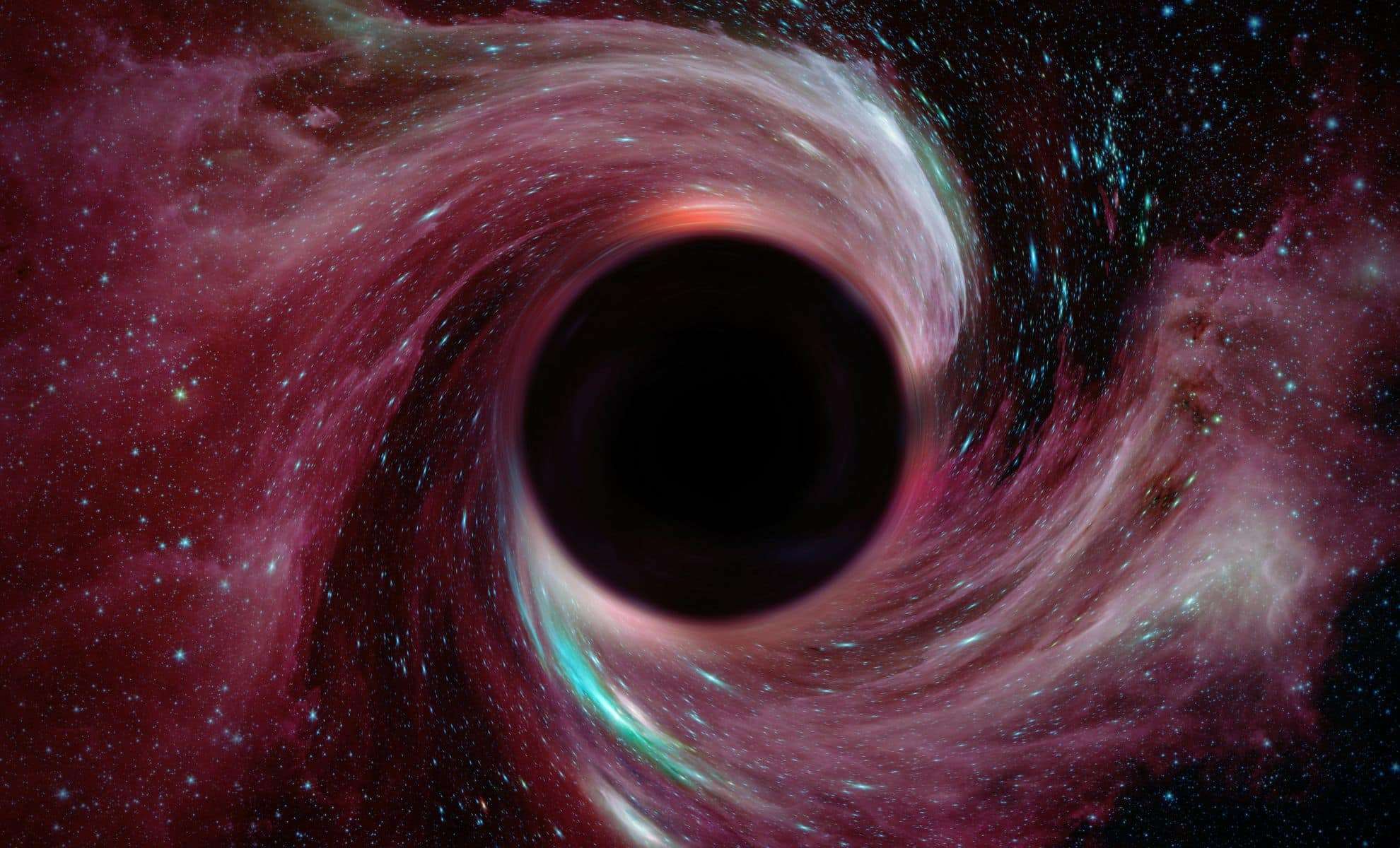
A recent study published in the Monthly Notices of the Royal Astronomical Society has unveiled a surprising cosmic phenomenon that challenges established ideas about how our universe formed. Leveraging the powerful capabilities of the James Webb Space Telescope (JWST), scientists explored galaxies from the universe’s infancy and discovered that many of these galaxies exhibit a preferred rotation direction, contrary to traditional cosmological predictions. This unexpected pattern has led to a bold hypothesis: our universe might actually exist within a black hole.
Conducted by a team at Kansas State University, this research prompts a reevaluation of foundational concepts in cosmology, suggesting our current models may need significant updates.
Revealing Unique Rotation Patterns in Early Galaxies
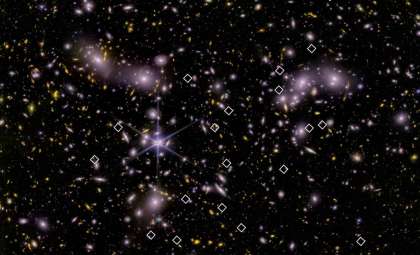
Thanks to the JWST, astronomers have peered deeper into the cosmic past than ever before. By scrutinizing galaxies formed just 300 million years after the Big Bang, they identified an unexpected uniformity: out of 263** galaxies observed, approximately 60% spin clockwise, while only 40% rotate counterclockwise.

This discovery defies the prevailing assumption that the universe is isotropic on large scales—that it should appear uniform in all directions. As Lior Shamir, associate professor of computer science at Kansas State University, noted, "This difference is so pronounced that anyone can distinguish it upon viewing the images, requiring no specialized expertise. The James Webb Space Telescope’s clarity makes this obvious to observe."
These findings provide new clues about the influences shaping galaxy spins during the universe’s early epochs and may reshape our understanding of cosmic structure formation.
Investigating a Potential Cosmological Axis
The surprising discovery of aligned galaxy rotations suggests the early universe may have been less random than previously believed. Researchers propose that this uniform rotation direction points to a possible cosmological-scale axis influencing the universe, which may have been more coherent in its early phase before growing increasingly disordered.
From the paper: “If the observation shown here indeed reflects the structure of the Universe, it shows that the early universe was more homogeneous in terms of the directions towards which galaxies rotate, and becomes more chaotic over time while exhibiting a cosmological-scale axis that is close to the Galactic pole.” The notion of such a universal axis hints at a fundamental property of the cosmos that demands further exploration.
This idea aligns with certain cosmological frameworks, including the ellipsoidal Universe, dipole Big Bang, and isotropic inflation models, all of which suggest the universe might contain an intrinsic cosmological-scale axis. If correct, this axis could have influenced the predominant rotation direction of galaxies, making their alignment more than mere coincidence.
The Provocative Idea: Our Universe Enclosed by a Black Hole
One of the more revolutionary implications from this research is the possibility that our entire cosmos could be residing within a black hole. This concept supports theories like black hole cosmology, which claim that our universe may have originated from inside a black hole existing in a larger multiverse. The observation that the universe might have begun rotating bolsters the view that black hole mechanics play a vital role in shaping cosmic evolution.
Shamir remarked, "One possible explanation is that the universe was born already rotating, which matches proposals such as black hole cosmology that suggest the universe exists inside a black hole." He added a caveat: "If the universe indeed started with rotation, our current cosmological theories would need revision."
While still speculative, this perspective offers fresh pathways to investigating the universe's origins, emphasizing how black hole physics could influence the birth and development of universes.
Rethinking Cosmic Distance and Expansion
The results also call into question some fundamental assumptions about how distances are measured in the cosmos. If these new rotation patterns are accurate, they may necessitate a reassessment of cosmic distance measurements. This adjustment could help clarify lingering puzzles about the universe's rate of expansion and the apparent ages of galaxies.
Shamir pointed out, "If validated, this would require recalibrating our distance measurements for faraway cosmic structures." Such recalibration might also resolve conflicts such as discrepancies in universal expansion speeds and the paradox of galaxies appearing older than the universe itself under current methodologies.
Such changes would profoundly influence our perception of cosmic structure and evolution, potentially transforming the field of astronomy by redefining how we measure and interpret the universe.
- Categories:
- News






0 comments
Sign in to Comment