
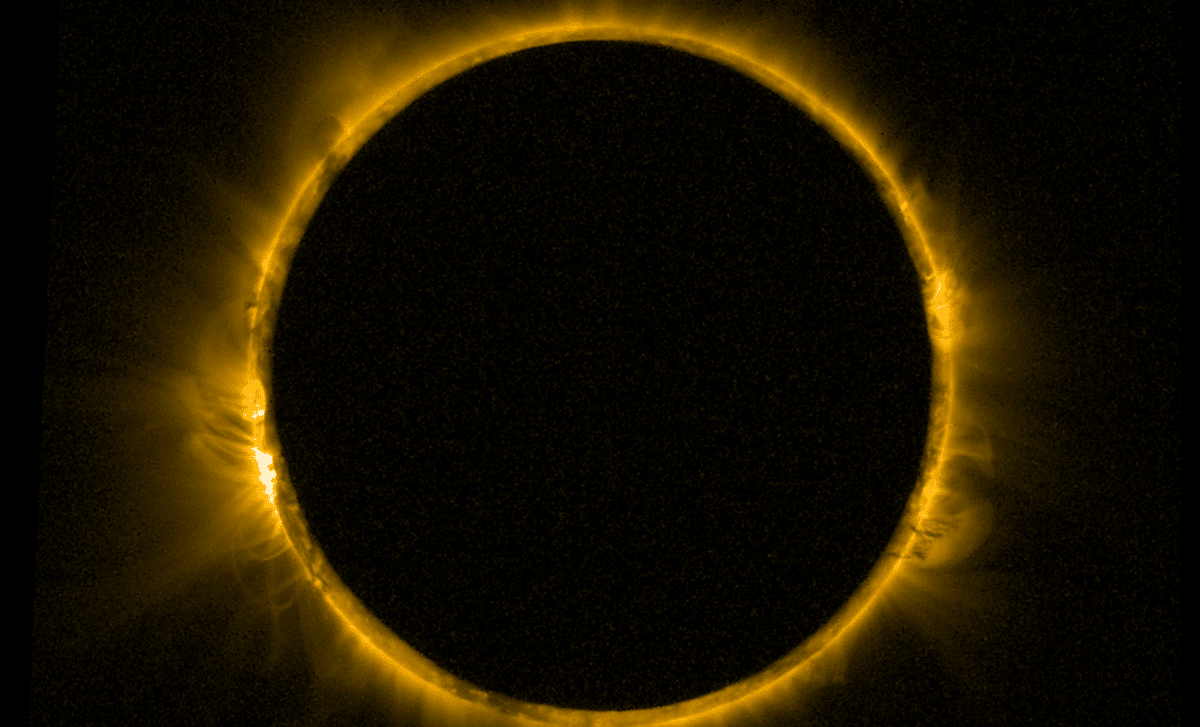
On February 17, 2026, a mesmerizing annular solar eclipse illuminated the sky, creating the iconic “ring of fire.” The European Space Agency (ESA) documented this astronomical event using its Proba-2 satellite, which observed the eclipse in extreme ultraviolet wavelengths. The images obtained by the satellite have offered new perspectives on solar dynamics and demonstrate the advanced capabilities of ESA's space technology. This article explores the importance of this eclipse, the cutting-edge instruments aboard Proba-2, and what the future holds for solar observations conducted from space.
Defining an Annular Solar Eclipse
An annular solar eclipse occurs when the Moon aligns directly between Earth and the Sun but appears smaller due to its farther position along its elliptical orbit. Unlike a total solar eclipse where the Moon fully covers the Sun, an annular eclipse produces a brilliant ring-shaped glow of the Sun surrounding the Moon, known as the “ring of fire.” The 2026 event offered an extraordinary vantage point from space, unhindered by Earth's atmospheric distortions.
These eclipses happen when the Moon's distance makes its apparent diameter slightly less than the Sun’s, leading to the distinctive glowing ring. The annular eclipse of 2026 highlights the intricate celestial choreography between Earth, Moon, and Sun, captivating both scientists and enthusiasts alike.

ESA’s Proba-2 Satellite: Advancing Solar Science
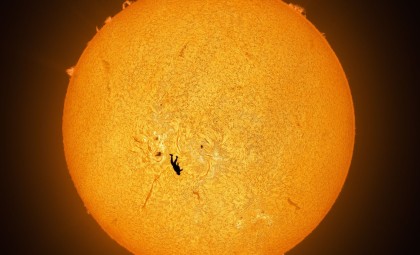
The European Space Agency (ESA) has significantly contributed to solar research, showcased by Proba-2’s observations of the 2026 annular eclipse. Launched in 2009, Proba-2 is a compact satellite fitted with advanced instruments designed to monitor solar activity and space weather in great detail. Among its payload is the SWAP (Sun Watcher using Active Pixel System) imager, which captures images in extreme ultraviolet light. This technique is crucial for studying the Sun's corona—the outer atmospheric layer—offering invaluable data about solar flares and coronal mass ejections.
During the eclipse, Proba-2 captured the full extent of the solar corona, revealing the Sun’s features with unprecedented clarity. Observations from orbit surpass what’s possible from the ground, since Earth’s atmosphere distorts these views. Proba-2’s images thus allow scientists to gain clearer insights into solar behavior and how it influences space weather.
Why Observing Solar Eclipses from Space Matters
Viewing solar eclipses from orbit opens up unique scientific possibilities. While Earth-based eclipse observations have a long history, satellites eliminate atmospheric interference, enabling much more precise study of solar phenomena, particularly in ultraviolet wavelengths essential for understanding solar dynamics.
Proba-2 recorded the event at a 17.4-nanometer wavelength, critical for examining the Sun’s corona. Such data assist scientists in monitoring solar flares and coronal mass ejections, which play key roles in shaping space weather conditions. This is vital, as heightened solar activity can disrupt satellites, GPS, and power grids on Earth. Space-based studies provide crucial knowledge to help prepare for and mitigate these technological risks.
Looking Ahead: Future Solar Eclipse Events
Although the 2026 annular eclipse was extraordinary, many more solar eclipses are on the horizon. Later that same year, on August 12, a total solar eclipse will be visible across regions of Greenland, Iceland, and Spain. This event offers observers a chance to experience the Moon completely obscuring the Sun, creating a stunning spectacle.
Following this, the August 2, 2027 total eclipse will cross southern Spain, northern Africa, and the Middle East, presenting another opportunity for groundbreaking solar research. In 2028, an annular eclipse will once again showcase the “ring of fire” across South America, Portugal, and Spain, delighting skywatchers worldwide.
- Categories:
- News






0 comments
Sign in to Comment