
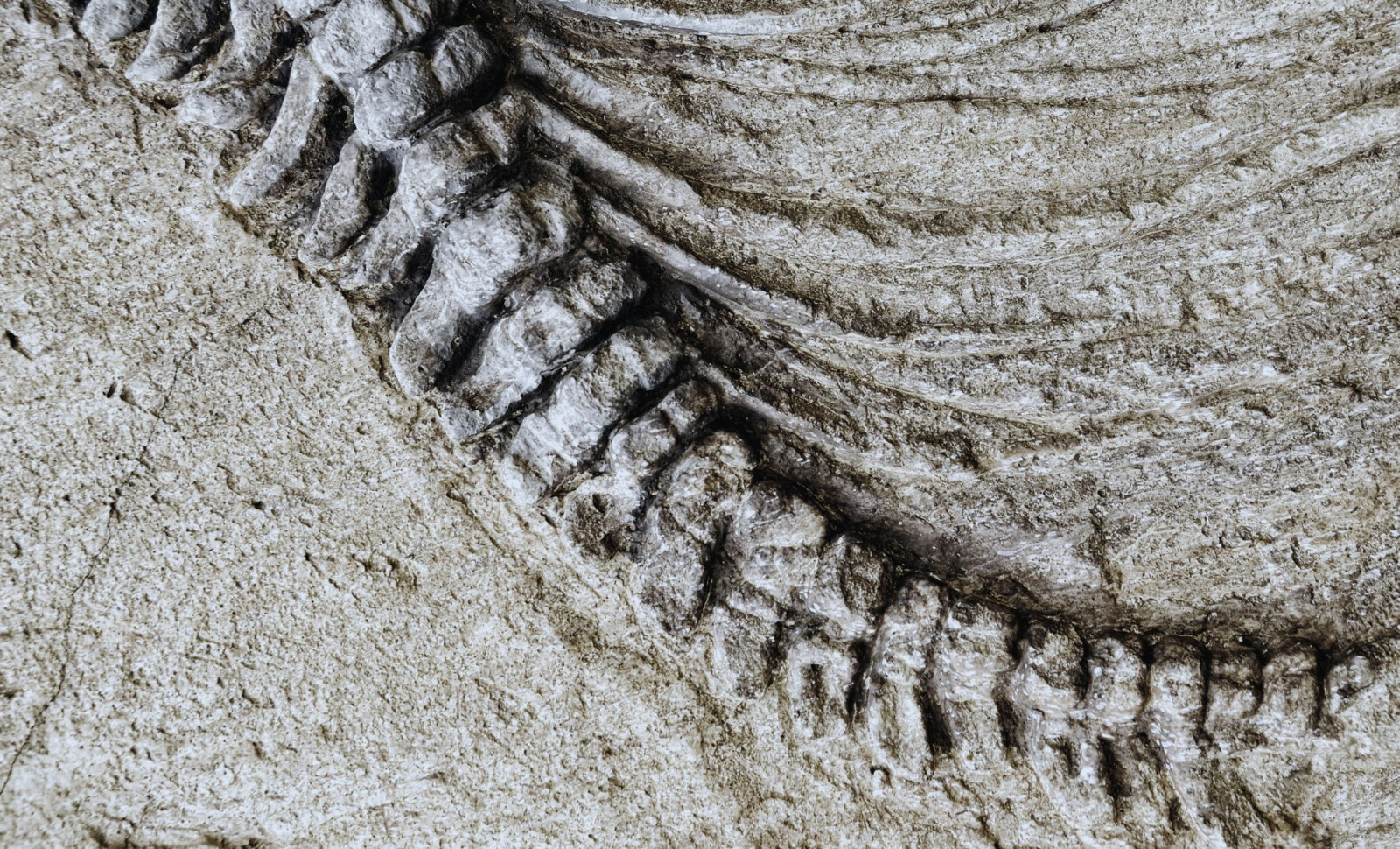
A gigantic dinosaur fossil found in Argentina’s Patagonia region led to an unusual incident while being transported. The remains of Chucarosaurus diripienda, a long-necked titanosaur that roamed the Earth roughly 90 million years ago, proved so massive that their weight fractured the road beneath them during relocation to a research facility.
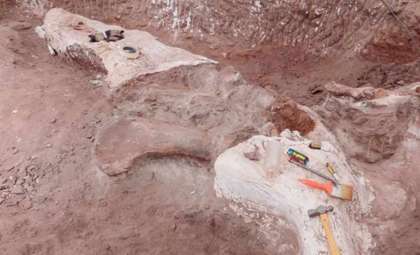
The find of Chucarosaurus diripienda is noteworthy not only for its sheer scale but also for the logistical hurdles presented by moving such hefty fossils. Key limb bones were excavated in 2018 in the Río Negro province of Argentina. Paleontologists managing the removal and transfer of these remains did not anticipate the extraordinary consequences of shifting these colossal bones, underscoring the enormity of the prehistoric giants that once inhabited the planet.
A Dinosaur Nearly Too Large to Transport
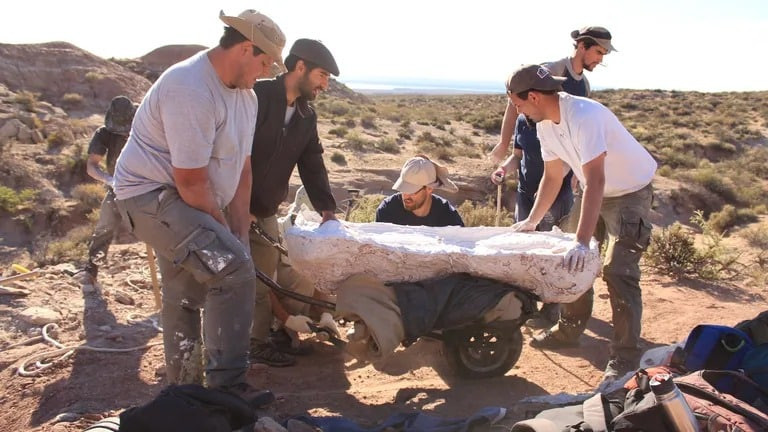
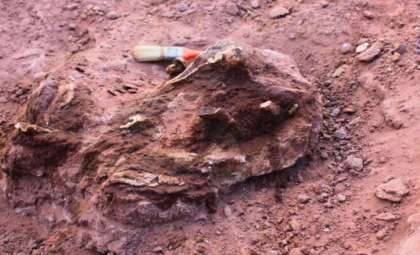
The fossils of Chucarosaurus diripienda were scattered across the Patagonian landscape, requiring meticulous excavation and careful transportation. As explained by Fernando Novas, lead author of the study, the bones were so sizable that multiple individuals had to collaborate to inch them forward.

The real difficulty emerged when transporting the fossils to Buenos Aires. The truck carrying the relics became unbalanced due to their enormous mass, resulting in a crash. While the fossils flew out, remarkably, they suffered no harm.
“The weight destabilized the vehicle and caused an accident,” he said “Luckily, no one was seriously injured and the bones of this dinosaur, which flew through the air, were so hard that they were not damaged. On the contrary, they broke the asphalt of the road.”
This event was so defining that it inspired the dinosaur’s scientific name: Chucarosaurus diripienda. The term combines Quechua, meaning “hard and indomitable animal,” with Latin for “scrambled,” reflecting both the fossil’s weight and the incident it caused.
Enormous But Not the Largest of Its Kind
Although Chucarosaurus diripienda was undeniably huge, it did not rank as the largest titanosaur discovered. Other colossal species outsize it, as noted by Novas:
“It is far from being one of the largest and most colossal dinosaurs, such as Patagotitan, Argentinosaurus, or Notocolossus, which would have weighed between 70 tons [63.5 metric tons].”
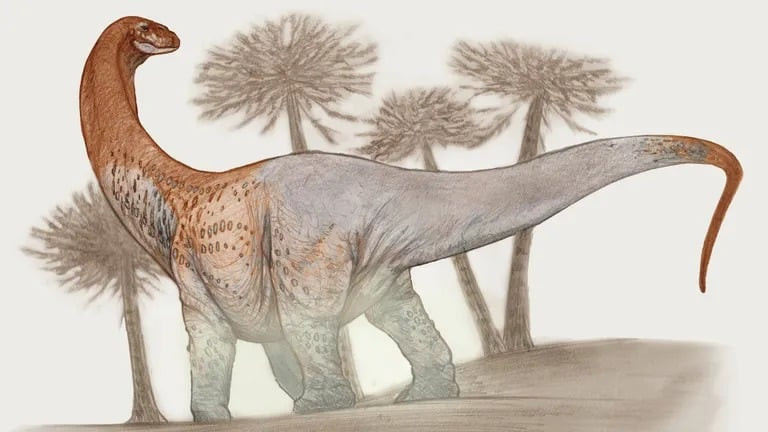
Still, Chucarosaurus was a heavyweight dinosaur, estimated to have weighed between 30 and 40 tons and stretched approximately 100 feet in length. This enormous herbivore would have been a formidable sight during the Cretaceous period.
Its elongated neck enabled it to reach vegetation inaccessible to smaller herbivores, feeding on tall tree leaves. Its likely lengthy and powerful tail might have served as protection against carnivorous predators. Though not the largest titanosaurs, Chucarosaurus was a dominant species during its era.
Unexpectedly Slender Limbs for a Giant Dinosaur
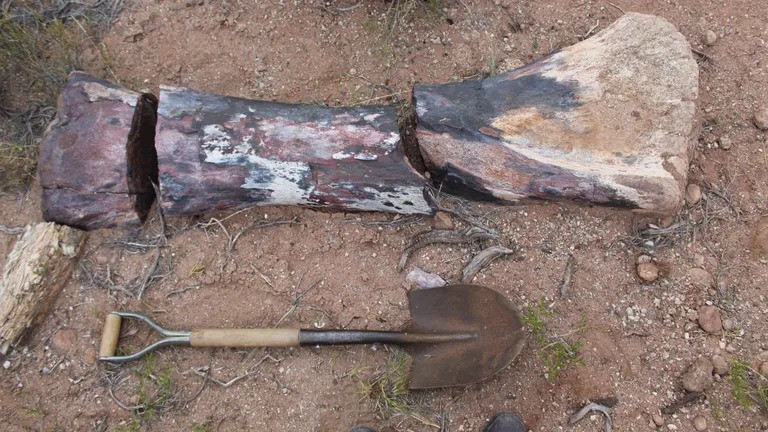
The study, featured in the journal Cretaceous Research, shines a spotlight on a unique feature of Chucarosaurus: its limb structure. Although titanosaurs typically have robust, thick limbs, Chucarosaurus possessed comparatively slim bones for such a large creature.
Novas pointed out that while the femur measured around 1.9 meters (6.2 feet), the limb bones were thinner than expected for a dinosaur of this magnitude. This potentially indicates a more efficient limb design than that of other titanosaurs.
The limb proportions of Chucarosaurus diripienda suggest its movement was likely less uniform than assumed, with some dinosaurs possibly exhibiting greater agility and efficiently covering large distances using their specialized limbs.
- Categories:
- News






0 comments
Sign in to Comment