
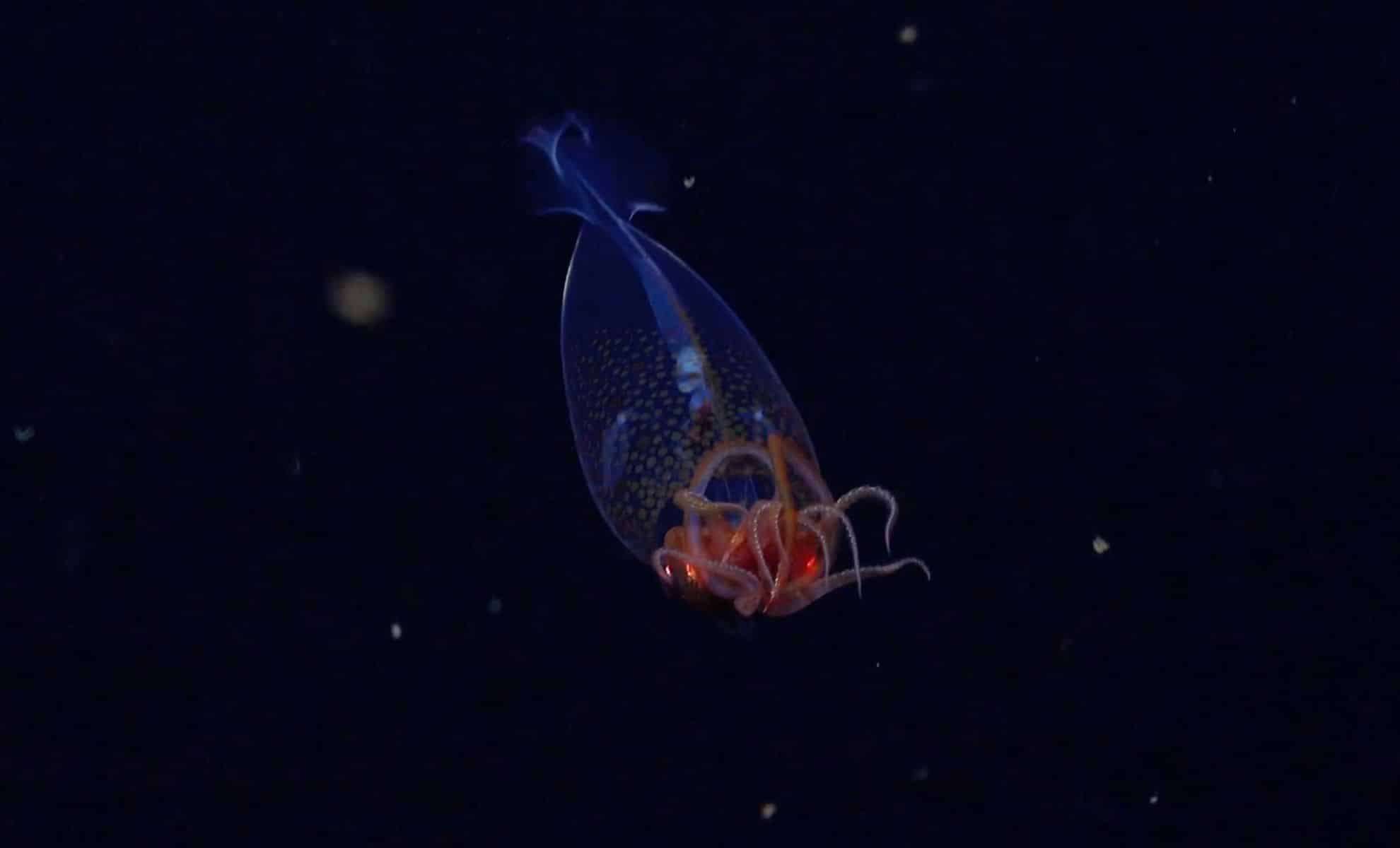
After more than a century since its first recognition from sperm whale remains, researchers have secured the inaugural confirmed recording of a colossal squid in its native environment. This remarkable achievement took place during an expedition near the South Sandwich Islands, spearheaded by the Schmidt Ocean Institute in collaboration with the Ocean Census initiative. The footage features a young squid measuring 30 centimeters, captured at a depth of 600 meters, providing an unprecedented insight into one of the ocean’s most enigmatic inhabitants.
Unveiling a Century-Long Enigma
The colossal squid (Mesonychoteuthis hamiltoni) is renowned among marine scientists for its enormous potential size—reaching lengths of up to seven meters and weighing as much as 500 kilograms. Despite its impressive stature, direct observations of its behavior and development have been virtually nonexistent until this recording.
Captured using a remotely operated vehicle (ROV) during a live-streamed scientific expedition, the video showcases the squid as it glides effortlessly through deep waters. Detailed examination of the high-definition footage allowed experts to definitively identify the species, representing a landmark in oceanic research.


Reasons Behind Its Elusiveness
The colossal squid’s rarity in footage and study stems from several factors. It dwells in immense, pitch-black ocean depths and likely avoids bright lights and mechanical noises typically emitted by deep-sea exploration devices. Its survival tactics rely heavily on evading predators such as diving sperm whales, employing sensory adaptations that work in near-total darkness.
The squid shown is an immature individual, characterized by its fragile, translucent body typical of the glass squid family (Cranchiidae). Distinguishing it from other glass squid species can be difficult; however, the visible mid-arm hooks, a hallmark of Mesonychoteuthis hamiltoni, confirmed its classification.
An Elegant Inhabitant of the Ocean Depths
Contrary to its common depiction as a frightening sea beast, this juvenile colossal squid demonstrated a delicate, almost otherworldly grace. Its transparent body, shimmering eyes, and flowing fins created a serene image as it moved with the underwater currents. While mature specimens are formidable hunters capable of capturing sizable prey like two-meter-long toothfish, this first visual encounter highlights a gentler, more captivating side.
Rather than evoking dread, the footage inspires wonder, portraying the squid as an exquisite marvel of deep-sea biodiversity.
The Significance of This Discovery
This achievement goes beyond a mere scientific milestone; it exemplifies the advances in oceanic exploration. The discovery occurred during a comprehensive biodiversity assessment aimed at cataloging new species and ecosystems in the remote southern Atlantic. The finding reinforces the vast unknowns that persist in Earth’s oceans, which blanket 70% of the planet yet remain largely unexplored.
This mission was a collective effort by the Schmidt Ocean Institute, the Nippon Foundation–NEKTON Ocean Census, and GoSouth, a partnership between the University of Plymouth, GEOMAR, and the British Antarctic Survey.
- Categories:
- News












0 comments
Sign in to Comment