
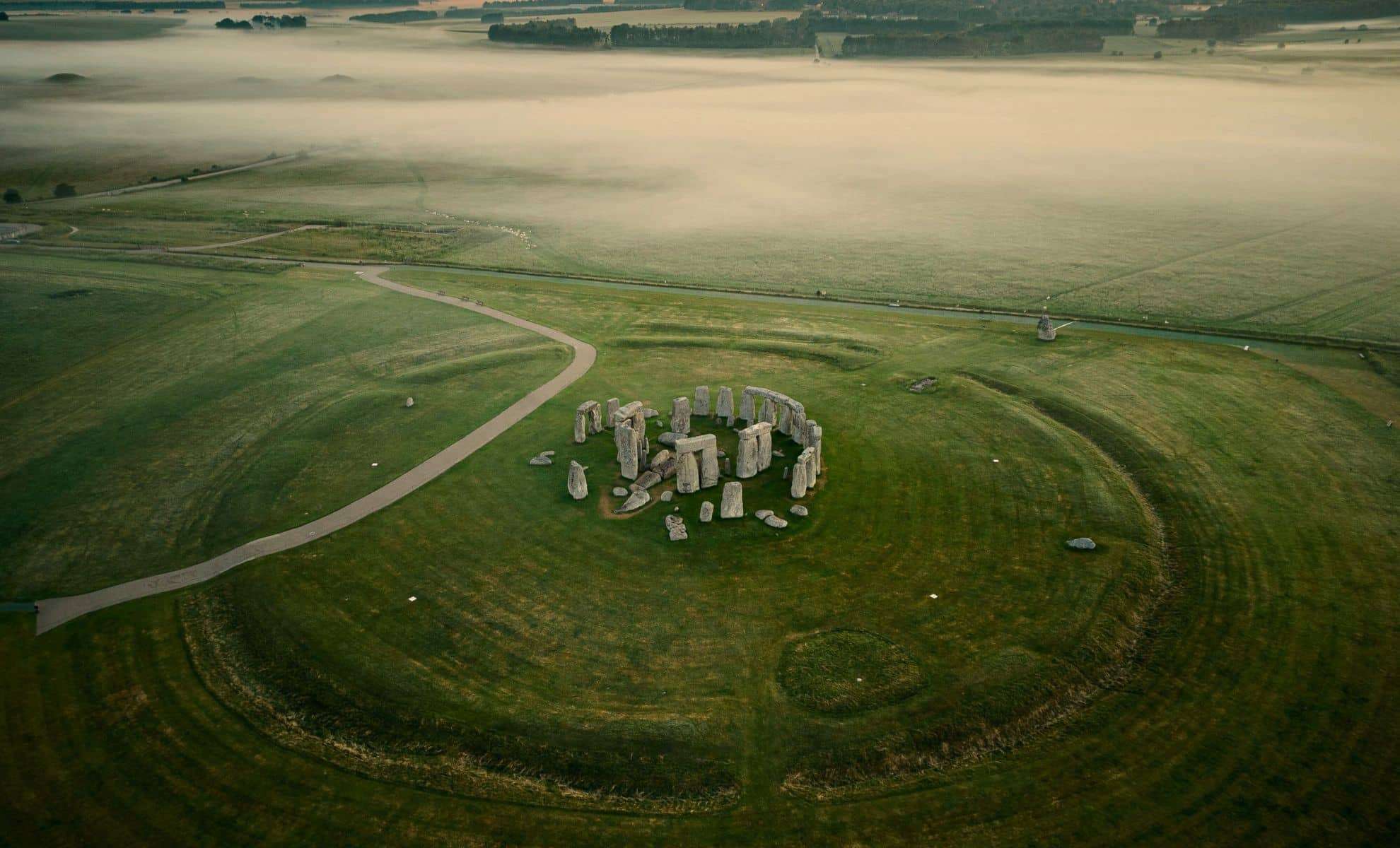
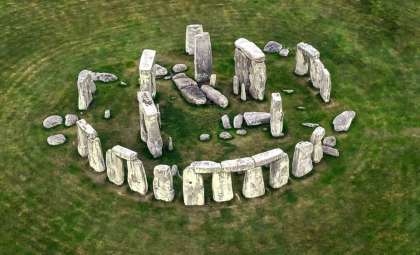
A fresh geological study has shed new light on the long-standing enigma surrounding Stonehenge, the iconic Neolithic landmark that has fascinated historians and scientists alike. Central to this ancient site is the Altar Stone, a hefty sandstone block weighing roughly six tons. For years, experts generally agreed it was sourced from the Brecon Beacons region of southeast Wales.
However, recent research published in the journal Nature on August 14, 2024, tells a very different tale. By examining the mineral makeup of the stone, scientists now propose that the Altar Stone originated much farther north.
Unearthing the Truth Beneath Stonehenge
The Altar Stone lies at Stonehenge’s center, partly buried under two fallen standing stones. This is one of the site’s largest stones outside of the sarsen group, measuring close to 16 feet by 3 feet and weighing around six tons. Traditionally, it was assumed to be composed of Old Red Sandstone from the Brecon Beacons, a theory that remained undisputed until now.

A research team from Curtin University closely analyzed microscopic fragments from the stone, focusing on their chemical and mineral composition. The findings revealed that the Altar Stone’s geological signatures diverge from those of Welsh rocks, instead matching formations found in Scotland’s Orcadian Basin, hundreds of miles away.
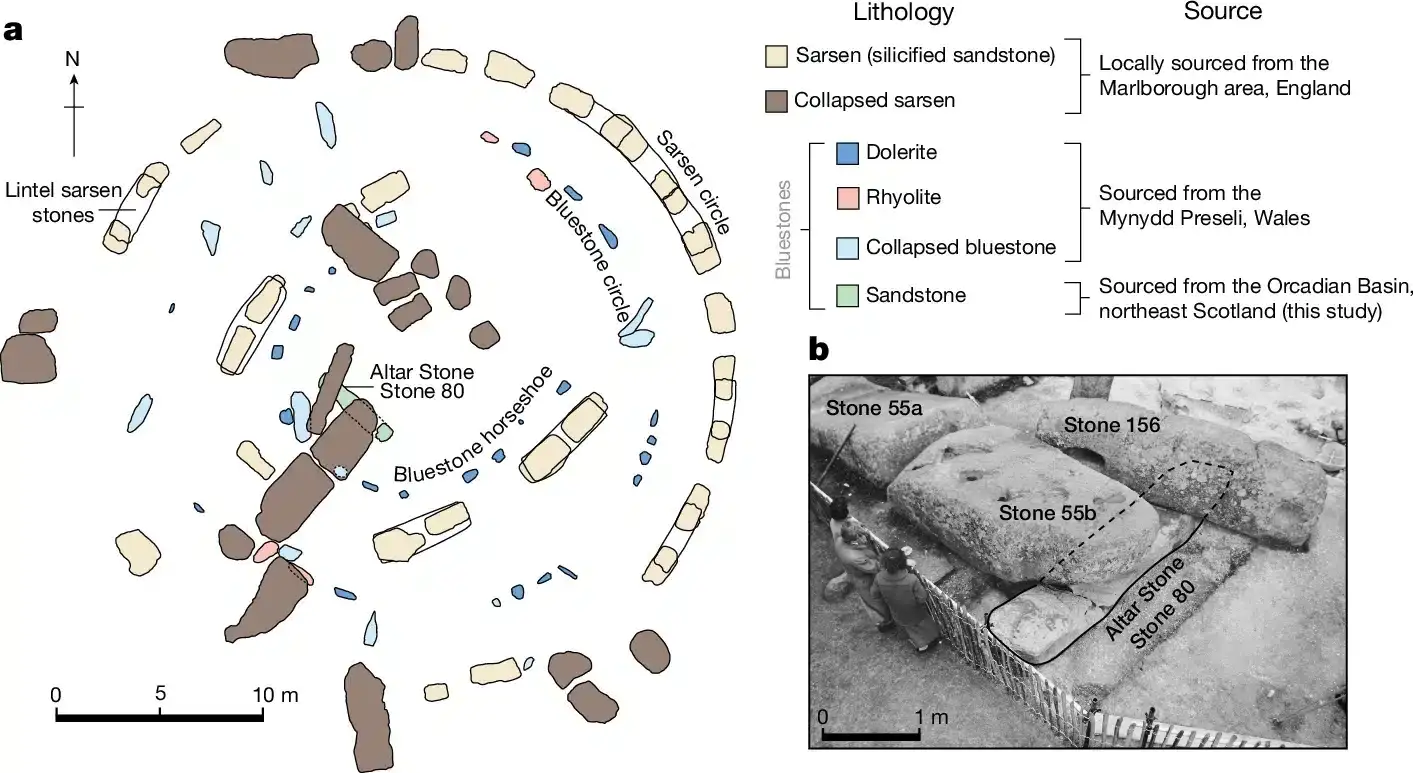
Decoding the Geological Signature
The researchers determined the stone’s origin by examining the age and elemental properties of mineral inclusions within the rock. Anthony Clarke, the lead author and a Ph.D. candidate at Curtin University’s School of Earth and Planetary Sciences, stated that the sample contains “specific mineral grains mostly ranging between 1,000 and 2,000 million years old, alongside other minerals approximately 450 million years old.”
This unique chemical fingerprint aligns closely with rocks native to Scotland rather than Wales. The study’s findings challenge previous assumptions and are already shifting the understanding of Stonehenge’s construction materials.
Richard Bevins, co-author and professor at Aberystwyth University, noted that ongoing efforts aim to pinpoint the precise quarry site within the Orcadian Basin from which the stone was extracted.
An Ancient Engineering Feat
This discovery raises a pivotal question: how did Neolithic builders transport such a heavy six-ton stone over great distances without modern tools or vehicles?
Scientists propose that maritime travel played a key role, with the Altar Stone likely transported by sea along the British coastline from Scotland down to Wiltshire. If validated, this suggests that sophisticated long-distance transport methods were in use during prehistoric times.
Chris Kirkland, co-author and professor at Curtin University, highlighted the significance of this, describing it as evidence of "advanced social organization" in ancient Britain. Moving such a colossal stone would have required coordinated effort, skilled navigation, and extensive collaboration, underscoring the complex capabilities of Neolithic communities.
Reevaluating Stonehenge’s Origins
Stonehenge has long been shrouded in mystery, but the new findings add a surprising dimension. If the Altar Stone truly hails from Scotland, it implies that some of Stonehenge’s components traveled much greater distances than previously believed, reshaping perspectives on the monument’s construction.
The site’s diverse stones come in various sizes and types, indicating they may have been gathered from multiple regions, possibly united by ancient trade routes or cultural connections. This revelation alters how we view the mobility, expertise, and networks of the people responsible for this legendary British landmark.
- Categories:
- News




0 comments
Sign in to Comment