
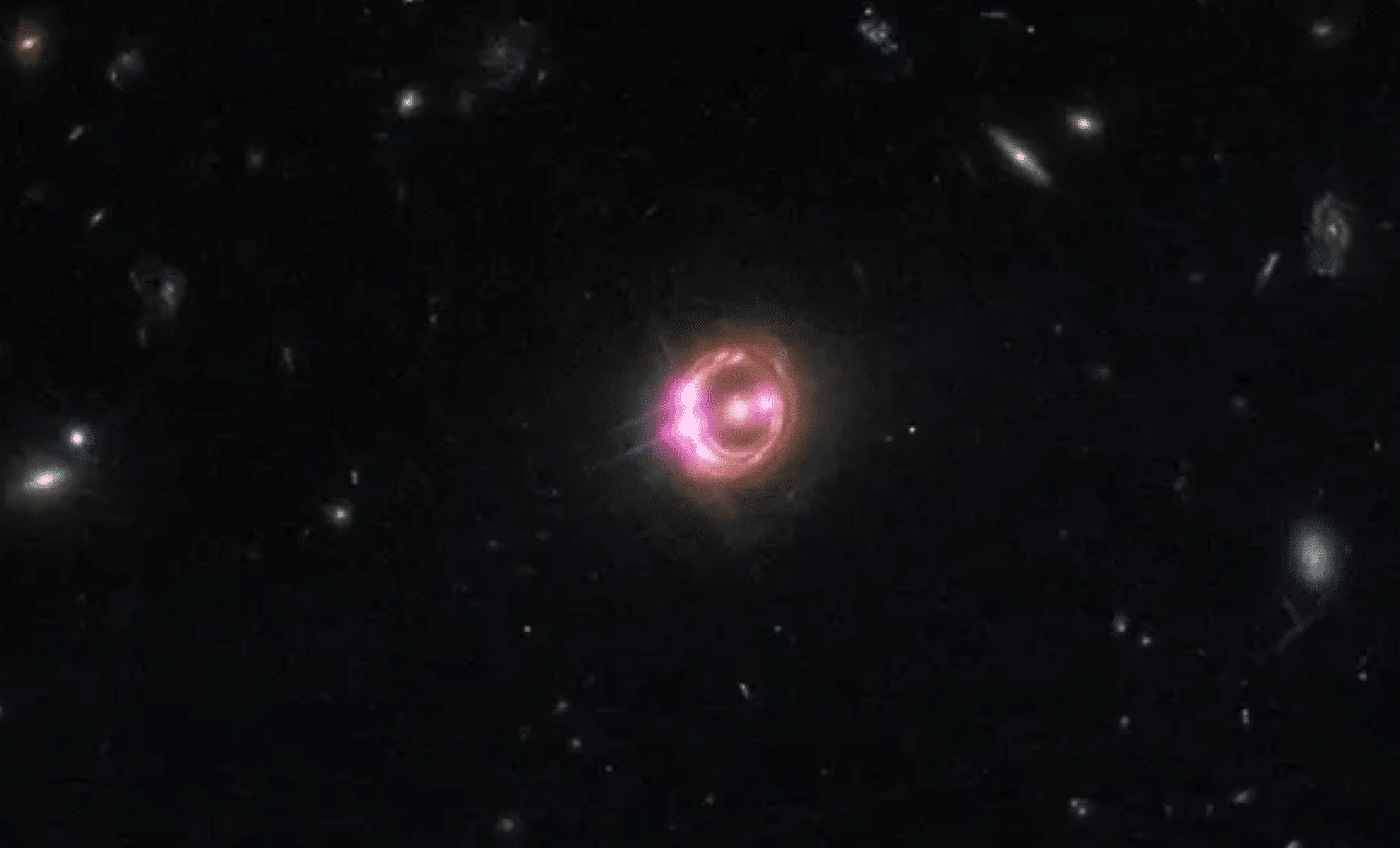
In an unexpected breakthrough, astronomers have successfully measured the scorching corona enveloping a distant supermassive black hole for the first time. Leading the investigation, Matus Rybak and his team utilized a rare “double zoom” approach by combining gravitational lensing with microlensing effects. This innovative method uncovered intricate details about the black hole’s environment that were previously beyond reach. Their findings, detailed on Arxiv, build upon prior cosmic studies but open fresh pathways for understanding black hole behavior and growth.
Opening New Horizons in Black Hole Exploration
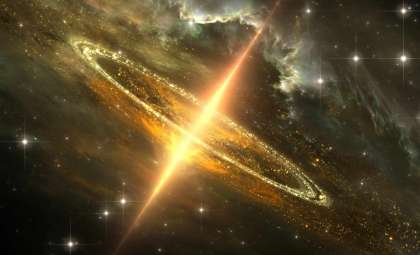
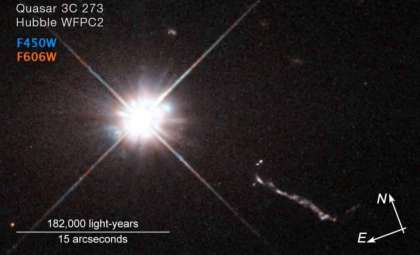
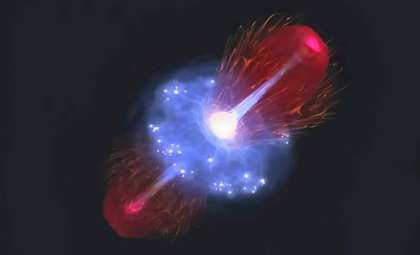
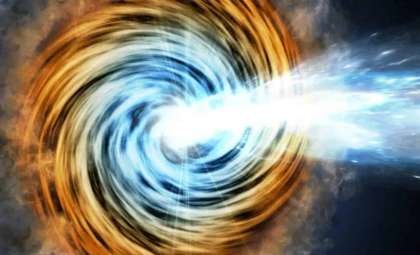
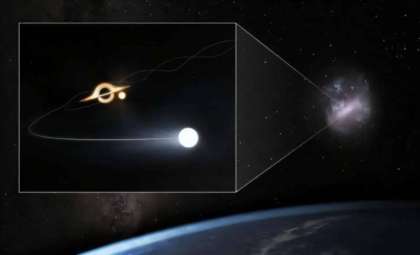
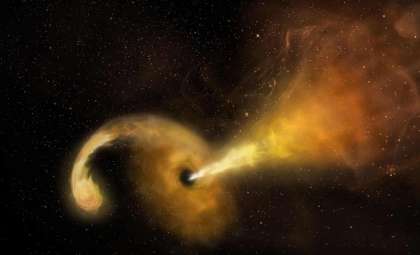
Black holes remain among the universe’s most enigmatic entities. While their interiors evade direct observation, the luminous regions around them, where matter whirls at tremendous velocity, offer vital clues. The subject of this research, the supermassive black hole RX J1131, lies approximately 6 billion light-years away. Its corona—a vast, superheated halo of gas—was characterized in unprecedented detail thanks to gravitational magnification. As one of the universe’s brightest quasars, RX J1131 presented an ideal case study for analyzing these extreme, energetic zones closely.
“This represents the inaugural direct measurement of its kind,” shares Matus Rybak, the study’s principal investigator. He highlights that this technique paves a new path for probing the immediate vicinity of black holes, a crucial area for decoding their physical dynamics. The research revealed the corona spans around 50 astronomical units, roughly matching the scale of our solar system, expanding the frontiers of how we examine these cosmic giants.

Gravitational Lensing: Unlocking Distant Black Hole Secrets
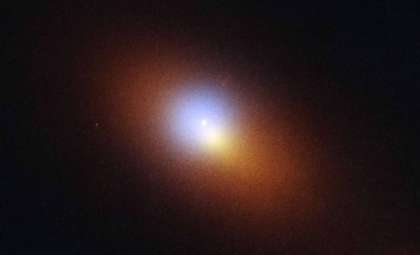
Gravitational lensing occurs when massive objects like galaxies curve the path of light traveling from even more distant sources, functioning similarly to a magnifying glass and sometimes generating multiple images of the same object. In RX J1131’s case, a galaxy situated 4 billion light-years away acted as this cosmic lens, producing four distinct quasar images. These formed the basis for precisely assessing the corona’s dimensions.
The breakthrough came as the team revisited archival data from the Atacama Large Millimeter/submillimeter Array (ALMA) collected over the past decade. Seemingly routine observations soon revealed unusual brightness variations across the quasar images. “It only took days before we noticed that something was amiss,” recounts Rybak. This prompted a deeper investigation, leading to the realization that these brightness fluctuations resulted from microlensing, where individual stars in the foreground galaxy selectively magnify portions of the quasar’s corona.
Microlensing: Revealing Fine Details Through Stellar Magnification
Microlensing involves stars acting as tiny lenses that temporarily boost brightness in specific areas of a background source, in this case, RX J1131’s corona. This effect enabled scientists to detect subtle shifts in light emitted from the compact corona, which standard observational techniques couldn’t explain.
Rybak calls this a pivotal discovery, stating, “This was the smoking gun—definitely something happening along the line of sight.” The uneven flickering across the four images confirmed the cause lay between Earth and the quasar. Microlensing facilitated the first-ever direct measurement of the corona’s size, unlocking new methods to study black holes and similar elusive cosmic features.
Advancing Knowledge on Black Hole Evolution
One of the most promising aspects of this landmark measurement is its implications for understanding the magnetic fields that envelop black holes. Black holes acquire mass by drawing in surrounding gas and dust, a process strongly influenced by local magnetic fields. Rybak notes, “The biggest potential here lies in uncovering how black holes grow.” These magnetic fields regulate gas inflow and outflow, playing a vital role in the life cycle of black holes.
The corona is believed to be tied to these magnetic environments, as fast-moving electrons spiral along magnetic lines generating emissions in the millimeter wavelength range. Measuring the corona’s scale provides valuable information about magnetic field strengths, enhancing theoretical models about supermassive black hole growth and their interaction with surrounding space.
- Categories:
- News



0 comments
Sign in to Comment