

Scientists at CERN have unveiled three groundbreaking findings that deepen understanding of the nuclear mechanisms responsible for the synthesis of heavy elements during extreme cosmic occurrences. Published in Physical Review Letters, the study explores a crucial phase of the rapid neutron capture process believed to form precious metals like gold and platinum amidst neutron star collisions and supernovae.
Heavy elements have long fascinated researchers, who associate their origin with sequences of rapid neutron absorption in neutron-rich environments. However, many specific nuclear reactions involved have remained elusive, largely due to the fleeting nature of the unstable nuclei participating in these processes.
To gain clearer insight, a research group led by physicists from the University of Tennessee focused on indium-134, a brief-lived isotope that decays quickly. Their experiments at the CERN ISOLDE Decay Station have provided new information on the behavior of these unusual nuclei and the pathways that lead to heavy element formation under such intense conditions.

Delving Into an Uncommon Nuclear Decay Sequence
The rapid neutron capture process involves atomic nuclei absorbing neutrons at a fast pace, growing heavier and increasingly unstable until they eventually fragment or transform, producing new elements.
A particularly understudied aspect is beta decay accompanied by the emission of two neutrons. Due to the transient nature of the nuclei involved, experimental observation has been challenging.
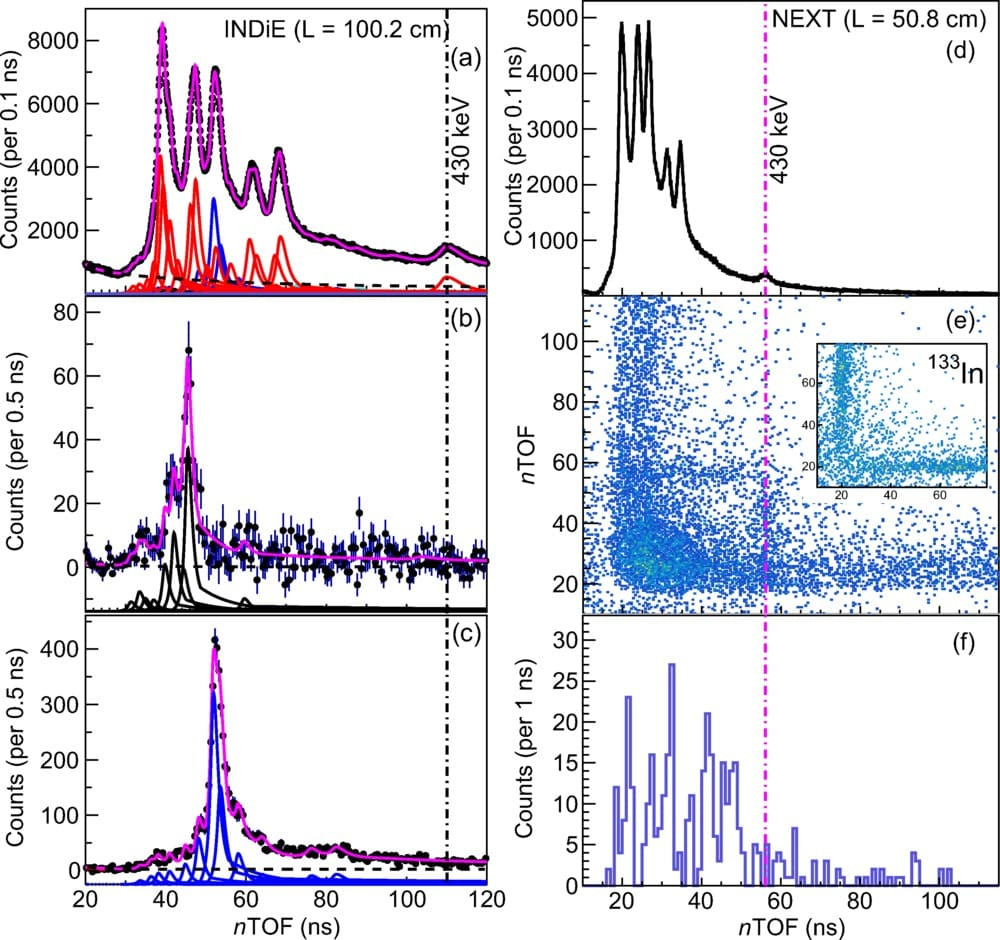
The team concentrated on indium-134, which decays into excited states of tin-132, tin-133, and tin-134. Employing a sophisticated neutron detector developed with assistance from the National Science Foundation, they captured the neutron energy spectrum emitted during decay for the first time. Project contributor Robert Grzywacz remarked:
“These nuclei are hard to make and require a lot of new technology to synthesize in sufficient quantities”
This new data enhances the understanding of nuclear reactions underlying the cosmic creation of heavy elements.
Discovery of a Long-Sought Nuclear State
The investigation also successfully identified a nuclear state that had been theoretically predicted but remained unobserved for decades. Researchers detected this anticipated neutron state within tin-133 during their measurements.
“People were searching for it for 20 years and we found it. Those two neutrons allowed us to see this state”, said Grzywacz.
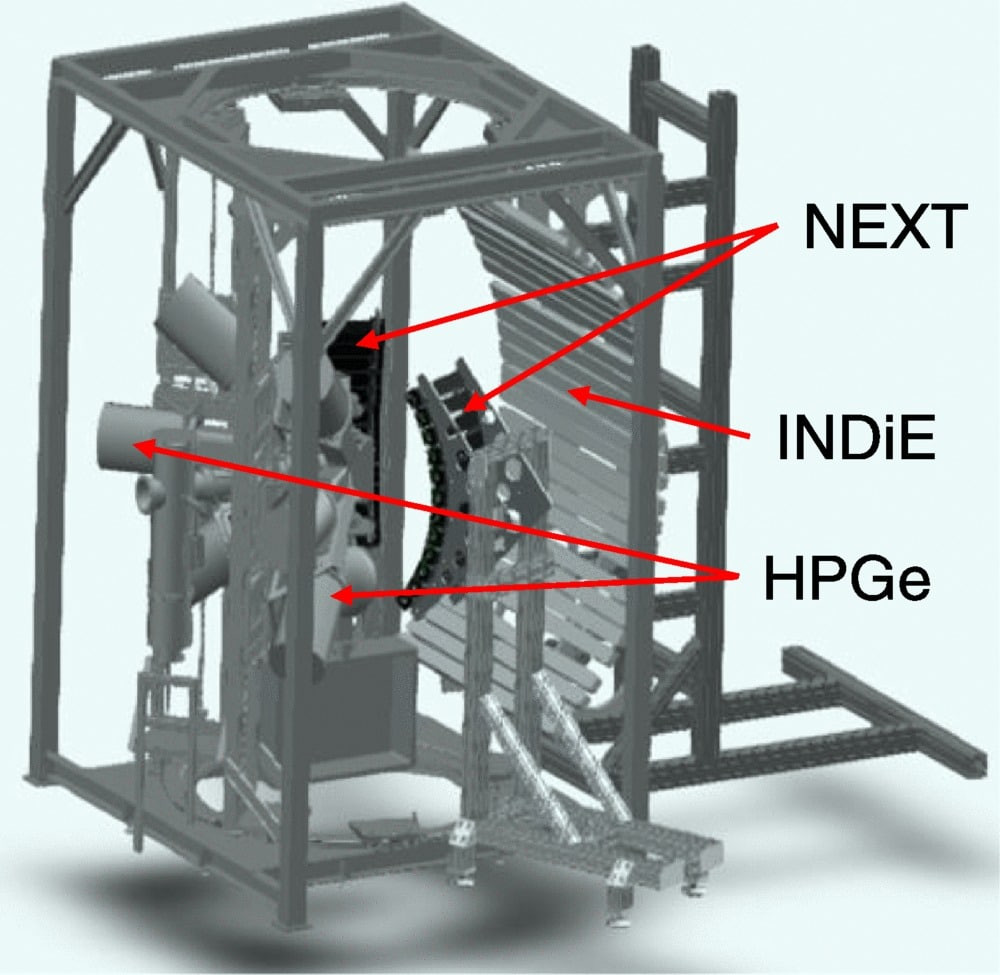
Unexpectedly, the team also observed a phenomenon resembling nuclear "memory," where the decayed nucleus retained aspects of its initial structure, indicating lasting influence from the original nuclear configuration.
Contradictions With Existing Nuclear Models
Some findings deviated from predicted outcomes. Detailed analysis of the observed state revealed behavior inconsistent with prevailing theoretical models; the population of this nuclear state during decay did not align with the expected statistical distributions.
The discrepancy arose despite the rigorously controlled experimental setup, making it particularly intriguing for physicists studying nuclei far from stability.
Instead of corroborating established theories, these results highlight gaps in our comprehension of such exotic nuclear systems, showcasing the need for further investigation into these complex processes.
- Categories:
- Science












0 comments
Sign in to Comment