
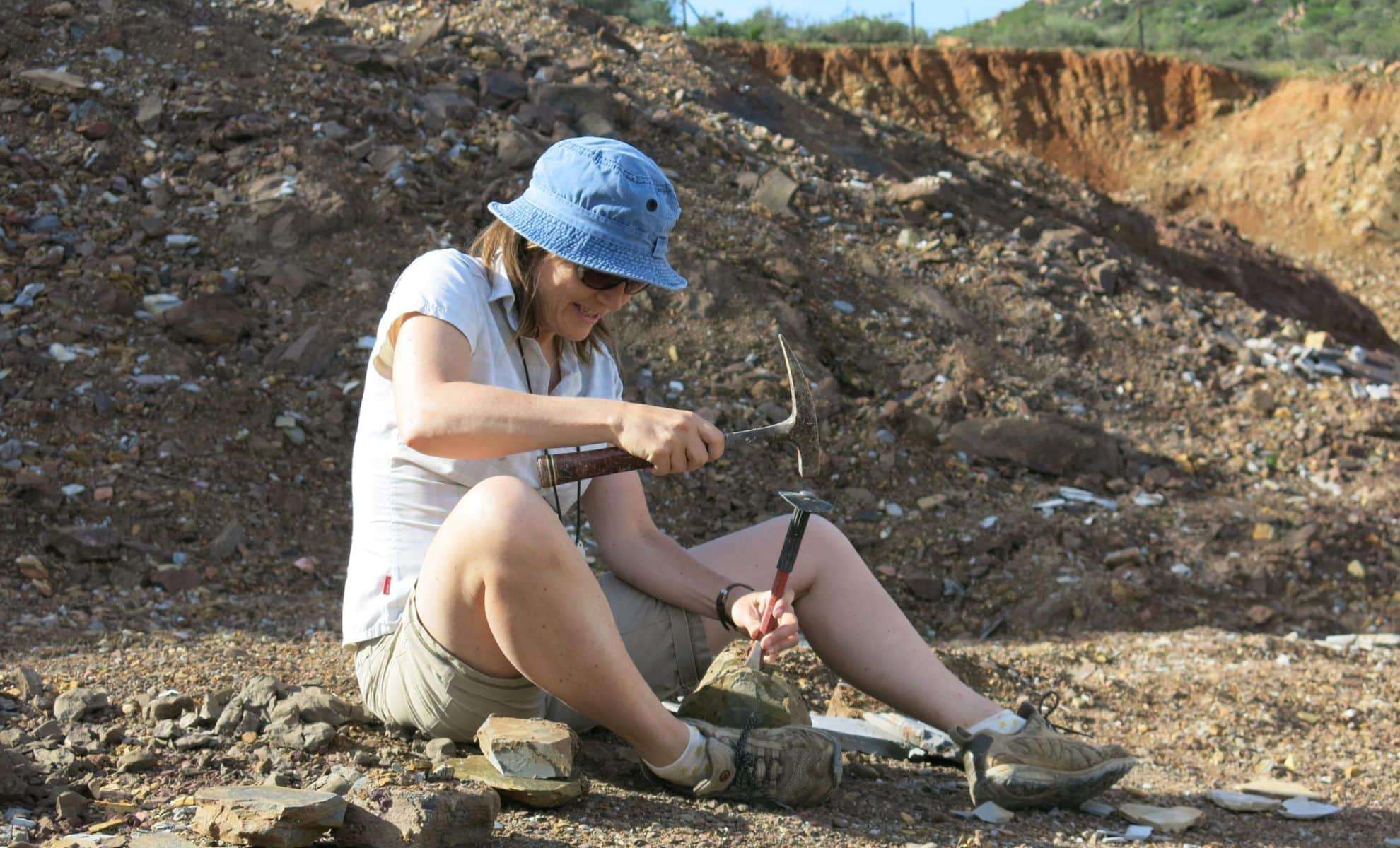
A newly documented fossil unearthed from ancient South African shale has amazed paleontologists by preserving not just hard parts, but delicate internal soft tissues. This discovery, published in Papers in Palaeontology on March 26, 2025, caps a remarkable 25-year research journey.
Sue: A Rare Glimpse Inside Early Arthropods
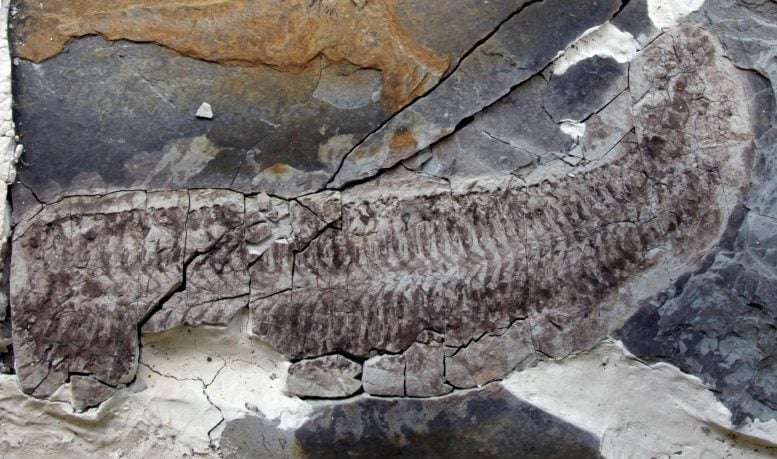
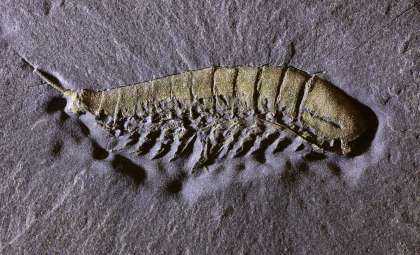
Known as "Sue," this fossil defies usual preservation expectations. Unlike typical specimens that show carapaces, legs, and heads, Sue lacks these external features entirely.
Instead, it reveals an extraordinary "inside-out" perspective, showcasing muscles, tendons, connective tissues, and gut components of an early arthropod. These soft tissues have been preserved with exceptional clarity within sediment dating back nearly 444 million years.

Preserving soft tissue is extremely uncommon in the fossil record, as organic materials usually degrade quickly. Here, however, the internal anatomy survived while the more durable exoskeleton disintegrated — a highly unusual fossilization reversal.
The Toxic Environment That Protected a Scientific Treasure
This fossil was extracted from the Soom Shale, a sedimentary deposit roughly 250 miles north of Cape Town, South Africa. This marine basin formed shortly after a severe glaciation event during the Ordovician period, which caused one of Earth’s five major extinction episodes, eradicating 85% of all species.
The basin’s anoxic, hydrogen sulfide-rich waters created a harsh environment that likely acted as a preservative chamber. Researchers believe this chemical milieu mineralized the internal soft tissues before decomposition could occur.
Such rare chemical fossilization processes remain only partially understood and have been described as a "strange chemical alchemy" responsible for enshrining Sue’s internal anatomy in remarkable detail.
A One-of-a-Kind Fossil Puzzle
Although clearly an early marine arthropod, Keurbos susanae doesn’t fit neatly within known arthropod family trees. Its unique preservation and missing external features present a biological enigma.
Professor Sarah Gabbott calls it a “headless, legless wonder” not just because those parts are absent, but due to how the fossil challenges fossil classification norms by highlighting typically lost internal anatomy.
A Tribute and a Career-Defining Discovery
Professor Gabbott has invested a quarter-century studying this fossil, which she named “Sue” in honor of her mother. The name reflects both a personal gratitude and the fossil’s exceptional preservation.
“I joke that Sue is named after my mom because she’s a well-preserved specimen,” Gabbott remarks, “but really, it’s because my mom encouraged me to pursue a path that brings joy.”
The naming reflects decades of dedication to uncovering ancient biological mysteries and symbolizes Gabbott’s lasting devotion to paleontology.
Implications for Understanding Evolution
Arthropods, including insects, spiders, and crustaceans, compose roughly 85% of all animal species. Although their fossil record extends over 500 million years, specimens like Sue provide unparalleled insight beneath their exoskeletons to internal anatomy.
This rare preservation allows scientists to examine the muscle arrangement and internal supportive structures of ancient arthropods, potentially clarifying elusive parts of their evolutionary history that traditional fossils cannot reveal.
- Categories:
- Science

0 comments
Sign in to Comment